
PA11 Yarn Linear Density: Dtex Conversion and Fabric Weight
PA11 yarn is quoted in dtex by producers, in denier by buyers raised on nylon 6, and consumed in grams per square meter by fabric developers. Each figure sits one conversion away from the others, and each conversion is where a purchase order drifts from the fabric it was written to make. The arithmetic is simple; the discipline around it is what makes a program repeatable.
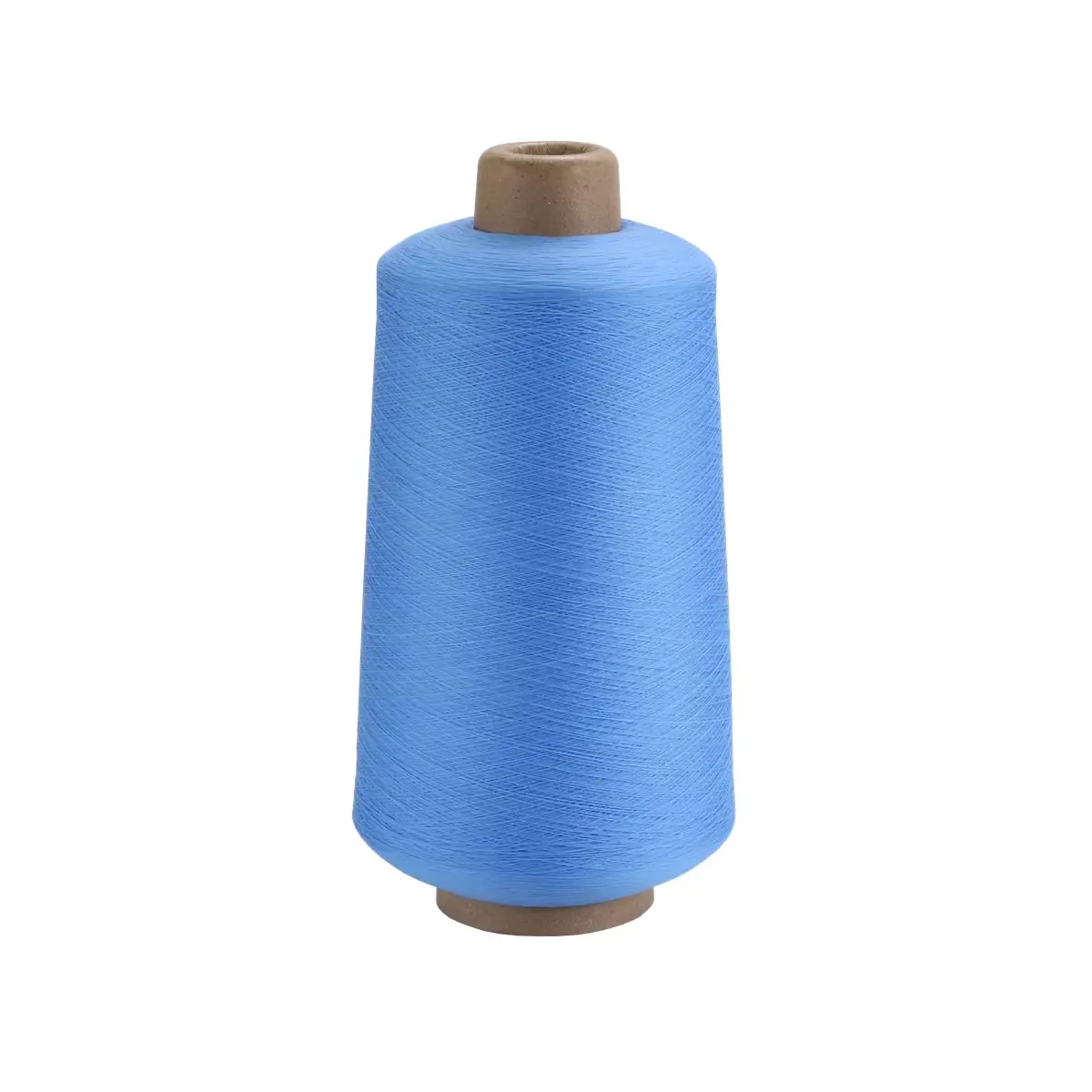
Dtex, denier and tex describe the same yarn
Denier is the mass in grams of 9,000 meters of yarn; dtex is the mass in grams of 10,000 meters. Dtex measures mass per 10,000 meters, so the two systems never meet on round numbers: dtex equals denier times 10 divided by 9.
- 40 denier is approximately 44 dtex
- 70 denier is approximately 78 dtex
- 100 denier is approximately 110 dtex
- 150 denier is approximately 167 dtex
- 210 denier is approximately 233 dtex
70D and 78 dtex are the same yarn. A 70 dtex ticket is roughly 10 percent lighter, and a fabric knitted at the same stitch density finishes about 10 percent light. Tex, dtex divided by 10, survives mainly in datasheets and cord specifications.
Converting to Nm, Ne and decitex per filament
Legacy blend sheets still carry indirect counts. Nm equals 10,000 divided by dtex, so 78 dtex is Nm 128; Ne equals 5,905 divided by dtex, so the same yarn is roughly Ne 76. Plied yarns are described by component and ply, and total dtex is the sum of the ends. Filament-level density drives hand feel: 78 dtex in 24 filaments is 3.25 dtex per filament, and the same 78 dtex in 68 filaments is 1.15. Same linear density, different fabric.
From yarn dtex to fabric weight per square meter
For plain single jersey: grams per square meter equals courses per cm times wales per cm times loop length in cm times yarn dtex times 0.01. A 78 dtex PA11 DTY knitted at 26 courses per cm, 20 wales per cm and 0.32 cm loop length gives approximately 130 gsm. The same settings with 110 dtex give approximately 183 gsm, which is why fabric weight per square meter is never fixed by yarn alone.
Two-yarn structures add up: a plated 44 dtex elastane plus 78 dtex face carries both contributions, each calculated separately before summing. Interlock, rib and pique absorb a different yarn length per needle, so the constant changes, not the logic. Build that constant from a weighed swatch.
Where the calculation goes wrong
Two inputs carry nearly all the error. Loop length is often read from a running machine under tension and then understates the finished figure; unravel a known number of wales and courses from a dry-relaxed swatch and divide total yarn length by the stitch count. Stitch density shifts after washing, dyeing and compaction, so greige and finished counts belong on separate lines of the same sheet.
Tip: Convert and calculate on a conditioned mass basis at 65 percent relative humidity and 20 C, because PA11 takes up roughly 2.5 to 3.5 percent moisture there and an oven-dry dtex reading makes the yarn look finer than the mill will actually knit.
Allowances for crimp, shrinkage and process loss
The formula gives the yarn mass inside the fabric, not the yarn to buy. Add allowances on top:
- Crimp and relaxation: typically 3 to 8 percent, higher for textured DTY than for flat FDY
- Knitting and warping waste: 2 to 4 percent, wider on short runs and fine-gauge machines
- Dyeing and finishing loss: 1 to 3 percent, adjusted for weight gained or lost in heat setting
- Sampling and reject: one to two meters per shade per run, which matters more at narrow width
Yarn to purchase per 1,000 linear meters equals gsm times width in meters divided by 1,000, then divided by one minus total allowance. At 130 gsm and 1.6 m width that is about 208 kg before allowances and closer to 220 kg after them, which drives both order quantity and landed cost per meter.
Writing linear density into a PA11 purchase order
State unit, nominal value, tolerance and test method on one line: 78 dtex, tolerance plus or minus 3 percent, ISO 2060, conditioned basis. Add filament count, the linear density tolerance for package average and within-package variation, and the moisture assumption used at acceptance. When buyer and supplier disagree by 5 percent on weight, the cause is usually a unit mismatch on the ticket or an oven-dry versus conditioned basis, not a spinning fault. Keep the conversion table in the contract appendix and require both units on every shipping document.
FAQ
Is 78 dtex the same as 70 denier?
Yes, within rounding: 70 denier converts to 77.8 dtex and producers round to 78. Interchangeable in a brief, never in a tolerance clause.
How do I convert gsm to ounces per square yard?
Multiply gsm by 0.0295, or divide by 33.9. A 130 gsm fabric is approximately 3.8 oz per square yard.
Why does a 130 gsm target knit at 122 gsm?
Check loop length first, then stitch density, then the actual dtex on the package. A yarn at the low end of tolerance plus a short loop explains most shortfalls.
Can I specify fabric weight instead of yarn dtex?
Specify both. Fabric weight is an outcome of yarn, structure and machine settings; a weight-only clause lets the mill reach it with finer yarn and a longer loop, changing hand feel and coverage.
Related Pages
- Hot Melt Yarn vs Adhesive Film
- Low Melting Yarn vs Regular Yarn
- Bulk Yarn Order Timeline Explained
- Yarn Bulk Order Planning Guide
Post time: Nov-23-2026