
Low Melting Yarn vs Regular Yarn: A Complete Sourcing Guide for Textile Manufacturers
Introduction
For textile buyers, factory production managers and product developers, selecting the correct filament yarn directly impacts production efficiency, finished product quality, manufacturing costs and market competitiveness. Standard regular nylon yarn has long been the universal base material for weaving, knitting and sewing, while low melting yarn (also called hot melt adhesive yarn) is a modified functional filament built for thermal bonding applications.
This guide breaks down the core differences between low melting yarn and regular yarn, covering molecular structure, physical performance, processing requirements, applicable industries, cost tradeoffs and sourcing decision frameworks. All content is tailored to the purchasing perspective, helping you quickly identify which yarn matches your production lines and product positioning.
1. Fundamental Material & Molecular Difference
Regular Nylon Yarn
Standard PA6 / PA11 regular filament yarn is unmodified polyamide polymer with complete, stable molecular chains. Its chemical structure is designed to maintain consistent fiber rigidity and elasticity under normal textile processing temperatures.
- Melting point: 215°C–220°C, stable at all standard weaving, dyeing and finishing temperatures
- Core function: Structural weaving, knitting, sewing thread, provides fabric tensile strength and hand feel
- No inherent adhesive properties; relies on stitching, liquid glue or interweaving to fix fabric layers
Low Melting Yarn
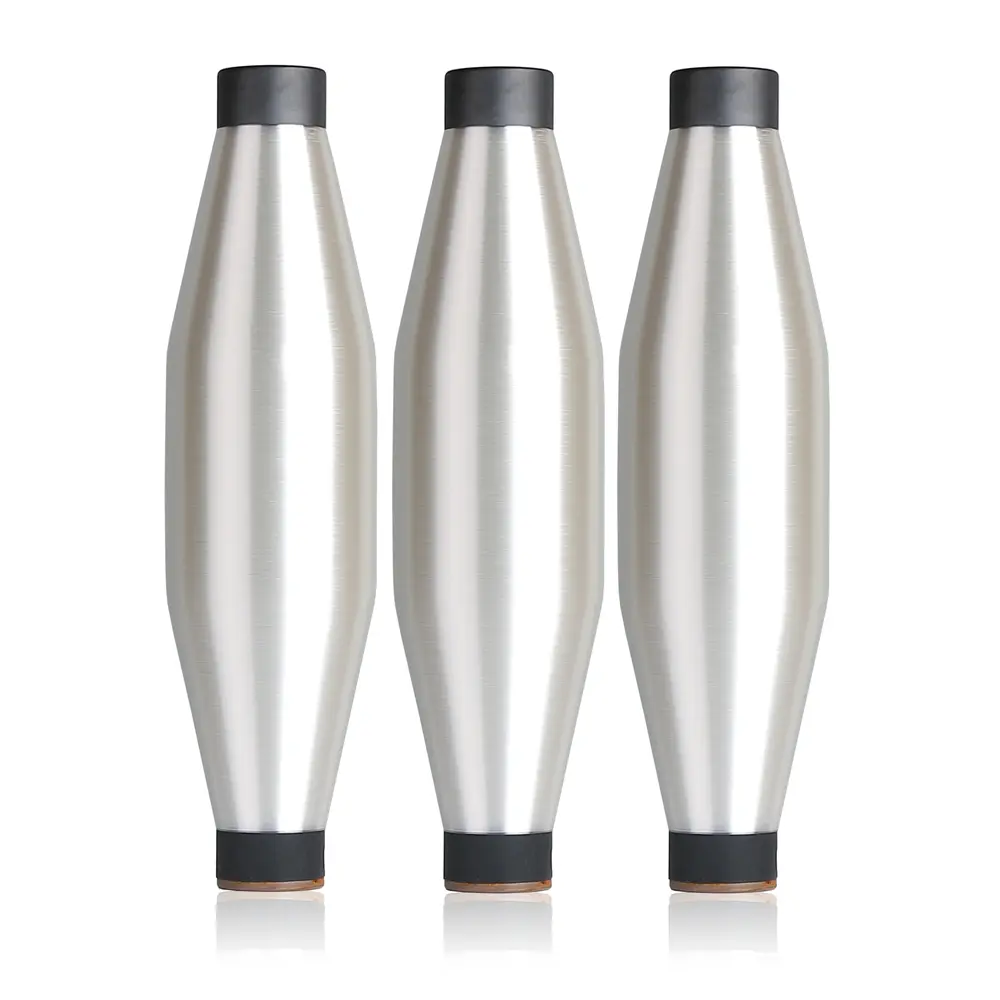
Low melting yarn undergoes targeted molecular modification to reduce polymer softening and melting temperature, retaining textile spinnability at room temperature while gaining thermal adhesive properties. Common base materials include modified nylon and polyester low melt filaments.
- Adjustable melting range: 85°C–130°C (customizable per production demand)
- Dual performance: Acts as normal yarn during weaving/knitting; melts and forms permanent bonds after mild heat pressing
- Thermoplastic bonding core trait: No solvent required for adhesion, meets global eco-textile standards
2. Key Performance Comparison Table
表格
| Performance Metric | Low Melting Yarn | Regular Nylon Yarn | Practical Sourcing Impact |
|---|---|---|---|
| Melting Temperature | 85–130°C (customizable) | 215–220°C | Low melt yarn bonds without damaging foam, lace, thin lining and heat-sensitive fabrics |
| Thermal Adhesion | High-strength permanent fusion after heating | No adhesive capability | Low melt eliminates stitching or liquid glue processes |
| Edge Anti-Fray Effect | Fully locks loose fiber ends post heat setting | Fabric edges unravel without extra binding | Low melt cuts secondary edge finishing labor |
| Stretch Compatibility | Bond follows fabric stretch, no seam splitting | Stitched seams may crack under repeated stretching | Ideal for elastic sportswear, flyknit shoe uppers |
| Processing Temperature Limit | All downstream finishing must stay below melting point | Tolerates standard high-temp dyeing, setting | Restricts high-heat post-processing for low melt blended fabrics |
| Raw Material Unit Cost | Higher than standard nylon filament | Lower base price per kilogram | Low melt offsets cost via reduced labor and defective rates in mass production |
| Eco-Friendly Traits | Zero VOC solvent-free bonding; bio-based PA11 variants cut carbon emissions by 50% | Standard recyclable fiber, no special green production advantages | Critical for brands targeting OEKO-TEX, RoHS compliance |
| Fabric Surface Finish | Seamless, stitch-free smooth surface | Visible needle holes and stitching lines | Preferred for premium lingerie, lace, luxury suit lining |
3. Production & Processing Workflow Differences
Processing Regular Yarn
- Weave or knit base fabric with standard looms/knitting machines
- Cut fabric panels into finished product shapes
- Sew panels together via mechanical stitching
- Add separate glue binding or edge wrapping for anti-fray requirements
- Standard high-temperature dyeing, washing and heat setting with no temperature restrictions
The workflow relies heavily on manual sewing labor and multiple secondary finishing steps, leading to longer production cycles and higher defect rates at seams.
Processing Low Melting Yarn
- Blend low melt yarn with regular filament during weaving/knitting (mixed yarn structure)
- Cut panels as usual, no pre-sewing required
- Apply dry heat + light pressure at 90–120°C for rapid thermal fusion
- One-step heat setting completes bonding, edge sealing and fabric shaping simultaneously
- Limit post-processing temperatures below the yarn’s melting threshold to avoid accidental fabric fusion
This streamlined workflow automates assembly, drastically cutting sewing station labor and shortening order turnaround times for mass manufacturing.
4. Typical Application Scenarios & Matching Recommendations
Where Regular Yarn Is the Primary Choice
Regular nylon yarn remains irreplaceable for core textile construction without bonding demands:
- General apparel fabrics, woven outerwear, basic knitwear
- Standard sewing threads for universal garment stitching
- Thick home textiles: sofa covers, heavy curtain fabrics, woven carpet base
- Industrial textiles requiring high-temperature resistance during finishing
- Small-batch custom goods where post-production fabric separation is necessary
Where Low Melting Yarn Delivers Unique Competitive Advantages
Low melting yarn solves pain points regular yarn cannot address, ideal for high-value functional textiles:
- Footwear Industry: Flyknit athletic shoe uppers, braided shoelaces, insole lamination. Low melt locks knit structure without stitching, delivering lightweight, flexible shoe uppers with long abrasion life.
- Intimate Apparel & Lace: Seamless underwear, delicate lace trims, soft bra lining. Eliminates irritating stitch lines against skin, maintains ultra-smooth fabric texture.
- Formal Garment Accessories: Suit collars, shirt lining, waistband shaping. Creates crisp, wrinkle-resistant structure without thick glue layers.
- Home Textiles: Vertical blinds, chenille yarn, decorative lace. Prevents yarn shedding and fabric edge fraying for long-term household use.
- Automotive & Industrial Textiles: Car interior upholstery, safety textile laminates. Wash-resistant thermal bonding withstands repeated cleaning and temperature fluctuations.
- Eco-Friendly Sustainable Lines: Bio-based PA11 low melt yarn fits circular textile brand standards, lowering overall product carbon footprint.
5. Core Advantages & Limitations Breakdown
Low Melting Yarn Main Benefits
- Streamlined automated production: Remove multiple sewing processes to cut labor overhead in large-volume orders
- Premium seamless aesthetic: No needle perforations or raised stitches, matching high-end consumer product positioning
- Stable stretch durability: Bonding force flexes with elastic fabrics, eliminating split seam defects common in sportswear
- Environmentally compliant manufacturing: Replaces solvent-based adhesives, fully meets global textile safety certifications including OEKO-TEX, SGS and RoHS
- Multi-functional reinforcement: Simultaneously shapes fabric, seals loose edges and bonds multi-layer materials in one heat step
Low Melting Yarn Key Limitations
- Temperature restriction: All post-dyeing and finishing processes must stay below its melting point, limiting some high-heat treatment techniques
- Irreversible bonding: Once thermally fused, fabric layers cannot be detached without damaging raw materials, unsuitable for small trial batches requiring rework
- Higher raw material unit price: Initial yarn procurement cost exceeds standard regular nylon filament; cost savings only appear in mass continuous production
- Specialized production equipment requirement: Factories need heat pressing or hot air setting machines to activate adhesive performance
Regular Yarn Main Benefits
- Low entry cost: Affordable raw material price with no extra equipment investment needed
- Full processing flexibility: Tolerates all standard textile high-temperature finishing processes
- Reworkable assembly: Stitched seams can be unpicked and reworked for small-batch custom orders
- Universal compatibility: Works with all loom, knitting and sewing machinery without process adjustments
Regular Yarn Main Limitations
- Higher long-term labor cost: Dependence on manual sewing creates bottlenecks for large order output
- Visible stitching defects: Needle holes and seam lines downgrade the premium feel of delicate fabrics
- Extra finishing steps required: Separate edge binding or glue coating needed to stop fabric fraying
- Poor stretch seam stability: Stitched seams split easily under repeated stretching in activewear and elastic textiles
6. How Buyers Choose Between Low Melting Yarn and Regular Yarn
Use these decision criteria to align yarn selection with your product line and production capacity:
Choose Low Melting Yarn If:
- You produce high-volume functional textiles (flyknit footwear, seamless activewear, lace intimates)
- Your brand targets eco-friendly, zero-solvent manufacturing certification
- You want to reduce sewing labor and shorten factory lead times
- Finished goods require a smooth, stitch-free premium surface
- Products need permanent anti-fray, shape-retention performance after repeated washing
Choose Regular Yarn If:
- Production focuses on basic woven/knit fabrics without thermal bonding requirements
- Small-batch custom orders with frequent pattern adjustments and rework
- Finishing processes include sustained high-temperature dyeing or heat treatment
- Cost control for entry-level mass-market textiles is the top priority
- Products do not require seamless construction or reinforced edge sealing
7. Final Sourcing Takeaways
Low melting yarn and regular yarn are not competing substitutes but complementary textile materials, each engineered for distinct production goals. Regular nylon yarn acts as the foundational structural fiber for most standard textiles, while low melting yarn is a value-add functional filament designed to upgrade manufacturing efficiency and finished product quality for premium, performance-focused goods.
For mixed production lines, many manufacturers adopt a hybrid solution: blend low melting yarn with standard regular yarn during knitting or weaving to balance structural strength, thermal bonding performance and overall production cost. When sourcing, clearly communicate your processing temperature range, target applications and order volume to fiber suppliers to receive customized denier, melting point and color yarn specifications matched to your production line.
Post time: Jul-22-2026