
Recycled Nylon Yarn Sourcing: GRS Certification, Quality Consistency and Cost Positioning for Sustainable Mills
Sustainable mills and B2B buyers increasingly request recycled nylon, but the gap between a supplier’s “recycled” label and a mill’s production reality is wider than most purchase orders admit. This guide focuses on the procurement economics and quality consistency of recycled polyamide yarn rather than its carbon story. It walks through where rPA6 and rPA66 actually come from, how the GRS chain of custody and Transaction Certificates work in practice, what quality deviation to expect versus virgin filament, and how to price the premium against the brand claim value you can resell.
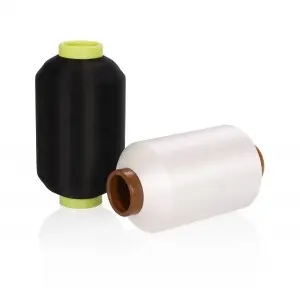
1. Where Recycled Nylon Actually Comes From: rPA6 and rPA66 Feedstock
Before negotiating price, a buyer must understand that recycled nylon is not a single material. The two dominant chemistries, rPA6 and rPA66, draw from different waste streams with very different availability profiles.
Post-Industrial (Pre-Consumer) Sources
Post-industrial feedstock is the workhorse of today’s recycled nylon supply. For rPA6, the largest volumes come from offcuts of warp knitting, texturizing waste, and discarded fishing nets collected through certified marine programs. For rPA66, the dominant post-industrial stream is scrapped airbag fabric, which is remarkably clean and consistent because it is a single-polymer, single-dye stream with minimal contamination. Industrial offcuts from weaving and twisting plants are also reprocessed, but their quality depends heavily on whether the scrap was segregated by denier and finish at the source.
Post-Consumer Sources and Their Availability
Post-consumer rPA6 relies on carpet tile waste, end-of-life fishing gear, and sorted garment fractions. Post-consumer rPA66 is scarcer because few consumer products are made of pure 66 in a recoverable form. Availability fluctuates seasonally: carpet recycling volumes in Europe peak in spring renovation cycles, while fishing-net collection depends on coastal collection partnerships that can halt during storm seasons. A mill planning twelve months of steady output should expect at least two feedstock-price reviews per year.
- rPA6 post-industrial: high, stable supply; lower price volatility; often 10-20% cheaper than post-consumer grade.
- rPA6 post-consumer: variable supply; requires stricter sorting; commands the strongest sustainability narrative.
- rPA66 post-industrial: dominated by airbag scrap; excellent consistency but limited total volume.
- rPA66 post-consumer: minimal commercial availability; mostly pilot scale.
2. GRS Certification Chain and the Transaction Certificate (TC)
GRS (Global Recycled Standard) is the certificate buyers ask for by default, but many procurement teams confuse the scope of the logo with the document that actually matters at customs and audit time: the Transaction Certificate.
How the Chain of Custody Works
GRS certification covers every node that touches the material, from the recycler who produces the chip, through the spinner who melts and draws the filament, to the trader who reels it. Each certified site holds a valid scope certificate issued by an approved certification body. The chain is only as strong as its weakest uncertified link: a single uncertified texturizing subcontractor can invalidate the recycled claim for the whole order.
The Transaction Certificate in Practice
A scope certificate proves a site is certified; a Transaction Certificate (TC) proves a specific lot moved between two certified sites. The buyer’s TC must list the same product, weight, and certified standard as the seller’s outgoing TC. Common errors that delay shipments include mismatched net weights (TCs must reflect actual shipped mass, not nominal order quantity), incorrect product descriptions, and TCs issued after the goods have already left the port. Request the draft TC at the booking stage, not at the document settlement stage.
- Verify the certification body is on the Textile Exchange approved list before signing.
- Match batch numbers on the TC to the physical lot labels on the cartons.
- Keep the TC valid for the full claim period; most brands require archived TCs for three years.
- Confirm recycled content percentage on the TC matches the percentage on your product claim.
Tip: Always request the draft TC at booking stage and reconcile batch numbers against physical carton labels before final payment, because a mismatched weight or product description is the single most common reason a recycled claim gets rejected at brand audit.
3. Quality Fluctuation: Strength, Dye Uptake and the Virgin Gap
The most expensive surprise in recycled nylon sourcing is not the price, it is the lot-to-lot variation that shows up only after knitting and dyeing. Understanding the gap versus virgin filament lets a mill build realistic tolerances.
Tenacity and Elongation Drift
Mechanically recycled rPA6 typically runs 5-15% below virgin tenacity at the same denier, with elongation varying by 3-8 percentage points between batches depending on the molecular weight of the recovered chip. rPA66 from airbag scrap holds strength close to virgin, often within 3%, because the input stream is clean. A mill producing 70D/24F activewear fabric should specify a minimum tenacity of 4.0 cN/dtex for recycled and accept a CV (coefficient of variation) across lots of no more than 4%.
Dye Uptake (Exhaustion Rate) Differences
Recycled chips carry residual oligomers and trace finishes that change dye affinity. The same disperse or acid dye recipe can shift exhaustion by 4-12% between a virgin lot and a recycled lot, and by 2-6% across recycled lots. This is the root cause of shade variation that no color-matching light can fully predict. Pre-screening each incoming lot with a small exhaust trial saves more money than any price negotiation.
Dealing With the Gap
- Set incoming acceptance limits wider than virgin, but document them in the purchase spec.
- Blend recycled lots within a controlled ratio rather than running single-lot claims where possible.
- Use a fixed dyehouse recipe per supplier lot, not a single house standard for all recycled.
- Prioritize airbag-derived rPA66 where strength-critical panels are knitted.
4. Spin-Dyed (Solution-Dyed) Recycled Filament: A Real Opportunity
Solution dyeing injects pigment into the polymer melt before spinning, eliminating the exhaust dye bath. For recycled nylon this is more than a sustainability win, it is a consistency win. Because color is locked into the filament, the shade variation that plagues post-dye recycled lots largely disappears. A mill can achieve DE under 0.8 between production runs versus DE of 1.5-2.5 typical of piece-dyed recycled. The trade-off is minimum order quantity: spin-dyed recycled usually starts at 300-500 kg per color, versus 50-100 kg for white yarn that you dye yourself. For steady-selling base colors in socks and sportswear, the math favors solution dyeing within two to three production cycles.
5. Price Premium and Brand Claim Value
Recycled nylon filament typically carries a 15-40% premium over virgin, with post-consumer rPA6 at the top of that band and post-industrial rPA66 near the bottom. The question a procurement lead must answer is whether the premium is recoverable.
Building the Claim-Value Model
A practical model separates hard cost from resale value. If recycled 70D yarn costs USD 3.20/kg versus USD 2.40/kg virgin, the delta is USD 0.80/kg. On a garment using 180 g of yarn, that is roughly USD 0.14 of extra material cost. If the brand’s “made with recycled content” claim supports a USD 2-4 retail premium or unlocks a sustainability-driven wholesale account, the delta is easily justified. Buyers should ask suppliers for a documented recycled-content percentage tied to the TC, because the claim value scales with verified content, not with marketing language.
- Calculate premium as a per-garment delta, not a per-kg delta, to frame the conversation with finance.
- Tie the negotiated price to the verified recycled percentage on the TC.
- Reserve the highest-premium post-consumer claims for hero products with strong storytelling.
- Use lower-premium post-industrial recycled for core volume styles.
6. Blend Ratio and the “100% Recycled” Claim Threshold
The phrase “100% recycled” is the most audited claim in the category and the easiest to lose. GRS allows a small amount of non-recycled input for technical reasons, but the on-product claim must reflect certified recycled content precisely.
Reading the Threshold
A yarn labeled “100% recycled” must contain 100% certified recycled fiber; there is no tolerance for virgin additions under that wording. A “recycled blended” or “made with recycled” claim can include a lower percentage, commonly 20%, 50%, or 80%, each of which must be backed by the TC. Many mills blend recycled nylon with a small elastane or with bio-based nylon for performance; in that case the recycled percentage drops and the claim wording must drop with it. Mismatched claims, where the hangtag says 100% but the TC says 70%, are the leading cause of retail pullbacks.
7. Testing and Lot Control: Tenacity, Color Difference, Evenness
Consistency is engineered through incoming testing, not hoped for at the finishing line. A disciplined mill runs three checks on every recycled lot before it enters production.
Core Test Panel
- Tenacity and elongation: single-filament and bundle test per lot; reject lots outside the agreed CV band.
- Color difference (DE): measure against an approved master using a spectrophotometer; target DE below 1.0 for piece-dyed, below 0.8 for spin-dyed.
- Evenness (CV of linear density): aim for Uster evenness CV below 1.2% for 70D recycled filament; higher CV signals poor melt filtration.
- Oligomer and finish check: verify residual oligomer level to predict dyeing behavior.
Batch Control Discipline
Assign a single lot identity from chip to carton, store lots separately, and issue yarn to knitting in lot-sequence order. When a shade drift appears, the ability to trace it to one certified lot, and to the matching TC, converts a quality incident into a supplier negotiation rather than a production stoppage.
8. Application Scenarios: Sportswear, Socks, Swimwear
Different end uses tolerate recycled variation differently, and matching the feedstock to the use is the cheapest quality control you have.
Sportswear
Activewear needs balanced strength and stretch recovery. Airbag-derived rPA66 performs well in high-abrasion panels, while rPA6 works for liners and lightweight knits. Specify minimum tenacity per the fabric’s abrasion test, and prefer spin-dyed recycled for team-color consistency across seasons.
Socks
Sock mills are the most forgiving adopters: thicker gauges hide minor evenness variation, and the recycling story resonates with outdoor and workwear brands. rPA6 post-industrial at 70-150D is the volume sweet spot, with solution-dyed black and navy as the anchor colors.
Swimwear
Swim fabric demands chlorine resistance and low shrinkage, which pushes buyers toward rPA66 or a recycled-nylon with stabilized polymer. Piece-dyed recycled here requires tighter DE control because solid bright colors expose shade drift immediately. Pre-test shrinkage at 98C before committing to a bulk dye lot.
9. Supply Security and Traceability: Mechanical vs Chemical Recycling
The long-term risk in recycled nylon is not price, it is whether the feedstock will still be there next year. Two recovery routes shape this risk.
Mechanical Versus Chemical Recovery
Mechanical recycling melts and re-extrudes sorted polymer; it is cheaper and dominates today’s rPA6 supply, but each cycle shortens molecular chains, capping how many times fiber can be reused and limiting strength. Chemical recycling depolymerizes nylon back to monomer and rebuilds it, restoring near-virgin properties and enabling true circularity, but at higher cost and lower current capacity. For procurement planning, mechanical recycled secures price; chemically recycled secures performance and a defensible long-term claim.
Traceability of Post-Consumer Waste
A mill’s audit exposure rises with the share of post-consumer content, because proving origin is harder than proving a factory offcut. Require suppliers to document collection geography, sorting method, and the certification of the upstream collector. A transparent post-consumer chain, even at a 20% blend, often carries more brand value than an opaque 100% post-industrial claim.
Frequently Asked Questions
Is rPA66 worth the higher cost versus rPA6?
For strength-critical or heat-exposed applications such as swimwear and technical sports panels, rPA66 from clean airbag scrap justifies its premium through lower tenacity loss and better dimensional stability. For liners andSock bodies, rPA6 is usually the better value.
How many TCs do I need for one shipment?
One incoming TC from your direct supplier per certified lot, matched to that supplier’s outgoing TC. If the yarn passed through a trader, you need the trader’s TC linking back to the spinner’s TC, so a single physical lot can require two or three linked certificates.
Can I mix virgin and recycled and still claim recycled?
Yes, but the claim percentage must equal the certified recycled percentage on the TC. You cannot say “100% recycled” if virgin was added for elastane or performance, and you should downgrade the wording to “made with recycled” at the verified level.
What is the safest first recycled order for a mill?
Start with post-industrial rPA6 in a spin-dyed base color at a controlled volume, build your incoming test panel, and only move to post-consumer and piece-dyed claims after two successful production cycles.
Does solution dyeing remove the need for DE testing?
No. Spin-dyeing reduces shade variation dramatically but does not eliminate it; you should still measure DE per lot and keep the spectrophotometer record for audit defense.
Related Pages
- Hot Melt Yarn vs Adhesive Film
- Low Melting Yarn vs Regular Yarn
- Bulk Yarn Order Timeline Explained
- Yarn Bulk Order Planning Guide
Ready to source GRS-certified recycled nylon yarn with verified lot control and a transparent cost model for your mill?
Post time: Oct-09-2026