
PA11 Yarn Dyeing: Temperature Windows and Color Fastness
When a fabric mill moves a bio-based PA11 program from lab dips to bulk production, the most common source of shade drift is rarely the dyestuff. It is the temperature profile the yarn actually experiences in the dye house. PA11 has a different thermal and chemical makeup than PA6 or PA66, and running it on a nylon 6 curve is a dependable way to get uneven exhaustion, flat shade, and wash fastness complaints downstream. This guide gives sourcing and dye-house teams a working framework: the temperature window to target, how PA11 differs from conventional nylons, why DTY and FDY take color differently, which fastness tests belong in a purchase contract, how to keep batch shade under control, and which documents to verify before approving a bio-based claim.
Treat every figure here as a starting point for a lab trial, not a guaranteed set point. Values depend on denier, texturizing history, package density, equipment, and dye class.
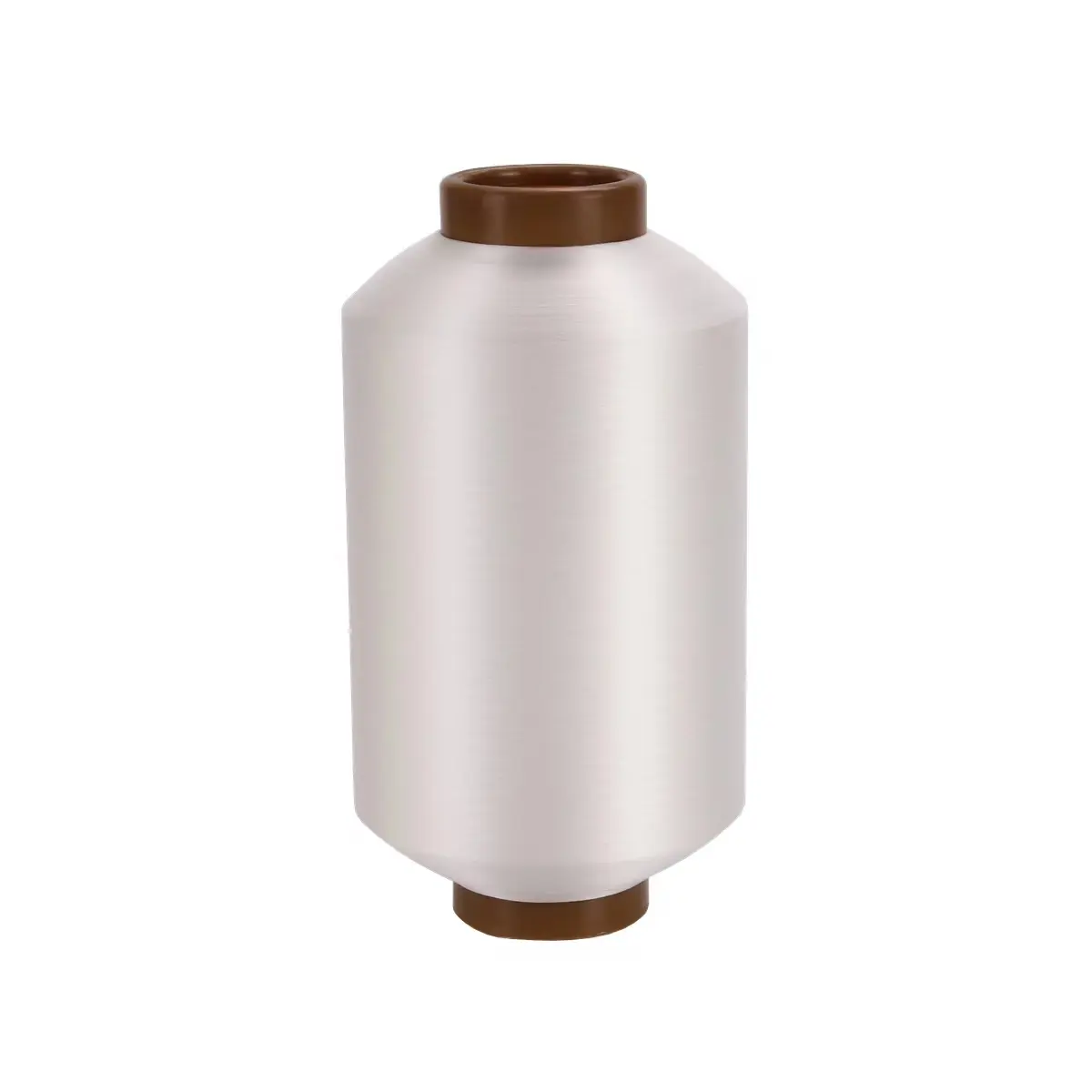
Why PA11 Behaves Differently in the Dye Bath
PA11 is a long-chain polyamide derived from a bio-based feedstock. Its repeat unit carries a much longer hydrocarbon segment between amide groups than PA6 or PA66. That structural difference explains most of what you observe at the machine.
- Lower amide group density means fewer sites for acid dyes to attach to. The same dye concentration that produces a deep shade on PA6 often yields a lighter, flatter shade on PA11.
- Lower moisture regain means slower wet-out. Wetting agents and a controlled ramp-up matter more than many mill teams expect.
- Lower thermal transitions narrow the gap between “dye can diffuse” and “yarn can be damaged,” which makes temperature discipline more important, not less.
The practical takeaway: do not copy a PA6 time-and-temperature curve. Build the curve from the yarn’s own behavior, then write it into the specification.
The PA11 Dyeing Temperature Window
Two thermal landmarks frame the process. The first is the glass transition temperature, where the amorphous structure opens enough for dye molecules to diffuse. The second is the point at which heat setting or mechanical tension locks the yarn into a state that resists further dye uptake. The usable window sits between them.
In practice, many mills find useful exhaustion somewhere in the range of 85 to 98 C at atmospheric pressure. Deeper shades may justify pressure-assisted temperatures above that, but every increase must be balanced against the risk of setting the yarn unevenly. PA11 melts at a lower temperature than PA6 or PA66, so there is less margin for error than a conventional nylon operator is used to.
Build the recipe around three controls. Ramp rate governs whether the package heats evenly from surface to core, hold time governs whether dye migrates into the fiber rather than sitting on the surface, and cooling rate governs whether the shade stabilizes. Change any one and the shade changes, even if peak temperature stays identical.
Tip: Log the temperature at the yarn package core during your first bulk runs, not just the machine set point, because a small gap between the two is a common cause of drift that no dye recipe can correct.
PA11 vs PA6 and PA66: What Changes in the Dye House
Buyers often ask whether PA11 can simply replace PA6 on an existing line. The honest answer is that it can, but not without adjusting expectations and settings. The comparison below is the one we recommend putting in front of the dye-house manager before approving a trial.
- Dye site availability. Fewer amide groups per unit mass mean lower color yield. Expect to reformulate depth rather than reuse a PA6 recipe at the same concentration.
- Heat history. PA6 and PA66 tolerate higher setting and ironing temperatures. PA11 rewards a gentler approach, especially where the yarn has already been texturized.
- Water and chemistry. Lower moisture regain changes wet-out behavior, so review the wetting and leveling system as a whole.
- Dimensional response. Shrinkage and relaxation differ, which affects how a knitted or woven panel looks after the first hot wash.
None of these points makes PA11 difficult to work with. They simply mean that the exhaust dyeing window should be validated on the exact yarn you intend to buy, not inferred from a generic nylon chart.
DTY vs FDY Dye Uptake Behavior
Texturized DTY and flat FDY filament rarely dye to the same visual depth, even from the same feeder yarn and the same recipe. Understanding why helps you set realistic acceptance criteria for each form.
FDY presents a smoother, more uniform surface. Dye uptake tends to be even along the length, so shade consistency between packages is usually easier to achieve. The trade-off is that any surface irregularity is visible, and high-luster filaments can make depth look different under varying light.
DTY has been drawn, texturized, and heat set, so its structure carries more memory. Crimp development and residual stress influence how dye penetrates the filament bundle. Two DTY lots with the same denier can dye differently if their heat setting temperature history differs. This is the mechanism behind many barre complaints, and it is why you should ask the supplier to keep setting conditions constant across a program rather than optimizing them lot by lot.
- For DTY, approve shade on knitted fabric made from a production-scale package, not on a small lab skein.
- For FDY, pay extra attention to luster and package build, since these drive apparent depth more than actual dye concentration.
- For either form, condition samples before comparison so that moisture differences do not distort the reading.
Color Fastness Standards to Write Into the Spec
Color fastness is where an attractive lab dip turns into a rejected shipment. Name the exact test method and the minimum color fastness rating in the purchase specification, and require the report to state the method version.
- Wash fastness: ISO 105-C06 or AATCC 61, with the test conditions specified rather than just the standard number.
- Rubbing or crock fastness: ISO 105-X12 or AATCC 8, reported separately for dry and wet conditions.
- Light fastness: ISO 105-B02 or AATCC 16, with the exposure endpoint agreed in advance.
- Perspiration fastness: ISO 105-E04 or AATCC 15, particularly for activewear and skin-contact programs.
- Water fastness: ISO 105-E01, useful as a quick check on unfixed surface dye.
Ask for ratings on both color change and staining of adjacent fabrics, because a yarn can hold its own shade while still transferring dye onto a neighboring panel. For deep shades, lower wet rub ratings are common, so agree on a realistic threshold by shade depth.
Batch-to-Batch Shade Control
Consistency is a process outcome, not an inspection outcome. The mills that get the fewest claims tend to control a small set of variables tightly and document them for every lot.
- Fix the dye recipe, the ramp profile, and the liquor ratio, and record any deviation rather than correcting it silently.
- Compare each new lot against a retained physical standard under agreed lighting, not against the previous lot.
- Keep texturizing and heat setting parameters stable, since their drift shows up as shade drift later.
- Define an acceptable delta tolerance in the contract and state the measurement geometry and illuminant used to determine it.
When a shade mismatch appears, work backward: yarn lot, setting history, package density, bath temperature log, then chemistry. Jumping straight to a dye correction often hides the real cause.
Procurement Spec Checklist for Fabric Mills
Before releasing a PA11 order, confirm that the specification covers the following items in writing. A short checklist prevents most of the disputes that otherwise surface at incoming inspection.
- Fiber content, bio-based content basis, denier, filament count, and yarn form (DTY or FDY).
- Recommended dye class, together with the supplier’s trial temperature range and ramp guidance.
- Heat setting conditions and the tolerance the supplier will hold between lots.
- Agreed fastness tests, method versions, and minimum ratings by shade depth.
- Package type, package weight, and winding tension limits that affect dye penetration.
- Shade standard handling: who holds the master standard, how it is stored, and how long it remains valid.
- Inspection sampling plan and the process for raising a claim if a lot falls outside tolerance.
Verifying Sustainability Certification Files
Bio-based claims are easy to print and hard to substantiate. Treat documentation as part of the purchase decision and check the chain of evidence rather than accepting a logo at face value.
- Request the certificate directly from the issuing body or through its verification portal, and confirm that the scope covers the specific product form you are buying.
- Check the validity dates and the site address, since a certificate for a different facility does not cover your yarn.
- For bio-based content, ask which test method was used and whether the reported figure is measured on the finished yarn or calculated from feedstock.
- If a mass balance documentation route is claimed, ask how the allocation is recorded and whether the bookkeeping has been independently audited.
- Keep the files with the purchase order so that a future buyer or brand audit can trace the claim back to its source.
Frequently Asked Questions
Can PA11 yarn be dyed on the same equipment as PA6?
Usually yes, after a thorough clean and a revised temperature profile. The equipment is rarely the constraint; the recipe and the heat history are.
Why does my PA11 shade look lighter than the PA6 standard?
Lower amide group density reduces dye site availability. Reformulate for depth instead of assuming a color match at equal dye concentration.
What causes barre in dyed DTY PA11 fabric?
Inconsistent heat setting, package density, or texturizing tension between lots. Trace the yarn history before changing the dye recipe.
Which fastness test matters most for activewear?
Wash and perspiration fastness usually carry the most risk, followed by wet rub on deep shades. Confirm the exact conditions with the brand’s test protocol.
How should I compare shades from two different suppliers?
Use one retained master standard, the same lighting booth, and the same conditioning time, then record the measurement settings so the result can be repeated.
Related Pages
- Hot Melt Yarn vs Adhesive Film
- Low Melting Yarn vs Regular Yarn
- Bulk Yarn Order Timeline Explained
- Yarn Bulk Order Planning Guide
Post time: Nov-11-2026