
Nylon Yarn Intermingling, Twist and Lubrication: How Process Parameters Affect Knitting and Weaving Performance for Mills
Most downstream weaving and knitting problems with continuous filament nylon do not start on the loom or the knitting machine. They start earlier, on the draw-texturing line and at the finish applicator, where three process parameters quietly decide whether a yarn will run clean or fight the machine: intermingling, twist and lubrication. For mills buying bio-based PA11 nylon yarn, whether DTY or FDY, the difference between a smooth production week and a week of broken ends is often a small shift in one of these settings that nobody wrote down on the specification sheet. This article focuses on those three processing parameters and how they translate into real knitting and weaving behavior, drawing only on the principles already covered in earlier posts about DTY versus FDY selection and standard physical testing.
Why Continuous Filament Needs Intermingling
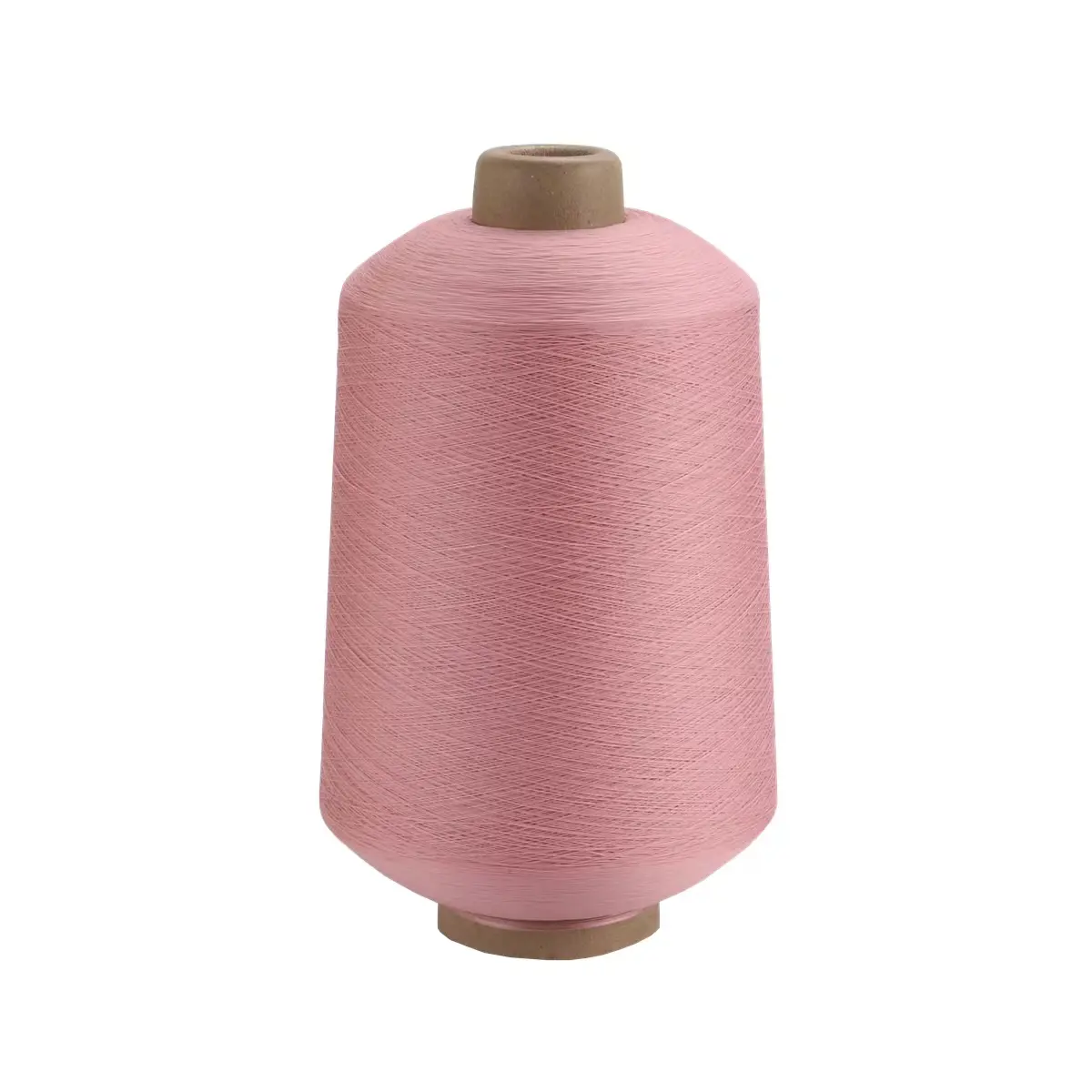
A nylon filament yarn is made of many individual filaments laid side by side. On paper they move together. On a high-speed knitting machine or a weaving loom they do not. Without anything holding the bundle together, the filaments split, spread and wander, and the yarn loses the round, stable cross-section that a knitting needle or a heddle eye expects. Intermingling, sometimes called entanglement, fixes this by injecting compressed air through a jet so that filaments tangle into periodic nodes. These nodes are the reason a multi-filament yarn behaves like a single round thread instead of a loose brush that opens under the slightest disturbance.
 Cohesion and Weavability
Cohesion is the yarn’s resistance to opening up under tension and friction. A cohesive yarn stays bundled as it passes through guides, tensioners and needles, which keeps the path stable and the tension even. Weavability is the practical result: fewer snags, fewer dropped stitches and a cleaner fabric surface. For PA11 in particular, the filament is slightly softer and more flexible than PA66, so cohesion from intermingling matters even more when the yarn runs on fine gauges or lightweight constructions where there is little margin for filament spread.
What Intermingling Does on the Machine
On the knitting machine, intermingling stops filaments from peeling away and wrapping around the needle. On the loom, it keeps the warp sheet flat and prevents fraying at the edges of the beam and at the reed. In both cases the goal is the same: a stable bundle that moves through the machine without fluffing or splitting. When a previously good yarn suddenly starts misbehaving, the intermingling level and its consistency are the first place a mill should look, ahead of blaming the machine or the fabric design.
Nips per Meter: Definition, Measurement and Typical Ranges
Intermingling level is described by the number of entanglement nodes per unit length, usually expressed as nips per meter. One nip is a single point where the filaments have been tangled together by the air jet. Counting them over a fixed length and converting to a per-meter figure gives a number that predicts how tightly the bundle holds together during downstream processing.
How Nips Are Counted
The standard shop-floor method is to lay a short length of yarn on a dark board, dab it with a light oil or a marker so the nodes become visible, and count the nips under a magnifier or a simple measuring graticule. Laboratories use a thicker marker line and a projection screen, counting nodes over a fixed length and converting to nips per meter. Some suppliers report the figure from an online sensor on the texturing machine, which is useful for tracking but should still be confirmed by the manual board method at incoming inspection, because sensor drift is itself a common source of lot variation.
How to Judge the Right Level
There is no single correct number that fits every fabric, and promising one would be misleading. The right level depends on filament count, fabric construction, machine speed and even the humidity of the shed. A useful approach is to define a working range rather than a single point: set a low limit below which the yarn opens up in the machine, and a high limit above which the nodes become visible in the finished cloth. Mills should agree this range with the supplier and re-check it on every incoming lot, because air pressure and jet condition drift over time and across production campaigns.
When Intermingling Is Too Strong or Too Weak
Both ends of the intermingling range create recognizable defects, and learning to read them saves hours of trial and error on the machine.
Over-Entangled Yarn Problems
Too many nips, or nips that are too tight, make the yarn stiff and boardy. The fabric can show faint lengthwise stripes because the nodes take mechanical and dye stress differently from the open sections between them. The hand feel turns hard, and on circular knitting machines the yarn can resist needle loop formation, causing uneven stitches and poor uniformity. Over-entangled PA11 in particular loses the soft drape that makes it attractive for premium knitwear, so pushing intermingling too high is a false economy that trades runnability for fabric quality.
Under-Entangled Yarn Problems
Too few nips, or weak nodes, let the filaments separate. The visible results are filament fly, hairy fabric surfaces, and broken ends as single filaments catch on guides and needles. On the loom this shows as warp fuzz and frequent stops. In knitting it appears as dropped stitches and holes. Both cases raise the end-break rate and lower the acceptable machine speed, which quietly destroys the cost advantage of buying a cheaper, under-specified yarn.
How Intermingling Points Show Up in Dyeing
The nodes created by intermingling are not only mechanical; they also change how the yarn accepts dye, because each intermingling points represents a local compression and surface disturbance of the filament bundle.
Dye Uptake Difference
In piece dyeing, a tightly entangled node may dye a slightly different shade than the relaxed section beside it. For deep, uniform colors this can read as a faint barre or a shadow along the yarn axis that the finisher cannot fully knit out. PA11 has good and reliable dye affinity, but affinity does not remove the physical effect of the node, so the construction still needs to be balanced with the dye recipe and the dyeing profile used by the mill.
Barre and Streak Control
The practical defense is to keep the nips-per-meter level consistent and modest, and to let the dye house know the intermingling level so they can adjust temperature, liquor ratio and leveling agent. Lot-to-lot uniformity of the node pattern is more important than the absolute number, because a stable pattern dyes into a stable cloth while a drifting pattern dyes into a moving target that no recipe can correct.
Twist: Twisted versus Twistless Filament
Twist is the second parameter that decides machine behavior. A twistless or very low-twist filament relies almost entirely on intermingling for cohesion. Adding twist gives the yarn its own internal hold, which changes the trade-off between stability and hand feel.
Twist in Weaving
In weaving, a small amount of twist can improve warp yarn stability and reduce shedding of filaments at the reed. Twist also affects the fabric’s surface, luster and the way it receives finishing. Too much twist, however, makes the yarn lively and prone to snarling, which fights the loom rather than helping it, and it can introduce its own streak defects that are easy to confuse with intermingling problems.
Twist in Knitting
In knitting, a low twist level filament is often preferred for softness and for clean loop formation, especially in single jersey and fine gauges. Adding twist can improve runnability on difficult machines but may stiffen the hand and reduce the smooth drape that PA11 knitters pay for. The choice is a balance between machine stability and fabric feel, and it should be recorded on the spec sheet rather than left to the operator’s intuition on the day.
Twist Direction and Torque in High-Twist Fabrics
When twist is increased for strength or surface effect, the direction of twist and the resulting torque become visible in the finished fabric, and this is where many mills first meet the problem of snarl.
Snarl and Skew
A high-twist yarn stores torque. When it is cut or relaxed it wants to twist back on itself, producing snarling at the yarn end and skew or spirality in the fabric. In knitted panels this shows as a diagonal lean that is hard to correct after finishing without expensive re-steaming. In woven fabric it can appear as a slight curl at the selvedge or as a biased twist in the yarn that reads as a visual defect under raking light.
Mitigation
Mitigation is practical rather than mysterious: balance twist direction between plies where used, relax the yarn before knitting, and avoid over-twisting for the chosen construction. Where skew is a known risk, run a small panel and measure the lean before committing a full order. PA11′s lower modulus makes it comfortable to handle but also means torque relief shows quickly, so the twist level must be chosen with the end fabric in mind rather than copied from a PA66 habit.
Spin Finish and Lubrication: Antistatic, Smoothing, Cohesion
The third parameter is the spin finish, sometimes called the lubricant or coning oil, applied as a thin film on the filament surface. It is easy to ignore because it is a fraction of a percent of the yarn weight, but it controls how the yarn slides, charges and holds together on the machine, and it follows the yarn into wet processing.
Three Jobs of Finish
First, the finish controls static electricity, which on a dry, fast machine can otherwise make filaments repel and fly. Second, it provides a smooth, low-friction surface so the yarn glides through guides and needles instead of grabbing and building heat. Third, it adds a mild cohesion that supports the intermingling nodes and keeps the bundle closed between them. All three jobs are load-dependent: too little and the machine fights the yarn; too much and the finish itself becomes the problem that the next section describes.
PA11 versus PA6 and PA66 Finish Behavior
Finish behavior is not identical across nylon types. PA11 has a different surface energy and moisture response than PA6 or PA66, so the same finish recipe can sit differently on the filament and release differently in the bath. PA66 tends to run hotter and can stress the finish more on the texturing line, while PA6 is more hydrophilic and can hold more surface moisture that changes apparent lubrication from hour to hour. PA11 usually needs a finish chosen for its bio-based, lower-modulus character, and mills should not assume a PA66 finish formula transfers directly across materials without re-testing both runnability and dye result.
Over-Lubrication and Under-Lubrication Symptoms
Too Much Finish
Excess finish shows up as a white powder, often called white dust, on the yarn and on machine parts. It builds up on rollers and guides as a sticky residue, and on knitting machines it can bake onto the needle into a hard coke that stops the needle from moving freely and leaves vertical lines in the fabric. In dyeing, leftover oil becomes oil spots or uneven shade, because the finish blocks dye where it sits and resists the scour bath that should remove it first.
Too Little Finish
Too little finish lets static build, so filaments spread and the yarn chatters through guides instead of sliding. End breaks climb, the fabric surface gets hairy, and the machine needs constant cleaning that steals production time. Both extremes are avoidable if the finish pickup is measured at incoming inspection rather than guessed from how the cone looks, because visual appearance is a poor proxy for the actual oil weight percent.
Finish Washability and Downstream Wet Processing
A finish that cannot be removed cleanly will follow the yarn into scouring and dyeing and leave its mark on the cloth. Washability matters because the dye house first has to strip the finish before the fiber can absorb color evenly. A finish that emulsifies easily in a warm alkaline scour leaves a clean, uniform base. A finish that is stubborn leaves streaks and requires longer or hotter baths, which costs energy, slows the line and can shift the final shade in ways that are hard to repeat.
For PA11, the finish should be selected so it washes out within the normal scour window without aggressive chemistry that would dull the hand or affect the bio-based chain. PA6 and PA66 often tolerate a wider range of wash conditions, so a mill moving between these materials should reconfirm the scour recipe rather than carry one setting across all of them. Documenting the finish type on the specification sheet lets the dye house plan the bath instead of discovering the residue on the first sample, which is exactly when a costly shade claim tends to appear.
Lot-to-Lot Consistency: Intermingling and Finish Drift
Two yarns with the same denier and filament count but different intermingling or finish from separate batches will not run the same. This is one of the most common causes of the familiar complaint that a yarn worked perfectly last time and then failed on the next delivery.
The drift comes from small changes in air-jet pressure, finish bath concentration and applicator roller wear that are invisible on a spec sheet that only lists denier and filaments. A lot with five percent more finish pickup can run faster but dye lighter; a lot with slightly tighter nips can knit cleaner but show faint streaks. The defense is to treat lot-to-lot consistency as a measured property, not an assumption, and to keep a running record of nips-per-meter and finish pickup per batch so trends are caught before they reach the loom rather than after they have already scrapped a roll of fabric.
Pre-Weave Verification: Small-Lot Trials, Tension and End Breaks
Before a full order goes on the machine, a short verification run pays for itself many times over, because a rejected roll costs far more than a few kilograms of trial yarn.
Small-Lot Trial Weave
Run a few kilograms on the actual machine and construction you will use in production. Watch the yarn as it unwinds and as it forms loops or passes the reed. A trial on a different machine is better than nothing but is not a substitute for the real line, because guide geometry and speed change the failure mode you are trying to predict.
Tension Variation Observation
Record the tension at several points with a tensiometer. A stable, narrow band means the yarn is behaving; a wandering or spiking tension means intermingling or finish is off, or the package is unwinding poorly. Compare the band against the previous good lot so the difference is measured, not felt, and keep the reading with the lot record for the next shipment.
End-Break Recording
Count end breaks per unit time and keep the number as a hard metric. A break rate that is double the last acceptable lot is a clear signal to stop and inspect the yarn rather than push through and scrap fabric. Pair the break count with a visual check of the machine parts for white powder or needle coke, which points straight at the finish, and with a check of the node pattern, which points at intermingling.
What to Write in the Specification Sheet
Most of the problems above are cheaper to prevent on paper than to fix on the machine. A useful specification for nylon filament should name, at minimum, the parameters that actually decide runnability and dye result:
- Denier and filament count, with an agreed tolerance band.
- Yarn type: DTY or FDY, and draw ratio where it is relevant to the construction.
- Intermingling level as nips per meter, stated as a range rather than a single point.
- Twist level and twist direction, where twist is applied to the product.
- Finish type and target finish pickup, with the wash method noted for the dye house.
- Allowed variation between lots for nips and finish, so consistency becomes contractual.
- Package form and any unwinding direction requirement for the knitting or weaving line.
- Reference test method for each parameter, so both sides measure the same way and disputes are factual.
Writing these down turns a vague request for a good knitting yarn into a reproducible item that the supplier can actually deliver and that the dye house can plan around, which is the real meaning of a workable specification.
Tip: Always confirm the nips-per-meter target and the finish pickup on the same specification line, because changing one without the other shifts both weaving stability and dye uniformity at the same time.
Related Pages
- Hot Melt Yarn vs Adhesive Film
- Low Melting Yarn vs Regular Yarn
- Bulk Yarn Order Timeline Explained
- Yarn Bulk Order Planning Guide
Post time: Oct-21-2026