
Denier and Filament Count Selection for Knit Fabrics: A Nylon Yarn Sourcing Map for Mills and Activewear Brands
For a textile mill or fabric knitter, the term “nylon yarn” on a supplier’s price sheet hides a set of decisions that determine whether the finished fabric will behave on the knitting machine, look right on the retail shelf, and survive the wash cycles a consumer expects. Two numbers do most of the work: the denier and the filament count. Get them wrong and you buy yarn that knits but puckers, drapes but bags, or wicks but pills. Get them right and your bio-based nylon yarn becomes a predictable raw material rather than a variable you argue about at every bulk order.
This guide maps denier and filament count to real knit structures and end uses, with the practical constraints that sourcing managers and technical knitters actually face when specifying PA11, PA56, or conventional nylon filament for activewear, outdoor apparel, and technical textiles.
What Denier and Filament Count Actually Control
Denier is the weight in grams of 9,000 meters of yarn. A 20D yarn is finer than a 70D yarn. It is the single most cited number in a yarn specification because it drives how much material sits in a given length of fabric, and therefore the fabric’s weight, opacity, and hand feel. Filament count is the number of individual filaments bundled into the yarn. A 20D/24F yarn has 24 filaments; a 20D/7F yarn has 7. The same denier with different filament counts produces visibly different yarn: more filaments means a rounder, smoother, softer yarn, while fewer filaments means a flatter, more lustrous, more “wire-like” yarn.
These two variables are not independent in practice. As you drop the denier, you usually cannot keep the same filament count, because each filament would become too thin and fragile for stable knitting. As you raise the denier, you can choose to pack in more filaments for softness or keep them few for a crisp technical look. The pairing you choose is the real specification, not the denier alone.
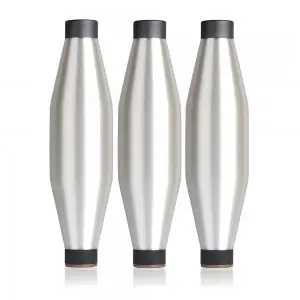
Why the Pairing Matters More Than the Denier Alone
A 40D/34F filament yarn and a 40D/12F yarn of the same polymer will knit into fabrics that differ in drape, pilling, and abrasion. The higher filament count spreads the same mass across more, finer strands, lowering the individual filament diameter and reducing the sharp points that cause pilling. For brands selling next-to-skin activewear, this difference is the line between a fabric that feels premium and one that feels like netting. For mills, it changes tension behavior on the machine and the risk of broken filaments during running.
Matching Denier and Filament Count to Knit Structures
Different knit structures place different demands on the yarn. The map below is a starting point for technical knitters specifying PA11 and PA56 filament from a spinner. Treat it as a first specification to validate on a knitting trial, not a substitute for one.
- Single jersey, lightweight base layers (15-30D): Use 15D/12F to 30D/24F. Low denier keeps the fabric light and breathable; a moderate filament count prevents the yarn from feeling wiry against skin. PA56 works well here because its lower cost supports high-volume base-layer programs.
- Interlock and double-knit activewear (30-50D): Use 30D/34F to 50D/48F. Higher filament counts give the soft hand and opacity that interlock needs, and help the fabric recover after stretch.
- Raschel and warp-knit mesh (20-40D): Use 20D/24F to 40D/36F. Mesh structures expose the yarn surface, so a round, smooth filament reduces snagging and improves the open-cell appearance buyers expect in performance mesh.
- Warp-knit outerwear and technical shells (50-110D): Use 50D/48F to 110D/96F. Heavier deniers build body and abrasion resistance; high filament counts keep the surface smooth under lamination or coating.
- Elasticized plush and fleece backings (40-70D): Use 40D/68F to 70D/136F. Very high filament counts create the lofty, brushed hand that fleece backings need without overloading the knit.
The pattern is consistent: as the knit structure gets denser, heavier, or more surface-exposed, you move up in both denier and filament count, but you move the filament count up faster relative to denier for next-to-skin softness.
Denier Windows for Common Activewear End Uses
Base Layers and Next-to-Skin Tops
For base layers, the target fabric weight usually lands between 110 and 160 gsm. That pulls you toward 20D to 30D yarn. PA56 is a strong fit here because its lower melt behavior and price let mills run high-volume programs without the cost penalty of PA11. The filament count should sit at the higher end of the range for the denier, around 20D/24F or 30D/34F, to keep the surface smooth and reduce pilling during repeated wear.
Leggings and Compression Knits
Leggings need opacity and recovery, which pushes the spec to 40D to 70D with high filament counts (40D/48F to 70D/68F). Recovery in a knit does not come from the nylon alone if elastane is present, but the nylon carrier yarn sets the stability. A low filament count at this denier will look and feel cheap; the buyer will notice the difference in a side-by-side hand test even if they cannot name it.
Outdoor Shells and Wind Layers
Wind layers and lightweight shells prioritize strength-to-weight and a clean surface for lamination. Here a 40D to 70D nylon with a moderate-to-high filament count (40D/34F to 70D/68F) balances durability with a surface that accepts membrane or coating adhesion. PA11 earns its place in this segment because its higher toughness and lower moisture uptake suit exposed outdoor use, even at a price premium.
Filament Count and Pilling, Abrasion, and Luster
Pilling is the failure mode most often blamed on “cheap yarn” when it is actually a filament geometry problem. Sharp, thick individual filaments protrude from the fabric surface, abrade against themselves, and ball up. Raising the filament count at a fixed denier thins each filament, softens the tip, and measurably reduces pilling in Martindale and random-tumble tests. For a brand making a durability claim, this is a specification lever, not a finishing afterthought.
Luster moves the opposite way. Fewer, flatter filaments reflect light more uniformly and give a brighter, more “synthetic sheen” look. If a buyer wants a matte, natural-hand fabric, push the filament count up; if they want a glossy performance look, keep it lower. This is one of the few aesthetic choices you can make entirely in the yarn spec before dyeing and finishing.
Abrasion resistance at the fabric level depends on both the polymer and the filament geometry. PA11′s higher abrasion resistance helps in high-rub zones like pack straps or saddle contact, but a too-low filament count will still allow filament snagging. The two decisions compound, so specify them together.
Yarn Evenness and Knitting Performance
Denier and filament count set the design; evenness determines whether the design runs on the machine. A 40D/48F yarn that varies in actual denier by more than a couple percent will show as barré or stripes in plain jersey and as inconsistent loop size in rib. When sourcing nylon filament from a spinner, request Uster evenness data and a CV% figure, and tie acceptance to it in the purchase contract rather than relying on a visual sample.
Filament count also affects running behavior. Very high filament counts at low denier are more prone to inter-filament tangling if the yarn is not packaged and waxed correctly. Confirm the cone winding type and whether the supplier applies knitting lubricant, because a perfectly specified yarn can still fail on the machine from winding and finish issues alone.
How PA11 and PA56 Shift the Same Denier Spec
PA11 and PA56 are both bio-based nylons, but they behave differently at the same denier and filament count, and that changes how you set the knitting machine and the finishing line. PA11 has higher tensile strength and lower moisture regain, which means it runs with slightly different tension and dries faster off the machine. PA56 has a lower melting point and a softer hand at equivalent denier, which can be an advantage in heat-setting and bonding but a risk if your finishing oven runs hot. When you switch a program from conventional nylon to PA56, keep the denier and filament count but re-validate heat-setting temperature and tension, because the polymer, not the yarn geometry, has changed.
For brands building a sustainability story, the choice between PA11 and PA56 is also a cost and supply story. PA11, typically castor-oil derived, carries a premium and a longer, more specialized supply chain. PA56, often bio-based from renewable feedstocks through a different route, can offer a lower entry cost for high-volume programs. The denier and filament count you choose do not change that economics, but they do change how much yarn weight you need per garment, which feeds directly back into the sustainability and cost math.
Specifying for Dye Lot and Program Consistency
A denier and filament specification only protects you if it is held across the life of a program. The classic failure is a “40D/48F PA56″ that quietly becomes a 40D/44F on the second bulk order because the spinner changed filament spinneret without telling the buyer. The fabric looks almost the same but drapes differently, and the brand’s quality team flags a hand-feel drift that no one can pin down. Hold the filament count as a contracted parameter, not a footnote, and sample-knit every new lot before committing the bulk run.
This is where planning the order matters as much as the spec itself. Buyers who read the yarn bulk order planning guide before negotiating volume tend to lock filament consistency into the supply agreement instead of discovering drift after three deliveries. A multi-lot consistency clause in the purchase order is cheaper than a recall or a re-cut program.
Practical Sourcing Checklist
Before you send a yarn inquiry, confirm these points so the supplier quotes the right yarn rather than the cheapest yarn that matches the denier on paper.
- Target fabric weight and structure (jersey, interlock, raschel, warp-knit shell).
- Required denier and filament count as a pair, not denier alone.
- Polymer choice: PA11 for toughness and low moisture, PA56 for softer hand and lower cost.
- Acceptance CV% for evenness and a contracted filament count tolerance.
- Winding type, cone weight, and whether knitting lubricant is applied.
- Heat-setting and tension parameters validated for the bio-based polymer.
- First-article knit sample accepted before bulk shipment releases.
Tip: Always request the filament count tolerance in writing and sample-knit the first bulk lot before committing the full order, because a small change in filament count can shift fabric hand more than a two-denier change in yarn size.
FAQ
Does a higher filament count always mean a softer fabric?
Within the same denier and polymer, yes, a higher filament count generally produces a softer, rounder hand because each filament is thinner and the yarn surface is smoother. The effect is strongest at low to mid denier used in next-to-skin knits. At very high denier the absolute filament thickness is still larger, so the gain is relative rather than dramatic.
Can I use the same denier spec for PA11 and PA56 without changes?
You can keep the same denier and filament count, but you should re-validate heat-setting temperature, tension, and dye affinity because PA11 and PA56 differ in melting point and moisture behavior. Running PA56 on a PA11 finishing profile risks over-heating and hand changes that show up only after bulk production.
What denier should I specify for lightweight activewear mesh?
For raschel or warp-knit mesh, 20D to 40D with a moderate-to-high filament count (around 20D/24F to 40D/36F) is a practical window. The higher filament count keeps the exposed yarn surface smooth and reduces snagging, which matters because mesh structures leave more yarn exposed than a tight jersey.
How does filament count affect pilling performance?
Fewer, thicker filaments create sharper surface points that abrade and ball up more easily. Raising the filament count at a fixed denier thins each filament and lowers pilling in wear and lab tests. For durability claims, specify a minimum filament count rather than leaving it open.
Why does my fabric show stripes even though the denier matches the sample?
Stripes or barré are usually an evenness or filament-count issue, not a denier issue. If the bulk lot has higher CV% or a different filament count than the approved sample, loop size varies across the fabric. Request Uster evenness data and contract the filament count so the supplier cannot change it silently between lots.
Should I worry about filament count when switching spinners?
Yes. Different spinners standardize on different filament counts for the same denier, and those differences change drape, luster, and pilling. When you qualify a new spinner, knit a trial on your own machine with your finishing profile rather than trusting a lab swatch, and write the accepted filament count into the supply agreement.
Related Pages
- Bulk Yarn Order Timeline Explained
- Yarn Bulk Order Planning Guide
- Hot Melt Yarn vs Adhesive Film
- Low Melting Yarn vs Regular Yarn
When you are ready to translate a denier and filament spec into a running program, the bulk yarn order timeline explained and the yarn bulk order planning guide cover lead times and capacity booking in detail. For bonded or heat-set constructions, the low melting yarn vs regular yarn comparison helps you decide where a bio-based nylon carrier yarn fits alongside thermal-bonding yarns.
Post time: Sep-16-2026