OEM Hot Melt Yarn Manufacturer for Your Brand
Choosing the right OEM partner for hot melt yarn is one of the most critical decisions for brands in apparel, footwear, home textiles, automotive, and technical textiles. A reliable, customized hot melt yarn supplier directly improves product performance, production efficiency, cost stability, and brand competitiveness in global markets.
In this guide, we explain why professional OEM manufacturing matters for hot melt yarn, what to look for in a partner, and how tailored solutions support your brand’s long-term growth.
Table of Contents
- What Is Hot Melt Yarn & Why It Matters for Modern Manufacturing
- Key Benefits of OEM Hot Melt Yarn for Brand Owners
- Core Specifications & Performance Indicators You Should Control
- Customization Options for Your Brand & Applications
- Quality Control & Certification Standards for Global Markets
- How to Select the Best OEM Hot Melt Yarn Manufacturer
- Sustainable & Low-Carbon Hot Melt Yarn Trends
- FAQ: OEM Hot Melt Yarn Partnerships
What Is Hot Melt Yarn & Why It Matters for Modern Manufacturing
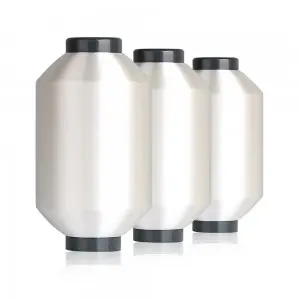
Hot melt yarn (also called low-melt yarn, thermal bonding yarn) is a functional filament that softens and bonds at specific lower temperatures while maintaining structural stability. It replaces traditional adhesives, sewing, or complex lamination processes across many industries.
Unlike standard filaments, hot melt yarn activates under controlled heat and pressure to create stable, durable bonds without damaging fabrics or components. This makes it ideal for:
- Shoe uppers, midsoles, and structural bonding
- Lace, underwear, intimate apparel, and seamless wear
- Suit linings, collars, cuffs, and interlinings
- Sofa fabrics, cushions, and home textile composites
- Automotive interiors, filters, and technical textiles
For brands, consistent hot melt yarn performance means fewer defects, faster production lines, longer product lifespans, and better end-user satisfaction.
Key Benefits of OEM Hot Melt Yarn for Brand Owners
OEM cooperation with a specialized manufacturer gives brands full control over material design without heavy investment in spinning lines, R&D, or certification.
1. Full Customization to Match Your Process
Adjust melting point, tenacity, shrinkage, color, fineness, and cross-section to fit your machinery, temperature settings, and product structure.
2. Stable Quality & Batch Consistency
Uniform diameter, bonding strength, and color stability reduce rejection rates and streamline mass production.
3. Cost Efficiency & Flexible MOQs
Balanced bulk pricing and reasonable minimum order quantities support both small-batch testing and large-scale rollouts.
4. Faster Development & Time-to-Market
Professional R&D teams accelerate sample approval, shorten testing cycles, and help you launch products faster.
5. Compliance & Global Certifications
Ready-to-use certifications simplify customs clearance and market access in Europe, North America, and other regions.
Core Specifications & Performance Indicators You Should Control
When developing OEM hot melt yarn, focus on these measurable parameters to ensure production stability.
| Parameter | Typical Range | Why It Matters |
|---|---|---|
| Melting Temperature | 70°C – 130°C | Determines bonding heat settings; avoids damaging delicate fabrics |
| Fineness (Denier) | 20D – 300D | Matches weaving, knitting, sewing, or embroidery equipment |
| Tenacity | 2.5 – 4.5 cN/dtex | Ensures strength during high-speed processing |
| Shrinkage | <5% | Prevents deformation after heating and washing |
| Color Fastness | 4–5 Grade | Maintains appearance after dyeing, washing, and usage |
| Bonding Strength | ≥8N | Ensures durable adhesion in finished products |
These values directly affect yield, processing speed, and product durability. A professional OEM manufacturer will help you optimize them.
Customization Options for Your Brand & Applications
Top OEM manufacturers offer flexible customization to match your brand identity and technical needs.
Material Base
- Nylon low-melt yarn
- Polyester low-melt yarn
- Bio-based PA11 hot melt yarn
- Copolymer modified thermal fuse yarn
Structure & Form
- FDY (fully drawn yarn) for weaving and sewing
- DTY (draw textured yarn) for knitting and fabrics
- POY, composite yarn, and special functional variants
Performance Customization
- Precise melting point control
- High-adhesion formula
- Low-shrinkage, high-stability
- Low-temperature activation for sensitive materials
- UV-resistant, anti-static, wash-resistant
Appearance & Branding
- Custom colors and dyeing standards
- Semi-dull, bright, or matte finish
- Custom packaging and labeling
Quality Control & Certification Standards for Global Markets
Serious OEM hot melt yarn manufacturers maintain strict quality systems to meet international buyer requirements.
Common certifications include:
- ISO 9001 Quality Management System
- OEKO‑TEX Standard 100
- RoHS Compliance
- SGS Testing & Inspection
Quality control covers:
- Raw material inspection
- Online process monitoring
- Spinnability and bonding tests
- Shrinkage and color fastness tests
- Final batch inspection before shipment
Stable QC protects your brand reputation and reduces after-sales risks.
How to Select the Best OEM Hot Melt Yarn Manufacturer
Not all suppliers are equal. Use these criteria to evaluate partners:
1. Professional R&D & Technical Support
Look for in-house labs, testing equipment, and engineers who understand textile processing.
2. Mature Production & Stable Supply
Modern spinning lines, consistent capacity, and on-time delivery reduce production disruption.
3. Flexible OEM & ODM Service
Support for formula development, sample making, small-batch trials, and mass production.
4. Global Export & Compliance Experience
Familiarity with international standards, logistics, and customs documentation.
5. Long-Term Cooperation Mindset
Willingness to optimize together, improve costs, and protect your intellectual property.
The right manufacturer becomes an extension of your brand, not just a vendor.
Sustainable & Low-Carbon Hot Melt Yarn Trends
Sustainability is now a core requirement for global brands. Modern OEM manufacturers provide eco-friendly options:
- Bio-based PA11 yarns with lower carbon footprint
- Low-temperature bonding to save energy
- High-durability formulas that reduce microplastics and extend product life
- Clean production and waste reduction
Brands using sustainable hot melt yarn gain stronger market positioning and consumer trust.
FAQ: OEM Hot Melt Yarn Partnerships
What’s the difference between OEM and standard hot melt yarn?
OEM yarn is fully customized to your melting point, strength, color, and processing needs. Standard stock yarns use fixed parameters and may not fit your line.
How long does OEM sample development take?
Usually 7–15 days after confirming parameters, depending on complexity.
What are typical MOQs for OEM orders?
Flexible MOQs support trial orders and large runs; exact levels vary by specification.
Can you match our existing sample?
Yes. Professional OEMs can analyze and replicate performance from your reference yarn.
Do you support private labeling and packaging?
Yes, including custom logos, labels, cartons, and reels to align with your brand.
Conclusion
Hot melt yarn is a foundational material that shapes product quality, production efficiency, and brand competitiveness. Working with a professional OEM manufacturer lets you control performance, cost, and sustainability while focusing on design, marketing, and growth.
Post time: May-08-2026