
Industrial Applications of Hot Melt Yarn
Manufacturers and material buyers are always searching for high-performance textile solutions that balance durability, sustainability, and cost efficiency. Hot melt yarn has quickly become a game-changing material across global industrial sectors, thanks to its unique thermal bonding properties, stable physical performance, and eco-friendly characteristics. Unlike traditional textile yarns, it eliminates the need for chemical adhesives, streamlines production processes while boosting product longevity and structural integrity.
Understanding the diverse industrial uses of hot melt yarn helps businesses select the right material for production optimization, product upgrading, and sustainable development goals. Each industrial application leverages its core strengths to solve traditional manufacturing pain points, from lightweight design to high-strength bonding and environmental compliance.
Table of Contents
- Core Characteristics of Hot Melt Yarn for Industrial Use
- Key Industrial Application Fields of Hot Melt Yarn
- Performance Advantages of Hot Melt Yarn Over Traditional Materials
- Customization Options for Industrial-Grade Hot Melt Yarn
- Sustainability & Eco-Friendly Value in Industrial Scenarios
- Future Development Trends of Hot Melt Yarn in Industry
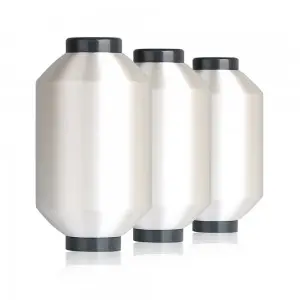
Core Characteristics of Hot Melt Yarn for Industrial Use
Hot melt yarn stands out in industrial manufacturing due to its tailored material properties designed for rigorous working conditions. Its low melting point enables seamless thermal bonding under moderate temperature, requiring no additional glue or chemical binders.
It features high tenacity and strong adhesive solidification, maintaining stable structure under repeated stretching, friction, and temperature changes. With low moisture absorption and excellent abrasion resistance, it reduces particle shedding and extends the service life of finished industrial products. The yarn also delivers outstanding spinnability, supporting high-yield production with low melting temperature, and is compatible with various weaving, knitting, and non-woven processing techniques.
Certified with global industry standards, industrial hot melt yarn meets OEKO-TEX, ROHS, and ISO quality requirements, ensuring safety and reliability for cross-border industrial procurement and mass production.
Key Industrial Application Fields of Hot Melt Yarn
Hot melt yarn has penetrated multiple mainstream industrial sectors, with mature applications covering automotive, medical, construction, filtration, footwear, and home textile industries. Each field utilizes its thermal bonding and high-performance traits for specialized production needs.
| Industrial Sector | Core Application Scenarios | Key Performance Utilized |
|---|---|---|
| Automotive Industry | Car interior liners, seat fabrics, door trim, carpet backing | Lightweight, heat resistance, non-slip bonding, low volatile emission |
| Medical & Healthcare | Medical non-woven fabrics, surgical dressings, elastic bandages | Sterilizable, non-toxic, skin-friendly, stable bonding strength |
| Filtration & Environmental Engineering | Industrial filter cloth, geotextiles, sewage treatment fabrics | Corrosion resistance, high permeability, structural stability |
| Footwear & Apparel | Knitted shoe uppers, lace accessories, suit collars, undergarment webbing | Shape retention, seamless bonding, wear resistance |
| Construction & Home Textiles | Sofa fabrics, carpet fixation, building insulation materials | Anti-deformation, eco-friendly bonding, long-term durability |
| Marine & Aquaculture | Fishing nets, marine engineering textiles | Salt corrosion resistance, high tensile strength |
In automotive manufacturing, hot melt yarn replaces traditional chemical adhesives to bond interior materials, reducing harmful emissions while achieving lightweight vehicle design. For medical applications, its non-chemical bonding feature avoids skin irritation, ideal for disposable and reusable medical textile products.
Industrial filter cloth made with hot melt yarn maintains stable pore structure in high-temperature and corrosive environments, improving filtration efficiency and service life. In footwear production, it enables integrated shaping of knitted uppers, simplifying craftsmanship and enhancing wear comfort and structural durability.
Performance Advantages of Hot Melt Yarn Over Traditional Materials
Industrial manufacturers continuously switch to hot melt yarn for its comprehensive advantages that traditional polyester and nylon yarns cannot match.
First, it removes reliance on chemical adhesives, cutting raw material costs and simplifying production workflows. This also reduces formaldehyde and volatile organic compound emissions, aligning with global industrial environmental regulations.
Second, its thermal bonding creates integrated structural strength without easy delamination or deformation, greatly improving product durability and reducing micro-particle shedding caused by friction. Compared to ordinary yarns, it has lower density and moisture absorption, making finished industrial products lighter and more adaptable to humid and high-temperature working environments.
Third, it supports flexible processing compatibility, suitable for FDY, DTY, POY and other specifications, adapting to various industrial spinning and weaving equipment without additional production line modifications.
Customization Options for Industrial-Grade Hot Melt Yarn
Industrial procurement demands personalized material specifications to fit unique production processes. Hot melt yarn offers rich customizable options for global industrial buyers.
Buyers can customize denier and filament specifications ranging from 20D to 150D to match different weaving and knitting needs. Semi-dull and virgin yarn options are available to meet surface texture requirements of industrial textiles. Melting points can be tailored to specific production temperature processes, ensuring optimal bonding effect without damaging base materials.
Bio-based hot melt yarn variants are also available, combining low-carbon production with industrial performance, suitable for brands and manufacturers pursuing sustainable supply chains. Custom color matching and texture processing further meet the personalized needs of high-end industrial textile products.
Sustainability & Eco-Friendly Value in Industrial Scenarios
Sustainability has become a core consideration in global industrial procurement, and hot melt yarn delivers remarkable eco-friendly value throughout its lifecycle.
Bio-based hot melt yarn reduces carbon emissions by at least 50% compared to conventional PET yarns, lowering the carbon footprint of industrial production. The glue-free bonding process eliminates chemical adhesive pollution, making production workshops more environmentally friendly and compliant with international green manufacturing standards.
Its excellent abrasion resistance extends the service life of industrial textiles, reducing product replacement frequency and resource waste. The material is also recyclable, supporting the circular economy model increasingly adopted by the industrial supply chain.
Future Development Trends of Hot Melt Yarn in Industry
As industrial manufacturing moves toward lightweight, intelligent, and low-carbon development, hot melt yarn will expand its application scope at a steady pace.
High-performance customized hot melt yarn will be widely used in aerospace and new energy industrial textiles, with higher requirements for temperature resistance and tensile strength. Bio-based and fully recyclable hot melt yarn will become the mainstream choice, driven by global carbon neutrality policies.
In addition, the integration of hot melt yarn with intelligent textile technology will create more functional industrial materials, such as temperature-sensing and pressure-sensitive industrial fabrics. The continuous upgrade of spinning technology will also lower production costs, making hot melt yarn accessible to more small and medium-sized industrial manufacturers worldwide.
FAQs
What makes hot melt yarn suitable for industrial mass production?
It features stable physical properties, excellent spinnability, no need for chemical adhesives, and compatibility with most industrial textile processing equipment.
It features stable physical properties, excellent spinnability, no need for chemical adhesives, and compatibility with most industrial textile processing equipment.
Which industrial sectors benefit most from hot melt yarn?
Automotive interiors, medical textiles, industrial filtration, footwear manufacturing, construction geotextiles, and marine aquaculture are the most mature application fields.
Automotive interiors, medical textiles, industrial filtration, footwear manufacturing, construction geotextiles, and marine aquaculture are the most mature application fields.
Is industrial hot melt yarn compliant with global safety standards?
Yes, qualified industrial hot melt yarn passes OEKO-TEX, ROHS, and ISO 9001 certifications, meeting cross-border industrial procurement safety and environmental requirements.
Yes, qualified industrial hot melt yarn passes OEKO-TEX, ROHS, and ISO 9001 certifications, meeting cross-border industrial procurement safety and environmental requirements.
Can hot melt yarn be customized for special industrial needs?
Absolutely. Specifications including denier, filament count, melting point, color, and luster can all be customized to fit unique production processes.
Absolutely. Specifications including denier, filament count, melting point, color, and luster can all be customized to fit unique production processes.
How does hot melt yarn contribute to industrial sustainability?
It reduces carbon emissions, eliminates chemical adhesive pollution, extends product service life, and supports recyclable circular production.
It reduces carbon emissions, eliminates chemical adhesive pollution, extends product service life, and supports recyclable circular production.
Conclusion
Industrial applications of hot melt yarn cover a wide range of sectors, driven by its unique low-melting bonding, high durability, eco-friendly performance, and customizable flexibility. It not only solves traditional manufacturing pain points such as chemical pollution and structural delamination but also supports industrial lightweighting, cost reduction, and green upgrading.
As global industrial manufacturing prioritizes sustainability and high-performance materials, hot melt yarn will continue to expand its application boundaries. For industrial buyers and manufacturers, choosing standardized, customizable hot melt yarn is a reliable way to optimize production processes, enhance product competitiveness, and adapt to evolving global industrial trends.
Post time: May-29-2026