
Hot Melt Yarn in Shoe Upper Manufacturing
Shoe manufacturing professionals are always seeking materials that balance performance, comfort, and production efficiency. The choice of raw yarn directly shapes the quality, durability, and market competitiveness of shoe uppers. Hot melt yarn has gradually become a game-changing material in modern shoe upper production, redefining traditional sewing and bonding processes. Many manufacturers now prefer hot melt yarn for its unique physical properties and eco-friendly advantages, while still more brands are exploring its full potential in lightweight, seamless, and sustainable footwear design.
Understanding the basics of hot melt yarn is essential for anyone involved in shoe upper sourcing and production. Melting temperature, bonding strength, and material compatibility all determine its performance in actual manufacturing. Using yarn with an overly high melting point may damage fabric textures during processing, while a low melting point can lead to unstable bonding and poor durability. The ideal melting range for shoe upper applications sits at a moderate level, enabling stable bonding without compromising the original softness and structure of upper fabrics.
Yarn structure also plays a vital role in application effects. Fully drawn and draw textured variants adapt to different weaving and knitting needs for shoe uppers. Uniform yarn fineness ensures consistent weaving density, which directly affects the seamless fit and overall appearance of finished shoes. Even subtle differences in yarn specifications can greatly impact the comfort and service life of footwear.
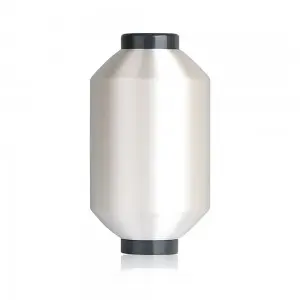
Exploring Key Roles of Hot Melt Yarn in Shoe Upper Making
Hot melt yarn brings irreplaceable value to every link of shoe upper manufacturing, solving multiple pain points of traditional processes. Seamless molding is its most prominent advantage. It replaces traditional needle sewing to eliminate stitching lines and pinholes, delivering a smoother upper surface and upgraded wearing comfort without skin friction from raised seams.
Another core application is layered composite bonding. It firmly adheres multiple fabric layers of shoe uppers, inner linings, and structural accessories. After hot pressing and cooling, it forms high-strength integration that resists peeling even after long-term wear and repeated washing. This simplifies the production process and enhances the overall structural stability of the shoe upper.
Bio-based hot melt yarn has emerged as a standout option for high-end shoe uppers. It features low density and low moisture absorption, keeping footwear lightweight and avoiding deformation caused by moisture absorption during use. It also avoids competing with food resources, perfectly aligning with the sustainable development trend of the global footwear industry.
| Application Role | Performance Feature | Production Advantage | Suitable Shoe Type |
|---|---|---|---|
| Seamless Molding | No stitching lines, smooth surface | Simplify sewing processes, reduce labor costs | Sports shoes, casual sneakers |
| Layer Bonding | High adhesion strength, anti-peeling | Improve upper structural stability | Running shoes, outdoor functional shoes |
| Structural Support | High tenacity, stable physical properties | Enhance upper toughness and shape retention | Fashion sneakers, board shoes |
| Eco-friendly Weaving | Low carbon emission, recyclable | Meet global sustainable procurement standards | High-end brand footwear |
Impact of Hot Melt Yarn Specifications on Shoe Upper Quality
The specification configuration of hot melt yarn directly determines the final quality of shoe uppers. Coarser yarn delivers stronger support, ideal for shoe toe caps, heel supports, and structural parts that require shaping. Finer yarn suits lightweight knitted uppers and lace fabrics, maintaining softness while ensuring subtle bonding effects.
Different types of hot melt yarn also create distinct differences. Nylon-based hot melt yarn boasts excellent abrasion resistance, extending shoe upper service life and reducing micro-particle shedding during use. Polyester variants offer stable dyeing performance, matching diverse color design needs of fashion shoe uppers better than conventional materials. Bio-based PA11 hot melt yarn leads in low carbon performance, cutting carbon emissions by at least 50% compared to ordinary polyester materials.
Consistent yarn quality is critical. Stable physical properties ensure no shrinkage or hardening after repeated hot pressing processing, keeping the shoe upper’s shape unchanged for long-term wear. Certified raw materials comply with international environmental and safety standards, adapting to the quality access requirements of global markets.
Material Compatibility for Optimal Hot Melt Bonding
Matching hot melt yarn with different shoe upper fabrics is key to stable production and quality output. It maintains great compatibility with common materials such as nylon fabrics, polyester cloth, knitted mesh, and elastic braids, realizing integrated weaving and seamless bonding. When matched with high-elastic fabrics, it retains the original stretchability of the material without restricting the flexibility of the shoe upper.
Water quality and processing environment also influence bonding effects in mass production. Moderate water hardness prevents impurities from affecting yarn melting and bonding performance. Clean production environments avoid particle contamination on the upper surface, ensuring a neat appearance of finished products. For manufacturers with large-scale assembly lines, standardized environmental parameter control can significantly improve product yield.
Temperature matching is another key detail. Preheating processing equipment before production stabilizes the hot pressing temperature, avoiding insufficient bonding caused by temperature drop. Adjusting temperature parameters according to fabric thickness and yarn type can achieve the best bonding and forming effect.
Processing Ratios: Finding the Perfect Application Balance
Reasonable blending and usage ratios of hot melt yarn are crucial for balancing shoe upper comfort, strength, and cost. A general guideline is to mix hot melt yarn with conventional yarn in an appropriate proportion during weaving, ensuring both bonding performance and fabric softness. Too high a ratio may make the upper stiff; too low will result in weak bonding and easy layered separation.
Different shoe upper structures require adjusted ratios. Structural support parts need a higher proportion of hot melt yarn to enhance tenacity and shape retention. Comfort-focused areas like shoe tongues and inner linings adopt a lower ratio to maintain soft and breathable wearing experience. Recording optimal ratios for different styles helps form standardized production parameters for batch replication.
It is also necessary to adjust ratios based on yarn raw materials. Bio-based PA11 hot melt yarn has good spinnability and low melting temperature, allowing a flexible blending range. Conventional polyester hot melt yarn needs stricter ratio control to avoid affecting fabric dyeing and texture.
Advanced Techniques to Optimize Hot Melt Yarn Application
Mastering refined processing techniques can fully release the performance advantages of hot melt yarn in shoe upper manufacturing. Precise temperature control is the core—controlling hot pressing temperature within the yarn’s optimal melting range to achieve molecular-level bonding between fabrics without damaging fiber texture.
Controlling processing time is equally important. Reasonable hot pressing and cooling time enable the yarn to fully melt, penetrate the fabric gaps, and then solidify for lasting adhesion. Excessively long time may cause fabric deformation; too short leads to incomplete melting and reduced bonding fastness.
Dyeing synchronization is an advanced advantage of high-quality hot melt yarn. It features easy dyeing, realizing integrated color matching with shoe upper fabrics, avoiding color difference in bonding areas. This eliminates post-color repair processes, improves production efficiency, and elevates the overall grade of finished shoes.
Innovative Value: Hot Melt Yarn Leading Sustainable Shoe Manufacturing
The global footwear industry is shifting toward low-carbon and sustainable development, and hot melt yarn has become an innovative material driving industry upgrading. Bio-based hot melt yarn uses renewable raw materials, avoiding competition with food crops and greatly reducing carbon footprint in the production chain. Its strong abrasion resistance prolongs footwear life, reduces waste generation, and conforms to the circular economy concept.
Meanwhile, hot melt yarn optimizes the production model. It replaces traditional solvent glue and complex sewing processes, achieving pollution-free production with stable physical properties and no harmful substance precipitation. It meets international environmental certification standards and supports brands in accessing high-end global markets.
As consumer demand for comfortable, lightweight, and eco-friendly footwear grows, hot melt yarn will be more widely applied in high-end sports shoes, fashion casual shoes, and functional outdoor shoes. Customized specifications and professional technical support can meet the personalized design and mass production needs of different manufacturers.
FAQs
What is the ideal melting temperature of hot melt yarn for shoe uppers?
The optimal melting range is moderate, adapting to hot pressing processing to ensure firm bonding while retaining fabric softness.
How does hot melt yarn improve shoe upper durability?
It delivers high-strength seamless bonding and excellent abrasion resistance, preventing peeling, deformation and fiber shedding for longer service life.
Is hot melt yarn suitable for lightweight shoe upper design?
Yes, low-density characteristics reduce overall shoe weight, ideal for lightweight sports and running shoe uppers.
Does bio-based hot melt yarn support environmental certification?
Absolutely, it features low carbon emissions, no pollution in production, and complies with mainstream international environmental standards.
Can hot melt yarn match complex shoe upper color designs?
Yes, it has excellent dyeing performance for synchronous coloring with fabrics, no color difference in bonding areas.
Conclusion
This article delves into the application value of hot melt yarn in shoe upper manufacturing, starting with basic material properties, covering core application scenarios, specification influence, material compatibility, processing ratios, and advanced optimization techniques. It also analyzes its innovative value in sustainable footwear development.
Hot melt yarn not only optimizes traditional shoe upper production processes and reduces labor and time costs but also elevates product performance in comfort, seamless texture, lightweight and durability. For global footwear procurement and manufacturing professionals, selecting high-quality hot melt yarn with stable specifications and eco-friendly properties is an important way to enhance product competitiveness and respond to sustainable market trends. Continuous trial of different specifications and processing parameters will help tap more application potential of this material in shoe upper innovation.
Post time: May-23-2026