
The Production Cycle of Low Melting Point Nylon Filament Yarn
Table of Contents
- Understanding Low Melting Point Nylon Filament Yarn Basics
- Raw Material Preparation and Pre‑Treatment
- Melt Extrusion and Spinning Formation
- Cooling, Oiling and Initial Filament Setting
- Drawing, Heat‑Setting and Internal Stress Release
- Winding, Rewinding and Package Forming
- In‑Line & Final Batch Quality Inspection
- Key Factors That Influence Final Yarn Performance
- Common Production Challenges & Practical Solutions
- FAQs
- Conclusion
- Related Posts
Buyers working in textiles, shoe component manufacturing, lace production and composite bonding often rely on low melting point nylon filament yarn for thermal bonding applications. Many sourcing professionals focus on final yarn specifications, yet overlook how each production phase shapes real‑world performance. Small variations across the full production cycle can alter melting temperature, tenacity, heat shrinkage and downstream processing stability. Getting familiar with each production stage helps purchasers evaluate supplier capability, interpret technical datasheets and avoid unexpected failures during weaving, knitting or hot‑press bonding.
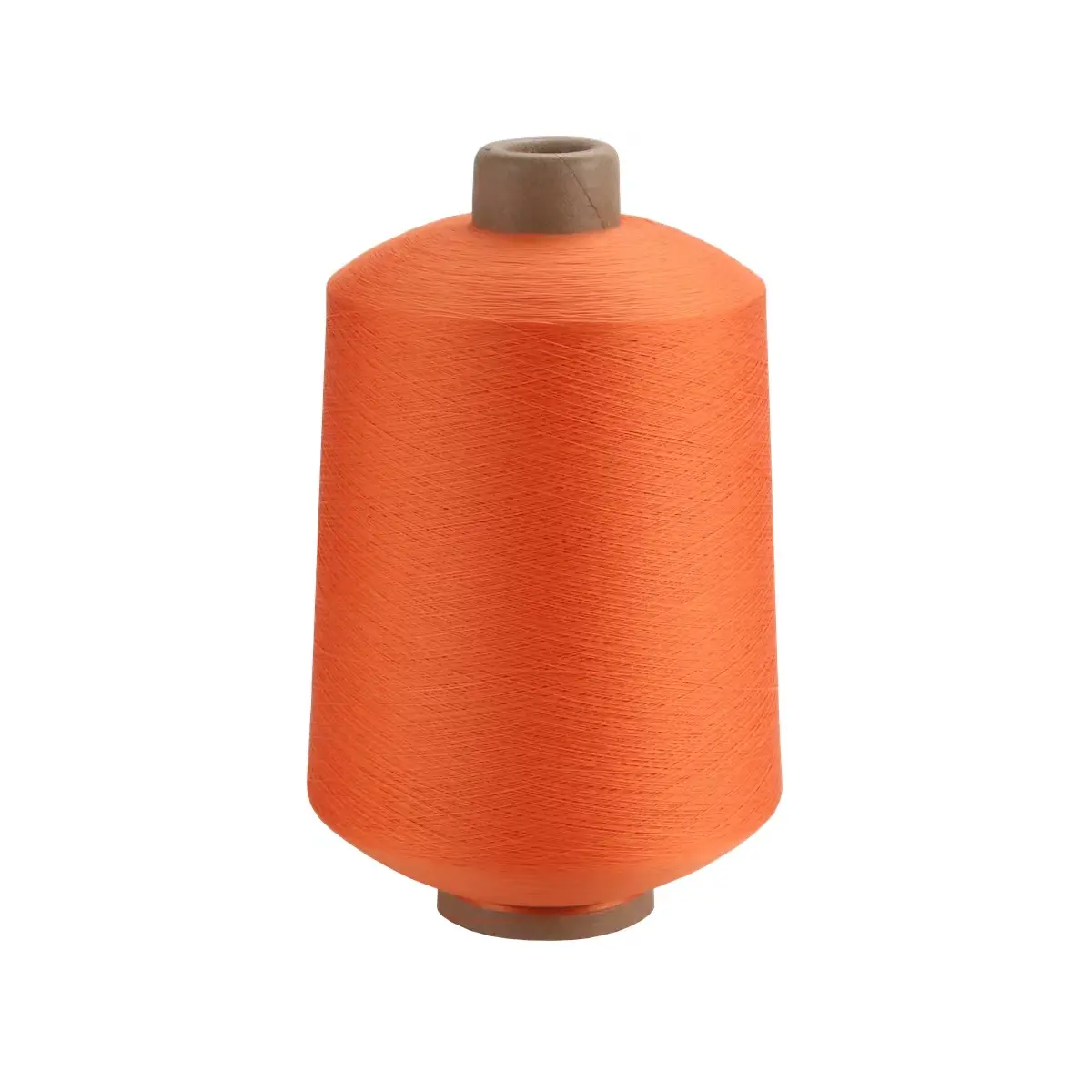
Understanding Low Melting Point Nylon Filament Yarn Basics
Low melting point nylon filament yarn is a modified polyamide material designed to soften and bond at comparatively low temperatures, while retaining core nylon characteristics like flexibility and chemical resistance. Unlike standard PA6 or PA66 filament, copolymer modification breaks polymer chain regularity to bring melting points down to ranges commonly between 90°C‑130°C for most commercial grades.
Its core value lies in thermal activation: when exposed to targeted heat, the outer portion of the filament melts to create adhesive force, while part of the fiber structure can remain intact for mechanical strength. This makes it widely used for shoe uppers, braided cords, lace, interlining, non‑woven reinforcement and composite textile assembly.
Three metrics dominate practical usability: accurate melting temperature, low heat‑shrinkage rate, and consistent breaking tenacity. All three are built step‑by‑step throughout the whole production cycle. Minor process drift in any single phase may cause batch‑to‑batch inconsistency that creates big headaches for converters and end‑product manufacturers.
Raw Material Preparation and Pre‑Treatment
Raw material handling is the starting point of consistent output. Even well‑formulated polymer chips will cause spinning defects without proper pre‑treatment. This phase covers resin selection, formulation adjustment and thorough drying before feeding to extrusion equipment.
Resin selection starts with target end‑use requirements. Manufacturers adjust copolymer ratios to lock in the target melting range. Antioxidants and processing stabilizers are blended in to resist thermal degradation during high‑temperature melt processing. Impurities or inconsistent viscosity inside polymer pellets will create gel particles, filament breaks and uneven denier later on.
Drying represents one of the most critical pre‑treatment steps. Nylon is highly hygroscopic. Any residual moisture above 0.05% will trigger hydrolytic chain‑scission once inside the hot extruder, lowering molecular weight, creating bubbles and causing frequent yarn breaks during spinning. Most facilities apply vacuum or hot‑air circulation drying at moderate temperatures over many hours to bring moisture content within acceptable limits.
Before entering the extruder, material batches go through visual checks and sampling tests to verify intrinsic viscosity, moisture value and melting point. Sub‑standard pellets are rejected at this early stage to reduce waste further down the production line.
Melt Extrusion and Spinning Formation
Fully dried polymer pellets are fed into a screw extruder, where staged barrel heating turns solid chips into homogeneous polymer melt. Temperature zones are precisely controlled; too high will degrade the copolymer, too low results in incomplete melting and poor melt flow behaviour.
The molten polymer flows through fine‑mesh filter assemblies to capture gels, char particles and foreign contaminants. Filtration protects tiny spinneret holes from blockage and delivers uniform melt viscosity to each filament stream.
Filtered melt passes into a metering pump. The metering pump delivers a fixed volume of melt per unit time. Pump output directly defines the final denier of every filament. Fluctuations in pump speed generate uneven thickness across the yarn package.
Under controlled pressure, melt is forced through precision‑drilled spinnerets. Each micro‑orifice extrudes one single molten filament. Spinneret hole count and diameter are matched to the target specification such as 40D/24F,70D/48F and other popular options. At this moment, continuous liquid‑state filament streams are formed, still hot and without stable mechanical strength.
Cooling, Oiling and Initial Filament Setting
Freshly extruded hot filaments move immediately into a controlled quenching chamber. Cool cross‑flow air blows evenly across the filament bundle, rapidly removing heat and turning liquid melt into solid as‑spun filament.
Cooling air temperature, airflow velocity and air uniformity heavily influence crystallinity inside the fibre. Too‑fast cooling creates overly low crystallinity and excessive later‑stage thermal shrinkage. Too‑slow cooling builds high crystallinity, making filaments stiff and prone to breakage in subsequent drawing steps. Well‑managed cooling keeps crystallinity within the target window for low‑melting nylon products.
Once solidified, the filament bundle passes through an oiling applicator. Spin finish oil is applied uniformly over filament surfaces. This oil formulation provides lubrication and antistatic performance. Without proper oil coverage, filaments will rub against guides and rollers, generating static electricity, snags and frequent filament breaks in drawing and winding. Oil pick‑up rate must stay within a narrow range; excess oil creates processing trouble for later knitting or bonding, insufficient oil leads to poor runnability on textile machinery.
After oiling, the as‑spun yarn still has low tensile strength and high residual internal stress. It cannot be used for textile processing in this state and must proceed to drawing and heat‑setting.
Drawing, Heat‑Setting and Internal Stress Release
Drawing (stretching) is where the yarn gains usable mechanical properties. The as‑spun multi‑filament runs over a series of heated godet rollers running at increasing surface speeds. The speed difference between front‑stage and rear‑stage rollers creates controlled stretch on the filament bundle, aligning polymer molecular chains along the fibre axis and raising breaking strength significantly.
For low‑melting nylon grades, drawing temperature and draw ratio demand careful tuning. Excessively high roller temperature risks partial melting of filaments. Too‑low temperature leads to uneven stretching and frequent filament rupture. Draw ratio is adjusted based on target tenacity and elongation values typical for the customer’s application.
Immediately after drawing comes heat‑setting. Heat‑setting eliminates internal stress locked inside stretched filaments. If residual stress remains, finished yarn will shrink severely when customers perform thermal bonding. Well‑executed heat‑setting stabilises dimensions and keeps finished‑product heat‑shrinkage below 3% for most standard specifications.
Different production lines choose hot‑roller setting or hot‑air oven setting according to yarn denier and melting‑point grade. During this whole segment, online monitors track tension. Abnormal tension triggers machine alarms to minimise defective production runs.
Winding, Rewinding and Package Forming
Stabilised, heat‑set low‑melting‑point nylon filament travels to high‑speed winding equipment. Under precisely controlled constant tension, multi‑filament yarn is layered onto bobbins or cones to form finished cross‑wound packages ready for shipment.
Winding tension control is critical. Over‑tight winding compresses inner‑layer filaments and creates unreeling snags for end‑users. Too‑loose winding causes yarn slippage, loops and tangles when customers unwind the cone on looms or knitting machines.
Some orders require secondary rewinding. Rewinding cleans up minor winding defects, corrects package shape, or performs extra functions such as additional oil adjustment or small‑lot colour‑matching. After rewinding, visual operators inspect every cone for surface defects: loose ends, filament fly, damage or contamination. Bad cones get segregated before packing.
In‑Line & Final Batch Quality Inspection
Quality control runs through the complete production cycle, not only as a final‑step check. In‑line sensors continuously monitor tension, yarn evenness and potential filament breakage during spinning, drawing and winding.
Once a full production batch is finished, laboratory sampling begins. Technicians take representative cones from across the production lot to run a full suite of tests:
表格
| Inspection Item | Typical Acceptance Standard | Purpose for Buyers |
|---|---|---|
| Denier Deviation | ±2% of nominal value | Guarantees consistent fabric weight and coverage |
| Breaking Tenacity & Elongation | Matches contract specification | Avoid yarn breakage during knitting, weaving |
| Melting Point (DSC test) | Melting‑point tolerance ±5°C | Ensures predictable thermal‑bonding behaviour |
| Heat Shrinkage | ≤3% under defined test condition | Prevents fabric deformation during hot‑press processing |
| Oil Pick‑up Rate | Formulation‑defined range | Balances runnability and downstream bonding effect |
Batch test reports are generated for traceability. Only batches passing all testing move to packing and dispatch. Failed lots are quarantined for rework or scrapped. For buyers, requesting access to batch test reports is an effective way to verify real‑world product quality before full‑order acceptance.
Key Factors That Influence Final Yarn Performance
Multiple variables across the cycle shape final‑product behaviour. For procurement specialists, understanding these factors supports technical communication with yarn manufacturers:
- Raw‑material copolymer formulation: This sets the fundamental melting‑point range. Even perfect spinning cannot compensate for poorly designed base polymer.
- Moisture control before extrusion: The single most‑common source of spinning instability and reduced yarn strength.
- Melt filtration efficiency: Poor filtration brings gels and weak spots inside filaments.
- Quench‑air uniformity: Directly impacts crystallinity and heat‑shrinkage performance.
- Draw ratio and heat‑setting temperature: Determines tenacity, elongation and dimensional stability.
- Spin‑finish oil type and pick‑up: Decides antistatic performance and compatibility with customers’ bonding processes.
- Winding tension: Controls cone unwinding performance for textile converters.
Small adjustments to these parameters create yarn grades suited for lace weaving, shoe‑upper hot‑pressing, non‑woven lamination or braided cord manufacturing.
Common Production Challenges & Practical Solutions
Even well‑managed production lines encounter typical difficulties when producing low‑melting‑point nylon filament yarn. Knowing these challenges helps purchasers interpret supplier feedback when quality issues occur.
Frequent filament breakage during spinning Mostly comes from insufficient drying, filter blockage, or incorrect temperature profiles. Solutions include stricter moisture testing, scheduled filter replacement and fine‑tuning extruder‑zone temperatures.
Unstable melting‑point across one batch Usually linked to inconsistent raw‑material mixing or uneven thermal history inside extruder. Reproducible formulation procedures and steady melt residence time improve consistency.
High heat‑shrinkage in finished cones Indicates incomplete stress‑release during heat‑setting. Adjusting heat‑setting temperature, residence time or over‑feed settings can bring shrinkage back within specification.
Poor unwinding behaviour at customer site Root causes often lie in improper winding tension or incorrect spin‑finish oil selection. Rewinding with revised tension or switching to alternative oil formulations solves most field‑unreeling complaints.
FAQs
What is the typical full production cycle duration for one batch of low‑melting‑point nylon filament yarn?
Total elapsed time varies with batch‑size. Pre‑treatment drying alone can take 12‑20 hours. Continuous spinning, drawing and winding then proceed around‑the‑clock, followed by laboratory testing. Large commercial lots often require multiple days from raw‑material loading to finished‑goods release.
Why is melting‑point tolerance not zero‑variance?
Copolymer‑modified nylon will show reasonable melting‑point ranges. Most responsible suppliers work within ±5°C tolerance measured by DSC testing. Buyers should define acceptable melting‑point windows in purchasing specifications rather than requiring an exact single‑temperature value.
Can low‑melting‑point nylon filament yarn be dyed?
Yes, but dyeing temperatures must stay clearly below the yarn’s melting temperature. Standard high‑temperature dyeing processes for regular nylon cannot be directly applied, otherwise filaments will soften or stick together.
What is the most important test parameter I should check when evaluating supplier samples?
For thermal‑bonding applications, melting‑point test results and heat‑shrinkage values are equally critical as breaking strength. Many purchasing teams only check tenacity and denier while overlooking shrinkage and actual melting behaviour, leading to costly surprises during customer hot‑press operations.
How should buyers handle batch‑to‑batch slight‑performance variation?
Define clear acceptance criteria in purchase documents and require suppliers to provide batch test reports for every shipment. Running small‑scale bonding trials with incoming new lots before large‑scale production is good operational practice.
Conclusion
The production cycle of low‑melting‑point nylon filament yarn is a connected sequence: raw‑material preparation, melt extrusion, spinning, cooling‑oiling, drawing‑heat‑setting, winding and strict multi‑stage quality control. Every single phase has direct consequences for melting behaviour, mechanical strength, thermal‑shrinkage stability and runnability in downstream textile manufacturing.
Sourcing professionals gain significant advantage once they understand these production‑cycle basics. It makes technical discussions with manufacturers clearer, helps interpreting lab reports and minimises risks brought by batch inconsistency. When comparing yarn quotations, look beyond price and nominal denier data. Confirm how suppliers manage drying, filtration, heat‑setting and final‑batch testing, as these process choices create real differences in end‑product reliability.
Post time: Aug-19-2026