
Polyester Low Melting Yarn: Key Properties Every Buyer Should Know
Table of Contents
- Understanding Polyester Low Melting Yarn Basics
- Core Performance Properties to Evaluate
- How Different Properties Influence End‑Product Performance
- Processing Compatibility: What Buyers Need To Check
- Common Real‑World Applications
- Practical Buying & Testing Tips
- Frequently Asked Questions
- Conclusion
Textile buyers and product engineers constantly search for materials that simplify production while improving finished‑product durability. Polyester low melting yarn, also known as copolyester hot‑melt yarn, has grown rapidly across footwear, apparel, home textiles and industrial textile sectors, thanks to its glue‑free thermal bonding capability. Even so, many purchasing teams overlook critical technical details, leading to production delays, inconsistent bonding quality, or finished‑goods failure after washing or long‑term usage.
Getting familiar with its core properties is essential if you want to source the right grade for your manufacturing setup. Small differences in melting range, shrinkage rate or tenacity can create huge gaps in your final output quality. Exploring these technical specifications helps buyers make well‑informed sourcing decisions, reduce trial‑and‑error costs and match yarn grades exactly to their production workflows.
Understanding Polyester Low Melting Yarn Basics
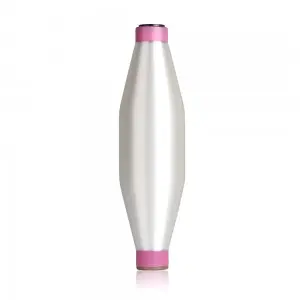
Polyester low melting yarn is a thermoplastic modified polyester filament designed to soften and form permanent bonds under controlled heat, far below the melting temperature of regular PET polyester (250‑260°C). Most commercial grades fall between 80°C‑150°C melting window. It behaves like normal textile yarn during weaving or knitting, and transforms into a bonding agent only after heat activation.
Two main constructions dominate the market: homofilament fully modified copolyester yarn, and bicomponent sheath‑core yarn. For sheath‑core variants, the outer sheath melts for adhesion while the high‑melting inner core keeps mechanical strength intact after bonding.
The core working principle is straightforward. Manufacturers weave or knit low melting yarn together with base fabric yarns. When heat and pressure are applied in ovens, hot presses or hot‑air tunnels, the low‑melting polymer softens and flows between neighboring fibers. Once cooled, it creates solid bond points without liquid glue or stitching. This workflow cuts chemical adhesive consumption and streamlines assembly steps for many product lines.
Core Performance Properties to Evaluate
When reviewing supplier datasheets, these physical indicators should be on top of every buyer’s checklist. Each property directly shapes processing feasibility and end‑item service life.
表格
| Property | Typical Working Range | What It Means For Buyers |
|---|---|---|
| Melting / Softening Temperature | 80°C‑150°C | Defines your heat‑setting processing window; must align with your existing machine temperature limits and base‑fiber heat resistance |
| Tenacity | 1.5‑3.0 cN/dtex | Determines running performance on looms and knitting machines; too‑low tenacity causes frequent yarn breakage during fabric formation |
| Elongation at Break | 20%‑50% | Reflects flexibility before thermal activation; impacts fabric stretch feel and resistance to mechanical stress |
| Thermal Shrinkage Rate | 3%‑12% | Uncontrolled high shrinkage leads to fabric dimension distortion during heat‑bonding stage |
| Denier & Filament Count | 30D up to 600D | Fine deniers suit lightweight apparel and lace; heavier deniers for webbing, shoe uppers and industrial textiles |
| Bonding Peel Strength | Application‑dependent | Shows how strong fiber‑to‑fiber joints remain after heat treatment; critical for wash‑resistant products |
Melting point is not a single fixed number but a melting range. Some suppliers only list a mid‑point value without providing soft‑onset and full‑flow temperature data. Without this full‑range information, factories risk either incomplete bonding (temperature too low) or over‑melting that ruins fabric hand‑feel (temperature too high).
How Different Properties Influence End‑Product Performance
Melting range mismatch creates the most frequent production headaches. If your existing heat‑setting equipment can only reach 110°C maximum, buying a yarn whose full activation starts at 125°C will result in weak, easy‑to‑peel bonds. Conversely, selecting too‑low‑melting grade for items that go through post‑production drying or high‑temperature ironing may trigger unintended re‑melting and fabric deformation.
Shrinkage performance deserves close attention, especially for knitted shoe uppers and apparel interlining. High thermal shrinkage will make fabric shrink unevenly when you run thermal bonding, resulting in inconsistent panel sizes that cannot fit your cutting or assembly molds. Reliable suppliers will supply hot‑air shrinkage test results under your target processing temperature.
Tenacity and filament count affect both weaving yield and finished fabric texture. Yarn with insufficient tenacity causes constant machine stops from breakage and raises production costs. For delicate fabrics such as lace or underwear accessories, higher filament‑count low‑melting yarn delivers softer hand‑feel compared to coarse few‑filament variants.
Bond peel strength and wash durability determine product service life. For footwear components, bag webbing or repeatedly‑washed apparel accessories, buyers should request lab test reports showing peel‑strength retention after multiple standard washing cycles. Good‑quality low‑melt polyester yarn should retain most bonding strength after repeated household washing cycles.
Processing Compatibility: What Buyers Need To Check
Even yarn with perfect lab parameters can under‑perform if incompatible with your factory workflows. Buyers should cross‑verify these practical processing factors before bulk order placement.
First, confirm your thermal‑activation setup: hot‑air oven, calendar hot press, steam setting or infrared heating. Different heating modes require slight adjustments to target yarn melting range. Dry‑heat and moist‑heat performance can differ significantly for the same yarn grade.
Second, check running performance on your looms or knitting machines. Ask for pre‑production sample cones to run small‑scale machine trials. Watch for yarn breakage, fly waste, or unwinding issues from cone package quality. Cone winding tension and package density directly affect how well yarn feeds on high‑speed textile equipment.
Third, consider compatibility with co‑used base yarns. If you blend low‑melting polyester yarn with nylon, conventional polyester or spandex, make sure the bonding temperature does not damage your main fiber. Spandex‑containing fabrics, for instance, cannot tolerate excessive heat during thermal fusing.
Color and finish options are another practical point. Raw white is most common, but black or dope‑dyed options are available. Semi‑dull and bright luster choices change fabric visual appearance. Some projects also require considering post‑dyeing feasibility, as certain low‑melt polyester grades cannot survive high‑temperature dye baths after fabric weaving.
Common Real‑World Applications
Polyester low melting yarn appears across multiple market segments, each calling for distinct property combinations.
Footwear Industry Knitted shoe uppers are one of the largest‑volume uses. Low‑melting yarn integrated into shoe upper knit structures creates 3D shape retention after heat setting, cutting liquid‑glue usage and simplifying seamless shoe manufacturing. Medium denier yarns with balanced tenacity and moderate melting range are widely preferred here.
Apparel & Accessories Used for garment interlining, collar support, waistband stabilizers, lace edge fixation and seamless underwear components. It holds fabric shape without adding heavy layers. Fine denier low‑melt variants work for lightweight fashion items.
Narrow Fabrics & Webbing Backpack straps, safety webbing and decorative ribbons benefit from thermal fusion. Heat‑activated bonding seals fabric edges and stops fraying after cutting operations.
Home Textiles Carpet backing bonding, mattress textile components and some upholstery fabrics leverage its glue‑free bonding capability for improved comfort and cleaner production.
Industrial Technical Textiles Filter media, automotive interior textiles and geotextile products select special high‑shock‑resistant grades, prioritizing bonding stability under long‑term environmental exposure.
Practical Buying & Testing Tips
Many buyers focus only on unit price when sourcing low‑melting yarn, but overlooking validation steps leads to expensive bulk‑lot failures. Follow these practical guidelines.
- Always ask for complete technical datasheets, not only simplified marketing specs. Require softening onset temperature, full melt temperature, shrinkage rate, tenacity and elongation data.
- Conduct small‑lot pre‑production trials before committing to large orders. Run trials using your actual production machines and your standard heat‑setting parameters. Evaluate fabric hand‑feel, bonding firmness and dimensional change.
- Request third‑party lab reports for critical end‑uses, especially items requiring repeated washing or heavy‑duty mechanical stress. Test peel‑strength retention after wash cycles matching your product specifications.
- Clarify denier, filament count, luster (bright / semi‑dull), color and cone‑package requirements in purchase documents. Minor misunderstandings over package weight or winding style can disrupt your factory’s automated workflows.
- Keep production‑relevant environment factors in mind. Storage humidity and temperature will not change core yarn performance, yet poor‑condition packaging can cause unwinding trouble during high‑speed processing.
Frequently Asked Questions
Q: What is the difference between polyester low‑melting yarn and nylon low‑melting yarn? A: Polyester low‑melting yarn is generally more cost‑competitive and good for general‑purpose thermal bonding. Nylon‑based low‑melting yarn delivers better abrasion resistance and higher flexibility, often chosen for high‑end footwear and items requiring superior flex‑fatigue performance.
Q: Can low‑melting polyester yarn be dyed after fabric weaving? A: It depends on yarn formulation. Most standard low‑melting copolyester grades cannot sustain high‑temperature dyeing conditions; dope‑dyed yarn or pre‑dyed raw‑material cones are normally selected instead. Confirm dyeing compatibility with your supplier early in the project phase.
Q: My bonded fabric loses bonding strength after washing. What should I check? A: Possible root causes include insufficient heat input during thermal‑bonding step, wrong yarn melting‑range grade, or excessive fabric tension applied during washing. Review both your production heat‑setting parameters and yarn technical specifications side‑by‑side.
Q: Are all low‑melting yarns sheath‑core bicomponent? A: No. Homofilament fully‑modified copolyester yarn is also available. Sheath‑core types retain better mechanical strength after full melting; homofilament grades offer very soft hand‑feel after bonding but lose more tensile strength once melted.
Conclusion
Polyester low melting yarn opens many possibilities for glue‑free, efficient textile manufacturing. Its real‑world performance is defined by a set of inter‑related physical properties: melting range, shrinkage rate, tenacity, elongation and bonding strength. Smart buyers move past surface‑level product descriptions and validate these key metrics against their own processing machines and end‑product requirements.
Matching yarn grade to your heating equipment, base‑fiber materials and product durability requirements reduces costly production errors. Small‑scale sampling and real‑machine testing remain the most reliable way to confirm suitability before large‑volume procurement. By mastering these core property insights, purchasing and engineering teams can fully unlock the advantages of low‑melting polyester yarn for footwear, apparel, home goods and technical textile projects.
Post time: Aug-21-2026