
Polyester Hot Melt Yarn in Automotive Interiors: A Material Solution for Modern Vehicle Manufacturing
The automotive industry has undergone a significant transformation in recent years, with manufacturers placing greater emphasis on interior quality, sustainability, and production efficiency. Among the material innovations driving this shift is polyester hot melt yarn—a thermoplastic adhesive fiber that is increasingly being specified for interior component assembly. This article examines the technical characteristics, application scenarios, and practical considerations of polyester hot melt yarn in automotive interiors, with a focus on what procurement professionals and design engineers need to know.
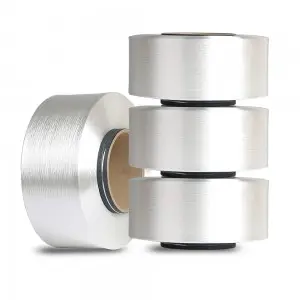
Understanding Polyester Hot Melt Yarn
Polyester hot melt yarn is a specialized fiber produced by spinning low-melting-point polyester chips. Unlike conventional polyester fibers, which have melting points above 250°C, hot melt variants are engineered to melt at significantly lower temperatures—typically between 110°C and 140°C. This low melting point is achieved through the addition of modified monomers during the polymerization process, creating a material that behaves like a standard textile fiber at room temperature but transforms into an adhesive when subjected to heat.
At ambient conditions, the yarn can be knitted, woven, or blended with other fibers just like conventional textile materials. When heat and pressure are applied during the manufacturing process, the yarn softens and melts, bonding with adjacent fibers or substrates to form a durable, seamless connection. Upon cooling, the bond solidifies, creating a permanent attachment without the need for separate adhesives or stitching.
Key Material Properties for Automotive Applications
Strength and Wear Resistance
Automotive interiors are subject to continuous use, friction, and mechanical stress. Polyester hot melt yarn offers tensile strength ranging from 2.6 to 8.0 cN/dtex, depending on the specific grade. Its wet strength remains comparable to dry strength due to low moisture absorption, ensuring consistent performance even in humid conditions. In terms of abrasion resistance, it ranks second only to nylon among textile fibers, making it well-suited for high-wear areas such as seat upholstery and door panels.
Elasticity and Dimensional Stability
The elastic properties of polyester hot melt yarn are comparable to wool, with nearly complete recovery after elongation of 5% to 6%. This elasticity translates into excellent wrinkle resistance and dimensional stability in finished interior components. For seat covers and door panel trims, this means the material maintains its shape and appearance even after years of use and exposure to varying temperatures.
Heat Resistance
As a thermoplastic material, polyester hot melt yarn can operate effectively across a temperature range of approximately 70°C to 170°C. Its thermal insulation properties are among the best of synthetic fibers, with low specific heat capacity and thermal conductivity. This heat resistance is particularly relevant for interior components located near the engine compartment or those exposed to direct sunlight through windows.
Chemical Stability
Polyester hot melt yarn exhibits good resistance to chemical corrosion and maintains its structural integrity when exposed to common automotive cleaning agents and environmental pollutants. This chemical stability contributes to the long-term durability of interior components and simplifies maintenance requirements.
Applications Across Vehicle Interiors
Seating and Upholstery
Seat construction represents one of the most significant applications for polyester hot melt yarn in automotive interiors. The material is used to bond multiple layers—including fabric or leather surface materials, foam cushioning, and backing substrates—into integrated seat cover assemblies. This thermal bonding approach eliminates the need for solvent-based adhesives, which are a source of volatile organic compounds (VOCs) in the cabin environment.
The yarn can also be employed in seamless quilting applications, where it replaces traditional stitching to create three-dimensional patterns on seat surfaces. This approach not only enhances the aesthetic appeal of the interior but also improves abrasion resistance—testing has demonstrated performance exceeding 50,000 cycles in Martindale abrasion tests.
Door Panels and Dashboards
Door panel assembly involves bonding decorative surface materials—typically PVC or polyurethane—to rigid substrates such as ABS or polypropylene. Polyester hot melt yarn enables this lamination process with high precision, eliminating issues such as adhesive overflow that can occur with liquid adhesives. The thermal bonding process also accommodates complex curved geometries, maintaining bond integrity even on contoured surfaces.
Headliners and Acoustic Insulation
The headliner—the fabric-covered panel that forms the interior roof of the vehicle—requires bonding of nonwoven fabrics, foam layers, and decorative materials. Polyester hot melt yarn provides an effective solution for this multi-layer lamination, reducing VOC emissions by as much as 80% compared to conventional adhesive systems.
Acoustic insulation materials, including soundproofing mats and vibration-damping layers, also benefit from hot melt yarn bonding. The material maintains its adhesive properties across a temperature range of -40°C to 120°C, ensuring reliable performance in diverse climatic conditions.
Floor Carpeting and Mats
In carpet and floor mat applications, polyester hot melt yarn is used to bond fiber layers to rubber or thermoplastic backing materials. The one-step molding process enables efficient production while ensuring secure attachment that resists shifting or curling during vehicle use. Some applications also incorporate recycled content, supporting automotive manufacturers’ sustainability objectives.
Comparative Advantages Over Traditional Methods
Replacement of Chemical Adhesives
Traditional automotive interior assembly has relied heavily on solvent-based adhesives and liquid glues. These materials present several challenges: they emit VOCs that affect cabin air quality, require drying or curing time that extends production cycles, and involve handling and disposal of hazardous chemicals. Polyester hot melt yarn eliminates these concerns by providing a solid-state bonding solution that activates only when heated.
Reduction of Stitching
Conventional upholstery construction often relies on extensive stitching, which introduces potential points of failure and limits design flexibility. Hot melt yarn bonding can reduce or eliminate stitching requirements, improving production speed and reducing labor costs. The absence of needle holes also enhances the material’s resistance to moisture penetration and extends service life.
Lightweighting Benefits
Weight reduction remains a priority for automotive manufacturers seeking to improve fuel efficiency and meet regulatory requirements. Polyester hot melt yarn has a density of approximately 1.1 to 1.3 g/cm³, making it significantly lighter than many adhesive systems. When applied across multiple interior components, this weight reduction can contribute meaningfully to overall vehicle mass reduction targets.
Quality and Compliance Considerations
For procurement professionals evaluating polyester hot melt yarn for automotive applications, several quality and compliance factors warrant attention:
VOC Emissions: Hot melt yarn systems operate without liquid solvents, facilitating compliance with in-cabin air quality standards such as ISO 12219-3.
Flame Retardancy: Automotive interior materials must meet stringent fire safety requirements. Polyester hot melt yarn can be formulated with phosphorus-nitrogen additives to achieve limiting oxygen index (LOI) values of 28% or higher, complying with FMVSS 302 burn rate standards.
Thermal Stability: For applications requiring extended high-temperature exposure, some grades are engineered to withstand temperatures up to 220°C.
Certifications: Reputable manufacturers typically maintain certifications including OEKO-TEX® STANDARD 100, ISO 9001, and RoHS compliance, providing assurance of material safety and quality control.
Processing Methods
Several manufacturing techniques have been developed to integrate polyester hot melt yarn into automotive interior production:
Heat Press Lamination: The yarn is positioned between layers of material, and heat and pressure are applied to activate the adhesive bond. This method is widely used for flat or gently curved components.
Laser-Activated Bonding: Localized laser heating at specific wavelengths enables precise melting of hot melt yarn with accuracy of ±0.5 mm, allowing for detailed pattern work and targeted bonding.
Ultrasonic Welding: High-frequency vibration generates localized heat that melts the yarn in less than one second, offering rapid processing for high-volume production lines.
In-Mold Lamination: Hot melt yarn can be pre-placed in molds before substrate injection, creating integrated components in a single operation.
Practical Considerations for Specification
When specifying polyester hot melt yarn for automotive interior applications, several factors should be evaluated:
Melting Point Selection: Different interior components may require different melting point characteristics. Lower melting points (around 110°C) minimize heat exposure to sensitive materials, while higher melting points (around 180°C) may be appropriate for components requiring greater thermal stability.
Denier and Filament Count: The yarn is available in various specifications, from fine deniers for delicate applications to heavier counts for structural bonding. The choice affects both the handling characteristics during processing and the final bond strength.
Blend Compatibility: Polyester hot melt yarn can be blended with conventional polyester and other fibers during nonwoven, knitted, or woven production. Understanding the compatibility with existing material systems is essential for successful integration.
End-of-Life Considerations: As the automotive industry moves toward greater circularity, the recyclability of materials becomes increasingly important. Polyester hot melt yarn systems that enable material separation or that are compatible with existing recycling streams offer advantages for manufacturers with sustainability commitments.
Conclusion
Polyester hot melt yarn represents a material solution that addresses multiple challenges in automotive interior manufacturing. Its combination of adhesive functionality with textile processability offers manufacturers an alternative to traditional stitching and chemical adhesive methods. The material’s strength, wear resistance, thermal stability, and low VOC profile make it suitable for a range of interior applications—from seating and door panels to headliners and carpeting.
For procurement professionals and design engineers, understanding the technical characteristics and processing considerations of polyester hot melt yarn is essential for making informed material selections. As automotive manufacturers continue to pursue improvements in interior quality, production efficiency, and environmental performance, this versatile material is likely to play an increasingly significant role in vehicle interiors.
Post time: Jun-22-2026