
PA11 FDY vs. PA11 DTY: What’s the Difference and Which One to Choose
Table of Contents
- Understanding Core Definitions of PA11 FDY & PA11 DTY
- Core Production & Structural Differences
- Key Performance Comparison Table
- Unique Advantages of PA11 FDY Filament
- Unique Advantages of PA11 DTY Textured Yarn
- Industry Application Scenarios Breakdown
- How to Select Between PA11 FDY and PA11 DTY For Your Production
- Common FAQs For Global Yarn Buyers
- Final Buying Guidance
- Related Articles
Understanding Core Definitions of PA11 FDY & PA11 DTY
As global demand for sustainable bio-based textile materials rises, 100% castor oil-derived PA11 nylon has become a staple raw material for apparel, footwear, upholstery and industrial textiles. Two mainstream finished formats dominate bulk procurement: PA11 FDY and PA11 DTY. While both share the eco-friendly, low-moisture, high-abrasion base properties of PA11 polymer, their manufacturing routes, physical structures and end-use performance diverge drastically, directly impacting production efficiency and finished product quality for manufacturers worldwide….
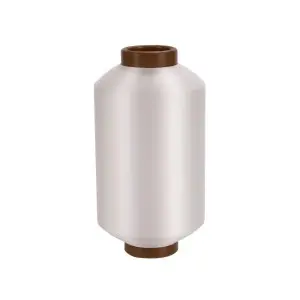
PA11 FDY (Fully Drawn Yarn) FDY is a one-step integrated spinning-drawing finished filament. Melted bio-based PA11 resin is extruded, drawn and heat-set in a single continuous production line, forming straight, smooth, uncrimped monofilament bundles without secondary texturing processing. It arrives as a ready-to-use flat yarn for weaving, sewing and thermal bonding without extra factory rework.
PA11 DTY (Draw Textured Yarn) DTY starts with semi-finished PA11 POY precursor yarn, which undergoes a secondary false-twist texturing process: stretching, high-temperature crimp setting and oil finishing. This permanent 3D crimp structure gives the yarn bulk, stretch and softness, turning rigid flat filament into elastic, fluffy textile raw material optimized for knitted stretch goods.
Core Production & Structural Differences
1. Manufacturing Process Flow
- PA11 FDY: Single-line spinning + online full drawing + heat setting + winding. No secondary processing required, finished yarn ready for shipment. Production runs at high continuous speeds with stable tension control, minimizing filament breakage during mass production.
- PA11 DTY: Two-stage workflow – POY semi-finished spinning first, then separate texturing line with dual heating chambers for crimp formation. Extra energy and processing steps add production lead time and cost compared to FDY base stock.
2. Yarn Physical Structure
- PA11 FDY: Filaments lie perfectly parallel, smooth linear surface, zero internal crimp. Tight, compact spool winding with consistent diameter across every batch. Fabric woven from FDY delivers sleek, flat, satin-like surface luster.
- PA11 DTY: Permanent micro-crimps inside every filament bundle, creating air pockets between fibers. Voluminous, fluffy spool appearance with softer visual texture; fabric surface is matte, non-gloss and stretchable under tension.
3. Raw Material Base Consistency
Both variants use identical 100% bio-based PA11 polymer sourced from renewable castor beans, retaining core material benefits: low density (1.03g/cm³), ultra-low moisture absorption (0.7% 24hr), superior chemical resistance and 50% lower carbon footprint vs petroleum-based PET yarns. All performance gaps stem purely from post-spinning texturing, not resin composition
Key Performance Comparison Table
| Comparison Item | PA11 FDY Filament | PA11 DTY Textured Yarn |
|---|---|---|
| Filament Shape | Straight, smooth, flat | Crimped, bulky, elastic |
| Stretch Recovery | Low elongation (~40-48%), minimal bounce | High elastic recovery (>95%), instant rebound |
| Fabric Hand Feel | Crisp, silky, rigid, smooth | Soft, fluffy, plush, stretchy |
| Surface Luster | High semi-gloss / bright | Matte, diffused low shine |
| Bulk & Air Retention | Low density, thin compact weave | High air trapping, warm insulating |
| Weaving Stability | Excellent high-speed loom compatibility, no snarls | Requires adjusted tension for knitting; prone to tangling at ultra-high speeds |
| Thermal Bond Uniformity | Consistent melting point across all filaments | Uneven heat penetration due to crimp gaps |
| Dye Performance | Bright saturated colors, sharp fabric outlines | Soft muted tones, even color penetration for textured surfaces |
| Typical Denier Range | 20D–100D fine denier | 40D–150D medium-heavy denier |
| Production Lead Time | Shorter, single-step manufacturing | Longer, two-stage processing |
Unique Advantages of PA11 FDY Filament
- Superior Dimensional Stability Without internal crimps, PA11 FDY maintains fixed length under tension, eliminating fabric shrinkage during washing or high-temperature heat pressing. This makes it ideal for finished goods requiring precise sizing, such as suit lining, decorative lace and precision sewing thread.
- Optimized For High-Speed Industrial Processing Flat, smooth filament runs seamlessly through water jet looms, embroidery machines and automatic sewing equipment, cutting production downtime caused by yarn breakage or tangling. Global sewing thread manufacturers prioritize PA11 FDY for consistent stitch strength across mass runs.
- Uniform Thermal Fusing Performance Every filament strand features identical melting characteristics (85–110°C activation range). During shoe upper lamination or fabric hot melt bonding, FDY creates continuous, gap-free adhesive layers with strong peel resistance after repeated wash cycles, a critical benefit for footwear OEMs.
- Premium Gloss Aesthetics FDY’s parallel filament arrangement delivers silky, reflective fabric surfaces favored for luxury lining, decorative ribbon and high-end apparel trim. Semi-dull bright custom options expand design flexibility for fashion brands targeting polished visual finishes.
- Lower Long-Term Production Costs Single-step manufacturing removes secondary texturing fees, reducing bulk order unit pricing for buyers with large continuous weaving or thread production lines. Less waste from broken filaments further improves production yield ratios.
Unique Advantages of PA11 DTY Textured Yarn
- Outstanding Elastic Comfort Built-in permanent crimp delivers unrestricted stretch and full shape recovery, core requirement for tight-fit products: seamless underwear, yoga sportswear, stretch webbing and athletic shoe liners. Fabrics maintain a snug fit without permanent sagging after hundreds of wears.
- Enhanced Thermal & Breathable Comfort Air pockets between crimped filaments trap body heat for cold-weather apparel while accelerating sweat wicking for activewear. The breathable, plush hand feel outperforms flat FDY for loungewear, hosiery and upholstery fabrics.
- Soft, Skin-Friendly Texture DTY eliminates the slight rigidness of flat FDY, creating gentle non-irritating surfaces suitable for intimate apparel, baby textiles and medical rehabilitation fabrics. Matte finish avoids harsh light reflection for casual, everyday wear aesthetics.
- Versatile Knitting Compatibility Circular knitting machines, warp knitting equipment and braiding lines operate efficiently with PA11 DTY, producing textured fabrics like fleece, elastic tape and decorative knitted lace with natural drape that FDY cannot replicate.
- Custom Crimp Tuning Suppliers adjust false-twist parameters to control crimp contraction levels, letting buyers tailor stretch intensity for specialized use cases: low-crimp DTY for mild stretch loungewear or high-crimp variants for heavy-duty sports support webbing.
Industry Application Scenarios Breakdown
When PA11 FDY Is The Primary Choice
- Sewing threads for footwear, luggage and high-strength garment stitching
- Woven suit lining, formal apparel interlinings and decorative ribbon
- Fine lace, embroidery thread and jacquard woven decorative textiles
- Hot melt thermal bonding for shoe upper composite assembly
- Flat woven industrial webbing with fixed length dimensional control
- Lightweight, glossy fashion fabrics requiring crisp structured drape
When PA11 DTY Is The Primary Choice
- Seamless stretch underwear, yoga wear and performance sportswear
- Knitted hosiery, stretch socks and elastic bra bands
- Soft upholstery, sofa knitted covers and plush home textiles
- Elastic braids, shoelaces and stretch binding tape
- Warm thermal active layers and cold-weather base layers
- Matte textured casual knitwear and children’s stretch clothing
How to Select Between PA11 FDY and PA11 DTY For Your Production
Follow this step-by-step decision framework for bulk yarn procurement:
- Define Your Core Fabric Texture Requirement If finished goods need smooth, glossy, structured surfaces → Select PA11 FDY. If soft, fluffy, stretchable matte fabric is required → Select PA11 DTY.
- Confirm Production Equipment Type High-speed looms, automatic sewing machines, heat press lamination lines match FDY’s stable tension. Circular knitting, braiding and stretch fabric production lines perform better with DTY.
- Evaluate End-Product Functional Needs Prioritize fixed sizing, minimal shrinkage, strong thermal bonding: FDY. Prioritize stretch recovery, warmth, skin softness and sweat wicking: DTY.
- Calculate Production Budget & Lead Time Large-volume continuous manufacturing with cost optimization: FDY reduces processing overhead. Small-batch fashion knitwear with custom stretch specifications: DTY, account for extended lead times.
- Review Brand Sustainability & Design Goals Both deliver identical bio-based low-carbon credentials; selection only impacts visual and tactile design outcomes, not eco-compliance certifications (OEKO-TEX, RoHS, ISO).
Common FAQs For Global Yarn Buyers
Q1: Can PA11 FDY be converted into DTY in-house?
A: No. FDY undergoes full molecular heat setting during primary spinning; secondary texturing cannot create permanent crimps on fully drawn filament. Manufacturers must purchase pre-textured PA11 DTY POY-derived yarn for stretch fabric production.
Q2: Do PA11 FDY and DTY share the same melting temperature for thermal bonding?
A: Base polymer melting points (85–110°C) are identical, but DTY’s crimped structure creates uneven heat distribution. Operators must extend heat press dwell time by 15–20% when using DTY to achieve equal bond strength compared to FDY.
Q3: Are color options identical for both yarn types?
A: Suppliers offer full custom color matching for FDY and DTY, but FDY produces brighter, sharper dyed hues while DTY delivers softer, diffused color depth due to internal air pockets scattering light.
Q4: Is PA11 DTY more prone to pilling than PA11 FDY?
A: When manufactured to standard quality specs, both have excellent abrasion resistance inherent to PA11 polymer. Excessively high crimp DTY variants may show minor surface fuzz after heavy friction; FDY flat filament resists pilling most effectively.
Q5: Can FDY and DTY be blended in a single fabric design?
A: Yes. Mixed weaving/knitting combining PA11 FDY for structural support and PA11 DTY for localized stretch is widely used in hybrid products like sports shoe uppers and multi-function activewear.
Final Buying Guidance
PA11 FDY and PA11 DTY are not competing replacements, but complementary bio-based yarn solutions tailored to distinct textile manufacturing objectives. For buyers focused on precision weaving, sewing thread and thermal composite production, PA11 FDY delivers consistent performance, faster production and lower long-run costs. For brands prioritizing elastic comfort, soft textured knits and casual stretch apparel, PA11 DTY is the optimal raw material choice.
All specifications (denier, filament count, semi-dull luster, custom dyed colors) can be customized for both variants to align with regional market standards across Europe, Southeast Asia and North America. Request free sample spools of both formats to test loom compatibility and finished fabric hand feel before placing bulk container orders.
Post time: Aug-17-2026