
Middle Eastern Sofa Fabric Wholesalers Report: Polyester Hot-Melt Yarn Passes Safety Certification for Flame Retardancy
In the Middle Eastern home furnishing market, sofas, as core soft furnishing products, are directly affected by their safety performance, impacting market access and consumer trust. With the implementation of stringent flame retardancy standards such as those of the UAE’s ESMA and Saudi Arabia’s SASO, the flame retardancy of sofa fabrics has become a core indicator for wholesalers when selecting supply chains. Recently, sofa fabric wholesalers from Dubai, Riyadh, and other locations reported that a polyester hot-melt yarn product has successfully passed mainstream safety certifications in the Middle East. Its flame retardant performance and stable quality provide a new solution for the upgrading of the local sofa fabric industry.
The Middle East’s requirements for the flame retardancy of furniture are based on strict technical regulations. Taking the UAE as an example, ESMA certification, based on UAE.S 5019:2018, requires sofa fabrics to pass three core tests: vertical burning test, smoke density test, and heat release rate assessment. These tests simulate material performance under real fire scenarios, ensuring that the flame spread rate, burning duration, and toxic gas emissions all meet the limits. Saudi Arabia’s SASO certification, referencing SASO 1167 standards, sets clear requirements for the burning rate and smoke toxicity of sofa fabrics. Products that fail to pass certification are prohibited from entering the market.
“Previously, we tested many hot-melt yarn products, and they either failed to meet flame retardant standards or showed a decline in physical properties under high temperatures,” said a Dubai sofa fabric wholesaler. “This polyester hot-melt yarn exceeded expectations, not only passing both ESMA and SASO certifications, but also showing no significant change in the fabric’s adhesion and toughness even in the consistently high temperatures of the Middle East.”
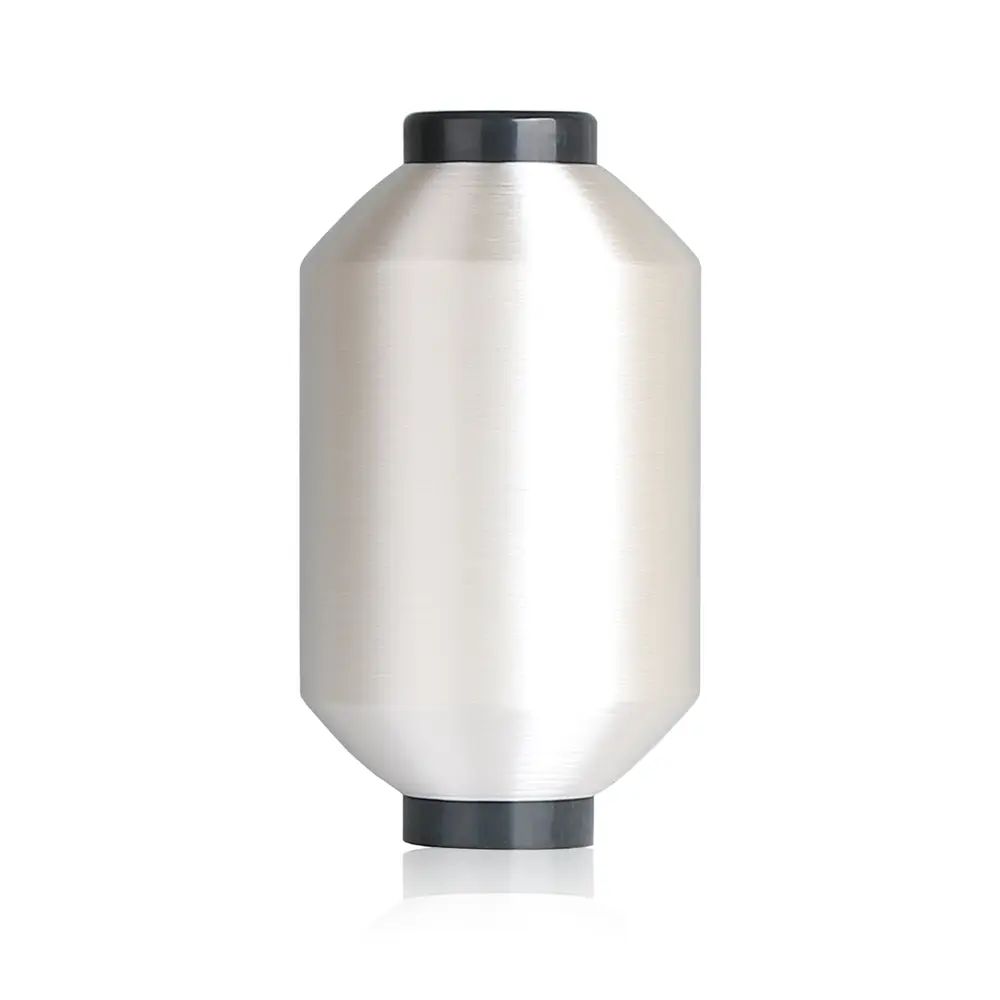
This polyester hot-melt yarn, highly praised by wholesalers, possesses several core advantages suitable for sofa fabric production. From a material properties perspective, it features a low melting point and high adhesion, enabling rapid curing during fabric lamination to form a stable structural layer and improve the durability of sofa fabrics. Simultaneously, its zero-pollutant emission and bio-based properties align with the Middle Eastern market’s demand for environmentally friendly materials. More importantly, in flame retardant performance tests, this product demonstrated excellent fire resistance—the flame spread rate was far below the standard limit, and no toxic fumes were released during combustion, fully meeting the stringent safety requirements for furniture in the Middle East.
In addition to meeting local certification standards, this polyester hot-melt yarn has also passed multiple international authoritative certifications, including OEKO-TEX STANDARD 100, RoHS, SGS, and ISO 9001, forming a dual quality assurance of “local compliance + global standards.” In North African markets such as Morocco, the synergistic effect of OEKO-TEX certification and local SNIMA certification has been proven, with textiles possessing dual certification commanding an export premium of 12-18%. This means that sofa fabrics using this polyester hot-melt yarn can not only smoothly enter the Middle Eastern market but also expand into surrounding markets such as Europe and North Africa with the support of international certifications, creating greater profit margins for wholesalers.
From a practical application perspective, this polyester hot-melt yarn has been widely used in the production of high-end sofa fabrics. Its high-strength bonding makes sofa fabrics more resistant to friction and pilling, extending product lifespan; its stable physical properties ensure that the fabric will not deform or crack under the dry, high-temperature climate of the Middle East. “After we used this yarn in the production of high-end sofa fabrics, customer complaints decreased by 30%, and sales in countries like Saudi Arabia and Kuwait increased significantly year-on-year,” shared a fabric wholesaler in Riyadh.
Against the backdrop of global textile supply chain restructuring, the Middle East market is becoming an important consumer of high-quality textile materials. Egypt, as a gateway to Europe, Asia, and Africa, has attracted many international fiber companies to establish production capacity, with 90% of its functional fibers exported to the Middle East and African markets. This trend confirms the strong demand for high-quality textile materials in the Middle East market and provides ample room for development for products with core competitiveness.
Post time: Jan-16-2026