
Low MOQ Hot Melt Yarn Suppliers for Small Orders
For small brands, workshops, startups, and custom manufacturers, sourcing reliable industrial textiles has long been a pain point: high minimum order quantities (MOQs), long lead times, inconsistent quality, and inflexible customization. Hot melt yarn is no exception—many bulk suppliers only accept large‑batch orders, leaving small buyers struggling to find stable, cost‑effective sources.
Today, we break down everything you need to know about low‑MOQ hot melt yarn suppliers for small orders: core advantages, ideal use cases, key buying factors, and how to choose the right partner for your business.
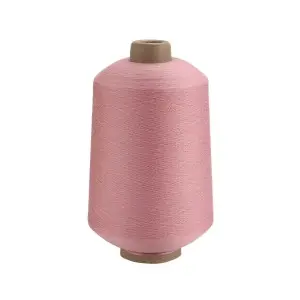
Table of Contents
- What Is Hot Melt Yarn & Why Small Orders Matter
- Key Benefits of Low MOQ Hot Melt Yarn for Small Buyers
- Ideal Applications for Low MOQ Hot Melt Yarn
- How to Select a Reliable Low MOQ Supplier
- Comparing Hot Melt Yarn Types for Small Batch Orders
- Ordering Tips to Improve Quality & Speed
- Conclusion
What Is Hot Melt Yarn & Why Small Orders Matter
Hot melt yarn (also called low‑melt yarn or thermal fuse yarn) is a functional filament that softens and bonds under heat without extra glue. It supports stable adhesion, good elasticity, and eco‑friendly processing, widely used in bonding, shaping, reinforcing, and composite textile production.
In today’s market, small‑batch, fast‑response procurement is becoming mainstream. Small brands, sample makers, designers, and aftermarket producers need flexible, low‑risk material sourcing. High MOQs force overstocking, tie up cash flow, and create waste—making low‑MOQ hot melt yarn a must‑have solution.
Key Benefits of Low MOQ Hot Melt Yarn for Small Buyers
- Lower financial risk: No need to purchase large volumes; match order size to actual demand.
- Faster testing cycles: Quickly validate materials for samples, prototypes, and small‑batch production.
- Greater flexibility: Support seasonal updates, custom projects, and fast‑follow orders.
- Reduced waste: Minimize leftover stock and inventory costs.
- Stable quality control: Professional suppliers maintain consistent performance even in small runs.
- Customization available: Many low‑MOQ suppliers offer tailored specifications, colors, and melting points.
Ideal Applications for Low MOQ Hot Melt Yarn
Low‑MOQ hot melt yarn fits perfectly with small‑scale, high‑flexibility production:
- Apparel: collar shaping, suit lining bonding, seamless underwear, lace fixing
- Footwear: upper bonding, heel reinforcement, edge sealing
- Home textiles: sofa fabric composites, carpet edging, curtain accessories
- Accessories: webbing, ribbons, labels, elastic bands
- Industrial uses: small composite parts, filter materials, automotive interior samples
- Sample & prototype making: fashion, footwear, and home textile development
How to Select a Reliable Low MOQ Supplier
Not all “low MOQ” suppliers are equal. Use these criteria to evaluate partners:
- MOQ flexibility: Clear, realistic small‑order policy without hidden conditions.
- Quality consistency: Stable performance in melting point, tensile strength, color fastness, and bonding force.
- Certification support: Ideally with OEKO‑TEX, ISO 9001, ROHS, SGS or similar safety and environmental certifications.
- Customization ability: Adjust melting temperature, denier, filament count, color, and luster.
- Lead time & delivery: Fast sampling and on‑time small‑batch delivery.
- Technical support: Provide processing guidance, temperature suggestions, and application matching.
- After‑sales service: Effective solutions for quality issues or application problems.
Comparing Hot Melt Yarn Types for Small Batch Orders
Different base materials affect bonding performance, feel, and durability. Below is a clear comparison for small‑order planning:
| Yarn Type | Melting Range | Bonding Strength | Hand Feel | Typical Use | Fit for Small Orders |
|---|---|---|---|---|---|
| Nylon Low Melt | 90–120°C | High | Soft & elastic | Apparel, footwear, webbing | Excellent |
| Polyester Low Melt | 110–140°C | Medium–high | Stable & stiff | Lining, composites, industrial | Very good |
| Bio‑based PA11 | 80–110°C | High | Eco‑friendly soft | High‑end apparel, intimate wear | Good |
Ordering Tips to Improve Quality & Speed
To get the best results from low‑MOQ hot melt yarn orders:
- Confirm exact parameters: melting point, denier (D), filament count (F), color, luster.
- Provide processing temperature and equipment type for better material matching.
- Request lab dips or small samples before formal orders.
- Clarify lead time, packaging, shipping terms, and quality standards.
- Keep consistent specs for reorders to maintain stability.
Conclusion
Low‑MOQ hot melt yarn suppliers are essential partners for small brands, designers, workshops, and custom manufacturers. They solve high‑threshold sourcing problems while supporting flexible, fast, and low‑risk production.
By focusing on quality stability, certification, customization, and service, you can build long‑term, reliable supply relationships. Whether for samples, small batches, or scaled trials, the right low‑MOQ hot melt yarn supplier helps you improve efficiency, lower costs, and speed up product launches.
For buyers prioritizing flexibility, quality, and small‑order friendliness, choosing a professional low‑MOQ hot melt yarn supplier is one of the most valuable decisions for stable and sustainable production.
Post time: May-11-2026