Hot Melt Yarn in Filter Materials: The Game-Changer for Modern Filtration Manufacturing
Introduction
Global filtration manufacturers are constantly balancing three core demands: consistent filtration efficiency, long service life, and sustainable, cost-effective production. Traditional assembly methods that rely on liquid adhesives, stitching, or mechanical stapling have long created persistent pain points: blocked filter pores, volatile organic compound (VOC) emissions, weak interlayer bonding, and complex recycling workflows.
Hot melt yarn (also known as low-melting thermal fuse yarn) has emerged as a universal functional bonding solution that eliminates chemical glues entirely. When integrated into air, liquid, and industrial filter media, it delivers stable pore structures, enhanced mechanical strength, and fully compliant eco-friendly production. This guide breaks down how hot melt yarn works within filter materials, its core performance advantages, mainstream application scenarios, material selection standards, and actionable tips for procurement and production optimization.
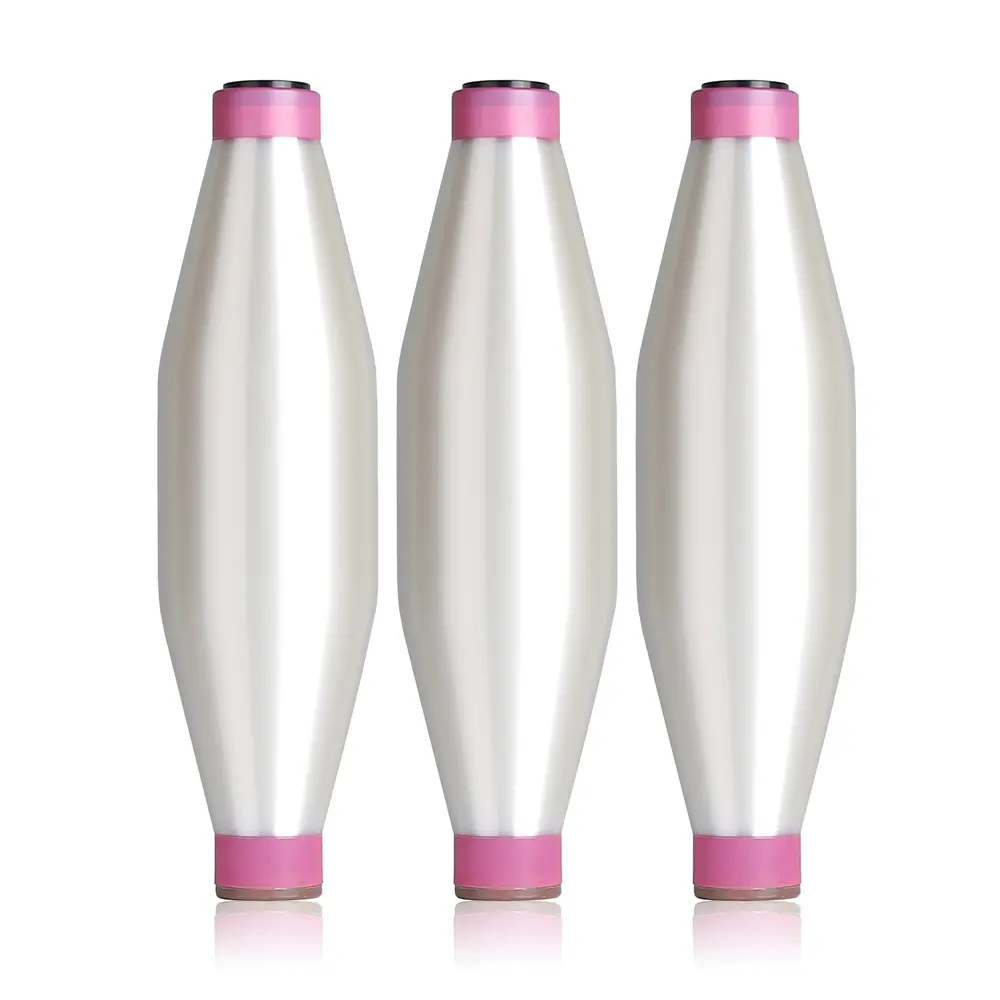
What Is Hot Melt Yarn for Filtration Applications?
Hot melt yarn is a modified thermoplastic filament engineered with a precisely calibrated low melting point ranging from 80°C to 180°C. Unlike standard textile yarns built for tensile strength alone, its core design targets controlled thermal flow and permanent cold-set adhesion.
For filter material production, two primary hot melt yarn variants dominate the market:
- Single-component nylon hot melt yarn (PA series)
Fully fusible nylon filament with a narrow melting tolerance (±5°C). It forms dot-style adhesive bonds after heating and cooling, without saturating filter pores. Exhibits stable performance across pH 3–11 acid and alkali environments, ideal for liquid filtration and medium-temperature air filter applications.
- Polyester low-melt hot melt yarn (Co-PET)
Skin-core composite filament where only the outer layer melts during thermal processing, while the core retains structural rigidity. Best suited for thick non-woven filter felts and high-volume dust filtration media, delivering superior compression resistance.
Unlike liquid adhesives that spread freely and block micro-pores, hot melt yarn creates discrete bonding points between filter fabric layers. This critical design preserves the original breathable pore structure of filter media while locking multi-layer composites firmly together.
Core Advantages of Hot Melt Yarn in Filter Materials
1. Preserve Filtration Precision & Air Permeability
The biggest flaw of solvent glue lamination is pore clogging, which drastically reduces airflow and shortens filter service cycles. Hot melt yarn forms localized dot bonds rather than full-surface coverage, maintaining the original graded pore structure of composite filter media.
Lab testing confirms multi-layer filters bonded with hot melt yarn retain over 95% of their baseline air permeability, while glue-laminated equivalents lose 30%–50% airflow efficiency. For fine particulate filtration (PM2.5, micron-level liquid impurities), this stable pore structure delivers consistent filtration efficiency above 99% without excessive pressure drop across the filter element.
2. Chemical-Free, Regulatory Compliant Production
Solvent-based adhesives release VOCs, formaldehyde, and residual chemical contaminants that fail REACH, FDA, and automotive interior safety standards. Hot melt yarn achieves interlayer bonding purely through thermal activation, introducing zero additional chemical additives into filter materials.
This benefit unlocks access to highly regulated verticals: food-grade liquid filtration, medical respiratory filter media, and automotive cabin air filters. Finished filter products carry no odor, eliminating consumer complaints related to chemical fumes in enclosed air circulation systems.
3. Superior Structural Durability & Wash Resistance
Filter elements undergo repeated fluid impact, pressure fluctuations, and regular cleaning cycles. Stitched filter seams fray over time, while glue bonds delaminate under hot, humid, or chemically corrosive working conditions.
Hot melt yarn fusion creates molecular-level bonding between overlapping filter fabric layers. Nylon hot melt bonded filter bags retain 80% of their original peel strength after 20 industrial hot wash cycles, resisting fiber shedding, layer separation, and rupture under high flow pressure. For heavy-duty industrial dust filter felts, thermal bonding eliminates loose fiber shedding that contaminates processed fluids or air streams.
4. Streamlined Manufacturing & Lower Operational Costs
Processing filter media with hot melt yarn cuts production lead times by eliminating glue curing, ventilation, and drying steps. Fabricators only require standard hot calendering or hot air oven equipment—no specialized adhesive coating machinery.
Melt flow characteristics of hot melt yarn allow fast solidification post-heating, supporting continuous high-speed production lines. Manufacturers report 15% faster order throughput and reduced energy consumption compared to glue-based lamination workflows, directly lowering per-unit filter production costs.
5. Circular, Recyclable Filter Media Construction
Mixed-material filter composites with separate adhesive layers are nearly impossible to recycle, generating large volumes of textile industrial waste. Hot melt yarn shares the same polymer base as most mainstream filter fabrics (PA, PET, PP).
Single-polymer composite filter media bonded with matching hot melt yarn can be fully shredded, re-melted, and re-spun into new filter non-wovens, aligning with global industrial circular economy and waste reduction mandates.
Key Industry Applications of Hot Melt Yarn Filter Materials
Automotive Air & Cabin Filtration
Cabin air filters, engine intake air filters, and EV battery cooling filters rely on multi-layer composite media: meltblown fine fiber, activated carbon felt, and support non-woven backing. Hot melt yarn laminates these layers without blocking carbon adsorption pores, maintaining dust, pollen, and volatile gas capture efficiency. Nylon hot melt withstands in-cabin temperature swings from -30°C to 80°C, preventing delamination during seasonal vehicle use.
Industrial Liquid Filtration
Woven filter bags, press filter cloths, and chemical wastewater filter cartridges use hot melt yarn for edge sealing and multi-layer composite bonding. Its broad acid-alkali resistance (pH 3–11) suits plating wastewater, food beverage filtration, and general industrial water treatment. Welded filter bag seams created with hot melt yarn eliminate liquid leakage at stitching gaps, reducing process waste and maintenance downtime.
HVAC & Dust Collection Filtration
Central air conditioning filters, industrial dust collector filter felts, and workshop ventilation media leverage polyester skin-core hot melt yarn. The composite filament structure delivers high compression resilience, preventing filter mat collapse under sustained airflow pressure. Gradient pore filter media bonded with tiered melting point hot melt yarn achieves graded dust interception, extending filter service intervals and lowering replacement frequency.
Medical & Personal Protection Filtration
Disposable mask filter layers, respiratory mask media, and sterile lab air filters require odor-free, skin-safe bonding. Hot melt yarn removes all chemical glue residues, meeting biocompatibility and hygiene standards. Micro-fine denier hot melt yarn supports ultra-thin composite filter laminates without sacrificing particulate capture efficiency for N95 and high-grade medical filter grades.
Food & Beverage Processing Filtration
Edible liquid filtration (edible oil, fruit juice, drinking water) demands FDA-compliant, contaminant-free filter construction. Hot melt nylon yarn contains no toxic plasticizers or solvent residues, making it safe for direct contact with consumable fluids. Bonded filter mesh and depth filter media avoid chemical leaching that would compromise food safety compliance.
Hot Melt Yarn Material Selection Guide for Filter Buyers
Choosing the correct hot melt yarn grade directly impacts filter performance and processing feasibility. Below is a simplified decision framework for procurement teams:
1. Select Nylon Hot Melt Yarn (PA Low Melt) If:
- End-use involves liquid filtration, humid working environments, or exposure to mild acids/alkalis
- Filter media requires repeated hot washing and long-term peel strength retention
- Target applications: automotive cabin filters, food-grade filter bags, medical filter laminates
- Melting point options: 90°C, 110°C, 130°C for low-temperature processing
2. Select Polyester Co-PET Hot Melt Yarn If:
- Primary use is dry air dust filtration, high-temperature flue gas filter felts
- Thick non-woven filter mats require high compression resistance
- Target applications: industrial dust collectors, HVAC air filters, power plant flue gas media
- Melting point options: 110°C, 150°C, 180°C for high-temperature thermal setting
3. Critical Spec Parameters to Confirm With Suppliers
- Melting point tolerance: Require ±5°C precision to avoid incomplete bonding or filter fabric scorching
- Denier range: Fine denier (20D–70D) for thin micro-fiber filter composites; heavy denier (100D–150D) for thick industrial felts
- Bond strength benchmark: Minimum 12N/2.5cm peel strength after thermal curing
- Certifications: OEKO-TEX Standard 100, RoHS, REACH full compliance for export-grade filter production
Common Production Challenges & Hot Melt Yarn Solutions
Challenge 1: Multi-layer filter media delaminates under pressure
Solution: Specify medium-melting-point nylon hot melt yarn with optimized melt flow viscosity (2000–5000 mPa·s). Controlled melt penetration creates deep inter-fiber bonding without pore blockage, boosting interlayer peel resistance.
Challenge 2: Thermal processing damages delicate meltblown fine fiber layers
Solution: Choose low-temperature grade hot melt yarn (90°C–110°C). Shorter heat exposure windows protect fragile micro-fiber filter layers while completing secure bonding.
Challenge 3: Finished filters fail odor and chemical compliance audits
Solution: Eliminate solvent glue entirely by switching to mono-polymer hot melt yarn. All thermal bonding reactions produce no volatile byproducts, passing global interior and food contact safety testing.
Challenge 4: High production costs from slow glue curing cycles
Solution: Integrate hot melt yarn into warp knitting, needle felting, or continuous calendering lines. Thermal bonding completes in 20–30 second heat cycles, removing drying and curing bottlenecks from production workflows.
Future Outlook: Hot Melt Yarn & Next-Generation Filtration
As global environmental regulations tighten around industrial waste, chemical emissions, and product recyclability, hot melt yarn will become the standard bonding material for filter manufacturing. Two key emerging trends will drive wider adoption:
- Bio-based PA11 hot melt yarn for premium filtration
100% bio-derived nylon 11 hot melt yarn delivers identical thermal bonding performance to petroleum-based PA while cutting carbon emissions by 50% compared to PET alternatives. It targets sustainable luxury automotive filtration, eco-friendly medical filter media, and zero-waste industrial filter lines, offering low moisture absorption and superior abrasion resistance for extended filter life.
- Custom graded melting point yarn for precision gradient filters
Formulated hot melt yarn blends with tiered melting points enable single-step thermal forming of gradient pore filter media. This eliminates secondary lamination processes, simplifying production of high-efficiency H13/H14 industrial air filters with consistent particulate capture performance.
Final Takeaways for Filter Material Procurement
For filter manufacturers and material sourcing teams, hot melt yarn delivers three unbeatable long-term value propositions:
- Superior core filter performance: Stable airflow, consistent filtration efficiency, and long service life impossible to match with glue or stitching methods.
- Simplified global market compliance: Zero VOC emissions and fully recyclable construction satisfy regional environmental and product safety standards worldwide.
- Sustainable operational savings: Faster production cycles, reduced equipment overhead, and lower post-processing waste cut overall manufacturing expenses.
When sourcing hot melt yarn for filter applications, prioritize suppliers capable of custom melting point tuning, consistent filament denier control, and full third-party material certification matching your target market regulatory requirements.
Post time:
Jul-17-2026