Custom Hot Melt Yarn Supplier: What You Need to Know
Hot melt yarn has become an indispensable material in modern textiles, footwear, automotive, home goods, and industrial manufacturing. Unlike conventional adhesives, custom hot melt yarn offers stable bonding, clean processing, high efficiency, and excellent compatibility with automated production lines. Choosing the right custom hot melt yarn supplier directly affects product quality, production efficiency, and cost control. This guide covers everything you need to know to select a reliable partner for your business.
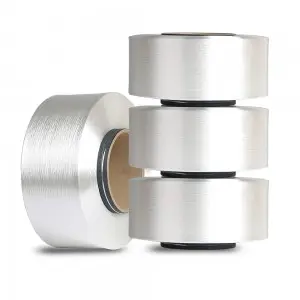
Table of Contents
- What Is Custom Hot Melt Yarn
- Core Advantages of Custom Hot Melt Yarn
- Key Applications Across Industries
- Critical Factors for Choosing a Supplier
- Customization Parameters You Should Define
- Quality Control & Certification Standards
- How to Test & Evaluate Samples
- FAQs About Custom Hot Melt Yarn
What Is Custom Hot Melt Yarn
Custom hot melt yarn is a thermoplastic adhesive filament designed to melt at a specific temperature, bond materials under pressure, and solidify quickly as it cools. It is produced using polymer formulations such as polyamide (PA), polyester (PES), polyurethane (TPU), or polyolefin, and can be fully tailored to melting point, tenacity, fineness, color, shrinkage, and bonding performance.
It is widely used as a bonding component in weaving, knitting, laminating, and thermal bonding processes, replacing many traditional glue and sewing applications.
Core Advantages of Custom Hot Melt Yarn
- Precise Melting Temperature: Customized melting points ensure stable bonding without damaging delicate fabrics or components.
- High Bond Strength & Durability: Forms firm, long-lasting bonds resistant to washing, dry cleaning, and daily wear.
- Clean & Efficient Processing: No solvents, no mess, minimal waste, ideal for high-speed automated lines.
- Flexible Customization: Adjustable diameter, tenacity, color, shrinkage, and softness to match your product needs.
- Eco-Friendly & Safe: Non-toxic, odorless, solvent-free, compliant with global environmental and safety standards.
Key Applications Across Industries
| Industry | Typical Applications |
|---|---|
| Apparel & Fashion | Seamless bonding, interlining, collar stiffening, lace, sportswear bonding |
| Footwear | Shoe upper lamination, heel bonding, toe cap reinforcement |
| Automotive | Interior textiles, carpet backing, door panel bonding, sound insulation |
| Home Textiles | Sofa fabric lamination, curtain bonding, bedding components |
| Industrial Textiles | Filter materials, composite fabrics, industrial webbing, thermal bonding products |
Critical Factors for Choosing a Supplier
1. Customization Capability
A professional supplier should support full customization from polymer formula, melting point, yarn count (denier), filament number, tenacity, color, to package specifications. They should also provide flexible order volumes for both mass production and prototype sampling.
2. Production & R&D Strength
Look for mature spinning equipment, stable process control, and consistent batch quality. In-house R&D enables formula optimization and problem-solving for special applications.
3. Quality & Certifications
Reliable suppliers maintain strict raw material inspection, online monitoring, and finished product testing. Recognized certifications include ISO 9001, OEKO‑TEX® Standard 100, and RoHS compliance.
4. Stable Supply & Lead Time
Evaluate production capacity, inventory planning, and on-time delivery performance to avoid production line disruptions.
5. Technical & After-Sales Support
Strong suppliers provide processing guidance, temperature/pressure parameters, and troubleshooting for bonding, weaving, and knitting issues.
Customization Parameters You Should Define
Before ordering, clarify these key specifications:
- Melting Temperature: Low-temperature (≈90–110°C), medium-temperature (≈110–130°C), or high-temperature (≈130–160°C).
- Yarn Type: FDY fully drawn yarn or DTY textured yarn.
- Yarn Count & Filaments: Such as 70D/24F, 100D/48F, 150D/72F, etc.
- Color & Luster: Semi-dull, bright, or custom-dyed.
- Bonding Performance: Bond strength, washing resistance, heat resistance, flexibility.
- Packaging: Cone weight, length, and packaging method.
Quality Control & Certification Standards
Stable quality requires complete QC systems:
- Raw material purity and performance testing
- Online monitoring of evenness, tenacity, and elongation
- Melting point and bonding strength verification
- Washing, dry cleaning, and aging resistance tests
Common certifications:
- ISO 9001 Quality Management System
- OEKO‑TEX® Standard 100
- RoHS
- SGS testing reports
How to Test & Evaluating Samples
- Melting Performance: Test melting temperature, flowability, and bonding speed.
- Bond Strength: Perform peel and shear tests after cooling.
- Washability: Test durability under standard washing or dry cleaning.
- Processing Stability: Weave or knit with your equipment to check spinnability.
- Appearance & Uniformity: Inspect color consistency, evenness, and defects.
FAQs About Custom Hot Melt Yarn
What is the difference between PA and PES hot melt yarn?
PA (polyamide) offers good flexibility, washing resistance, and low-temperature bonding. PES (polyester) provides higher heat resistance, stronger bonding, and stability for technical applications.
Can hot melt yarn be used on delicate fabrics?
Yes. Choose a low-melting formula and adjust temperature and pressure to avoid damaging thin or heat-sensitive materials.
How long does the bonding take to solidify?
Most types solidify within seconds to minutes after heating and pressing, supporting high-speed production.
Is custom hot melt yarn environmentally friendly?
Yes, it is 100% solid content, solvent-free, non-toxic, and meets major global eco-requirements.
What is the typical lead time for custom orders?
Sample orders: 7–10 days. Mass production: 15–25 days depending on specifications and quantity.
Conclusion
Selecting the right custom hot melt yarn supplier is a long-term strategic decision. Focus on customization ability, quality system, production stability, and technical support rather than just price. A professional partner can optimize your materials, improve product performance, reduce costs, and boost competitiveness.
Whether you are in apparel, footwear, automotive, or industrial textiles, clearly define your performance and processing needs, test samples rigorously, and establish stable cooperation to achieve efficient, high-quality production.
Post time: May-06-2026