Use of Hot Melt Yarn in Nonwoven Fabrics: A Complete Guide for Global Textile Sourcing
Introduction
Nonwoven fabrics have become an indispensable material across medical, automotive, hygiene, filtration and industrial sectors, valued for their lightweight structure, fast production cycle and diverse functional adjustments. Traditional nonwoven bonding relies on chemical adhesives, mechanical needle punching or stitching, all of which carry obvious drawbacks: residual volatile organic compounds (VOCs), extra labor procedures, uneven bonding strength, and limited fabric breathability.
Hot melt yarn (low melting adhesive filament) has emerged as a game-changing thermal bonding solution for nonwoven manufacturing. When blended into fiber webs and activated via heat and mild pressure, the thermoplastic filament melts to form seamless inter-fiber adhesion, eliminating liquid glue and secondary stitching steps. This guide breaks down hot melt yarn’s core functions, mainstream material types, compatible nonwoven production processes, end-use verticals, performance advantages and procurement selection tips, tailored for fabric converters, nonwoven manufacturers and bulk textile buyers worldwide.
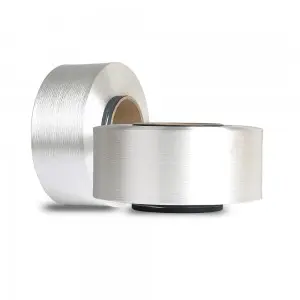
What Is Hot Melt Yarn for Nonwoven Production?
Hot melt yarn is a thermoplastic multifilament or monofilament engineered with a controlled low melting temperature. It exists in two mainstream forms: fully melted filament (FDY/DTY) and core-sheath composite fiber. Mixed evenly with base fibers (polyester, conventional nylon, viscose, bio-based staple fibers) during web forming, it acts as an invisible thermal binder rather than a structural base fiber.
Once exposed to targeted heat ranges, the outer layer of hot melt yarn liquefies, flows into fiber gaps, and solidifies upon cooling to lock the entire fiber web into a stable nonwoven sheet. Unlike liquid adhesives, hot melt yarn retains partial filament porosity after fusion, preserving the air permeability and soft tactile feel critical to most nonwoven end products.
Two dominant material families serve nonwoven applications, with premium bio-based PA11 hot melt yarn as a high-performance sustainable upgrade:
- Polyester (Co-PES) Hot Melt Yarn
Melting point: 110°C–150°C. Delivers rigid, heat-resistant bonding, ideal for high-temperature post-processing and rigid industrial nonwovens. Offers stable chemical resistance against oils and weak solvents.
- Polyamide (Co-PA/Nylon) Hot Melt Yarn
Standard nylon 6 low melt yarn melts at 85°C–110°C, enabling low-temperature bonding for heat-sensitive substrates. It creates soft, elastic bonds with superior abrasion resistance. Bio-based PA11 FDY/DTY expands this performance further: fully derived from renewable castor oil, zero competition with food crops, 50% lower carbon footprint than standard PET yarn, ultra-low moisture absorption and outstanding wear resistance to reduce microplastic shedding during long-term use.
Common available deniers range from 20D to 150D, matching thin lightweight medical nonwovens up to heavy-duty automotive felts. All standard grades pass OEKO-TEX Standard 100, RoHS and SGS eco-safety certifications for global market compliance.
Core Functions of Hot Melt Yarn Inside Nonwoven Fabrics
1. Solvent-Free Thermal Binder
The primary purpose of hot melt yarn is replacing chemical glue. No spray coating, drying tunnels or VOC waste water are required during production. The thermal bonding reaction occurs inline with hot rolling or hot air curing, cutting production waste and simplifying environmental compliance for factories exporting to EU, North America and other regulated markets.
2. Boost Structural Strength & Dimensional Stability
For needle-punched nonwovens, mixing hot melt yarn solves the common issue of weak vertical tensile strength and fiber shedding. After thermal activation, cross-point bonding locks loose staple fibers, lowering fabric shrinkage below 1.2% under standard heat testing. Laminated multi-layer nonwovens also rely on hot melt yarn to fuse separate web layers without delamination under repeated stretching or washing.
3. Preserve Softness & Breathability
Liquid glue blocks fabric pores and creates stiff, board-like textures. Hot melt yarn only melts at fiber intersection points, leaving most void spaces intact. Hygiene and medical nonwovens maintain consistent airflow and moisture transfer capacity, while upholstery and lining nonwovens retain flexible, skin-friendly hand feel.
4. Optimize Production Efficiency & Reduce Total Costs
Integrating hot melt yarn into the web-forming stage removes independent gluing and stitching workflows. Manufacturers report 5–15% overall production cost savings through reduced labor, shorter production cycles and lower reject rates from consistent bonding quality. Automated spunbond, meltblown and hot air lines support high-speed processing up to 600 meters per minute with hot melt yarn additives.
Compatible Nonwoven Manufacturing Processes Using Hot Melt Yarn
1. Spunbond Nonwovens
Continuous filament webs are laid with evenly distributed hot melt yarn. Online hot calendering triggers bonding to produce durable, lightweight nonwovens widely used in geotextiles, disposable hygiene backsheets and protective cover layers. Bio-based PA11 hot melt yarn here improves UV and hydrolysis resistance for outdoor long-service spunbond materials.
2. Meltblown Reinforcement
Meltblown fabrics feature ultra-fine filter fibers but suffer low tear resistance. Blending fine denier hot melt yarn reinforces the fragile fiber web without blocking filtration pores, ideal for medical mask filter layers, industrial liquid filtration media and HVAC air filter nonwovens.
3. Needle Punch + Thermal Composite Nonwovens
Heavy-duty industrial felts, automotive interior liners and sound-absorbing nonwovens adopt this dual process. Needle punching interlocks bulk fibers first; subsequent hot treatment melts mixed hot melt yarn to lock fiber structures, enhancing abrasion resistance for long-lifecycle automotive and construction applications.
4. Hot Air Through Bonded Nonwovens
Perfect for fluffy, high-loft nonwovens such as thermal insulation padding, mattress interlayers and sofa cushion composites. Hot air evenly activates hot melt yarn across the full web thickness, delivering uniform soft bonding without flattening the fabric’s bulk elasticity.
5. Multi-Layer Laminated Nonwovens
Hot melt yarn acts as an interlayer adhesive between functional nonwoven layers (waterproof film + absorbent fiber web, protective outer fabric + soft inner liner). Lamination is completed in one heat pass, eliminating glue aging and delamination risks for medical surgical drapes and protective apparel nonwovens.
Key End Application Verticals for Hot Melt Bonded Nonwovens
Medical & Hygiene Nonwovens
Disposable surgical drapes, sterile wound dressing substrates, face mask reinforcement layers, diaper and feminine care absorbent backsheets. Low-melt PA hot melt yarn meets skin-safe eco standards, delivers soft touch and avoids irritating chemical residues. Bio-based PA11 grades support sustainable medical product lines targeting zero-plastic-waste brand strategies.
Automotive Interior Nonwovens
Car door panel felts, seat cushion interlayers, trunk lining, sound insulation mats and battery thermal insulation nonwovens. Polyester hot melt yarn provides heat resistance under vehicle operating temperatures, while PA-based variants create flexible, vibration-resistant composite felts with minimal fiber shedding during long-term vehicle use.
Industrial Filtration Nonwovens
Liquid filter cartridges, dust removal air filter media, industrial oil absorption mats. Hot melt bonding maintains stable pore size under high flow pressure, extending filter service life and reducing microfiber leakage into processed fluids.
Home Textile & Furniture Nonwovens
Mattress padding, sofa cushion high-loft nonwovens, carpet backing, curtain lining and bedding interlayers. Hot melt yarn delivers wash-resistant bonding, ensuring padding retains elasticity after repeated cleaning cycles without fiber clumping.
Footwear & Apparel Composite Nonwovens
Shoe insole reinforcement nonwovens, seamless garment lining, bra support interlayers and sportswear thermal bonding substrates. Low-temperature PA hot melt yarn bonds delicate stretch nonwoven substrates without damaging elastic fiber performance.
Construction & Geotextile Nonwovens
Road stabilization geotextiles, roof waterproof base layers, tree frost protection nonwovens. Bio-based PA11 hot melt yarn offers superior hydrolysis and weather resistance for outdoor long-term buried or exposed geotextile materials.
Polyester vs Standard Nylon vs Bio-Based PA11 Hot Melt Yarn: Sourcing Comparison for Buyers
| Performance Metric |
Co-PES Polyester Hot Melt Yarn |
Conventional PA6 Hot Melt Yarn |
100% Bio-Based PA11 Hot Melt Yarn |
| Melting Temperature |
110–150°C |
85–110°C |
90–115°C |
| Bond Softness |
Firm, rigid bond |
Soft, elastic bond |
Ultra-soft, stretchable bond |
| Abrasion Resistance |
Medium |
High |
Excellent (100,000+ Martindale cycles) |
| Moisture Absorption |
Low |
Medium |
Ultra-low (stable fabric dimensions) |
| Carbon Footprint |
High petroleum-based |
Medium petroleum-based |
50% lower CO₂, renewable feedstock |
| Chemical Resistance |
Good against oils |
Moderate |
Outstanding against solvents & grease |
| Ideal Nonwoven Use Case |
Automotive rigid felts, high-temp filtration |
Hygiene, thin medical nonwovens, apparel liners |
Premium outdoor, medical, long-life industrial nonwovens |
Critical Advantages of Hot Melt Yarn Nonwovens Over Traditional Bonding Methods
-
Full Eco Compliance
Zero liquid glue, no toxic solvent emissions, no wastewater treatment costs. Bio-based PA11 variants further align with global carbon neutrality and circular textile requirements, helping brands meet EU carbon tax and sustainability labeling standards. All material grades pass international textile safety certifications for cross-border shipments.
-
Consistent, Long-Lasting Bond Strength
Thermal fusion creates physical interlocking between fibers rather than surface coating. Bond integrity remains intact after repeated washing, high-humidity exposure and temperature fluctuations, solving the common delamination issue of glue-bonded nonwovens.
-
Flexible Customization for Specialized Nonwovens
Yarn denier, melting point and blend ratio can be fully customized according to target nonwoven weight, loft thickness and end-use temperature requirements. Semi-dull, full-dull and bright filament options support dyed colored nonwoven production with uniform dye uptake compared to PET-only fiber webs.
-
Minimize Microplastic Pollution
Strong fiber bonding drastically reduces loose fiber shedding during product use and washing. PA11’s exceptional abrasion resistance outperforms standard polyester and nylon, cutting microfiber release over the product lifecycle—a key selling point for eco-focused brand buyers.
How to Select Suitable Hot Melt Yarn for Your Nonwoven Production
- Match melting point to your existing production equipment
Low-temperature PA yarn (85–110°C) works for hot air through lines and delicate thin nonwovens; higher-temperature polyester yarn fits hot calender lines and heat-resistant industrial substrates.
- Align yarn material with end-use environment
Choose polyester for high-temperature working environments; standard PA for soft hygiene and apparel nonwovens; bio-based PA11 for premium sustainable, long-service outdoor and medical materials.
- Select correct denier based on nonwoven weight
20D–70D fine denier for lightweight thin nonwovens (masks, dressing substrates); 100D–150D heavy denier for thick high-loft padding and heavy industrial felts.
- Confirm certification matching target export markets
Prioritize yarn manufacturers holding OEKO-TEX, RoHS and SGS test reports to avoid customs compliance delays for shipments to Europe, North America and Southeast Asia.
Future Outlook for Hot Melt Yarn in Global Nonwoven Markets
Global demand for eco-friendly, solvent-free nonwoven manufacturing is accelerating hot melt yarn adoption across all verticals. Two clear industry trends shape buyer sourcing decisions:
- Rapid uptake of bio-based thermal bonding filaments
As brand sustainability targets tighten, bio-based PA11 hot melt yarn is replacing petroleum-based variants in high-margin medical, outdoor and automotive nonwoven lines, with its low-carbon, food-crop-independent supply chain becoming a core procurement differentiator.
- Integration with high-speed automated nonwoven lines
Modern spunbond, meltblown and composite lamination equipment is engineered to support inline hot melt yarn blending, pushing manufacturers to phase out glue bonding entirely to boost throughput and factory sustainability credentials.
For nonwoven converters and bulk textile buyers, early adoption of optimized hot melt yarn formulations delivers dual benefits: lower long-term production costs and marketable eco-performance to meet global retail and industrial brand sustainability standards.
Final Takeaway
Hot melt yarn has redefined nonwoven manufacturing by resolving the long-standing tradeoff between bonding strength, production efficiency, fabric comfort and environmental compliance. From disposable thin medical webs to heavy-duty automotive and geotextile composites, tailored hot melt yarn grades deliver stable, scalable thermal bonding without the drawbacks of chemical adhesives or mechanical stitching.
As sustainability regulations grow stricter worldwide, bio-based PA11 hot melt yarn stands out as a premium long-term solution, combining outstanding mechanical performance with drastically reduced carbon impact. When sourcing raw materials for nonwoven production, matching hot melt yarn material, denier and melting point to your web-forming process and end-product requirements will directly improve fabric quality, cut manufacturing costs and strengthen your product competitiveness in global textile markets.
Post time:
Jul-10-2026