
Upgraded Antistatic Properties of Low-Melting-Point Nylon Filaments: A Safety Guarantee for Textile Processing
In the global textile industry’s transformation towards high efficiency, safety, and high quality, low-melting-point nylon filaments, with their core advantages such as excellent thermal bonding and formability, have become a key raw material for high-end apparel, industrial textiles, and knitted fabrics. However, safety hazards and quality problems caused by static electricity in textile processing have long plagued global weaving companies—from electrostatic adsorption caused by fiber friction to the risk of discharge in dusty environments, and performance defects after product molding, static electricity not only restricts production efficiency but also poses a direct threat to workshop safety. Upgraded antistatic properties of low-melting-point nylon filaments represent a key breakthrough addressing this industry pain point, providing comprehensive safety guarantees for global textile processing.
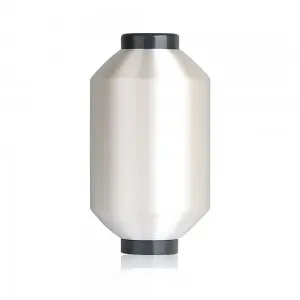
The Hidden Risks of Static Electricity in Textile Processing: An Industry Pain Point That Cannot Be Ignored
Static electricity is an inevitable product of high-frequency friction between fibers and between fibers and equipment throughout the entire textile processing process (spinning, weaving, dyeing, finishing, etc.). For low-melting-point nylon filaments, the insulating properties of their polymer materials make static electricity prone to accumulate, leading to multiple risks:
On a safety level, when floating fiber dust in a textile workshop encounters the accumulated static electricity in the filaments, if the discharge energy reaches the dust’s ignition threshold, it can cause a fire or even an explosion. This risk is particularly pronounced in high-speed weaving and enclosed production environments. Textile companies in many parts of the world have experienced production accidents due to electrostatic discharge, resulting in serious economic losses and safety threats.
On a product quality level, static electricity can cause low-melting-point nylon filaments to attract and entangle each other, increasing yarn breakage rates and reducing weaving efficiency. It can also cause problems such as pilling, defects, and color differences in finished fabrics, directly impacting the product’s market competitiveness. In high-end apparel and medical textiles, where quality requirements are stringent, even minor defects caused by static electricity can lead to product scrapping.
Furthermore, static electricity can also affect the health of operators and the lifespan of equipment. Prolonged exposure to high static electricity can cause electric shocks to operators, and skin and respiratory tract irritation due to excessive charged dust adsorption. Simultaneously, static electricity attracts dust to electronic components and mechanical parts of production equipment, accelerating wear and tear, increasing maintenance costs and downtime.
Upgrading the Antistatic Performance of Low-Melting-Point Nylon Filaments: Core Technology Paths and Breakthroughs
Upgrading antistatic performance is not simply about “adding antistatic agents,” but rather a systematic optimization based on materials science and textile processes. Multiple technological pathways are used to achieve both “suppression of static electricity generation” and “rapid dissipation,” balancing performance durability and application compatibility:
Raw Material Modification: Solving the Static Electricity Accumulation Problem at the Molecular Level
In the polymerization stage of low-melting-point nylon filaments, incorporating permanent antistatic agents through blending modification technology is currently the most crucial upgrade direction. Unlike traditional surface-sprayed antistatic agents (which are prone to degradation and have poor washability), this “embedded” modification deeply integrates the antistatic components with the nylon substrate, forming a continuous conductive pathway that ensures stable static electricity release throughout the filament’s entire lifespan.
Meanwhile, the application of bio-based raw materials provides a new breakthrough for antistatic upgrades. Low-melting-point nylons (such as PA11) based on renewable resources, with their polar molecular structure and biocompatibility, offer better dispersibility of antistatic agents. This improves antistatic performance while maintaining the material’s low melting point and environmental advantages, aligning with the global textile industry’s sustainable development trend.
Surface Functionalization: Constructing an Efficient Static Dissipation Interface
Through surface modification technologies such as plasma treatment and nano-coatings, a conductive film can be constructed on the surface of low-melting-point nylon filaments. This film not only reduces the surface resistance of the filaments, accelerating static electricity conduction and dissipation, but also improves the filaments’ lubricity, reducing the coefficient of friction between the fiber and equipment—reducing static electricity generation at its source.
The advantage of this surface treatment technology is that it does not alter the core physical properties of low-melting-point nylon filaments (such as melting point, strength, and flexibility), ensuring that they maintain their original advantages in subsequent processing such as hot-melt bonding, weaving, and knitting, making them suitable for various textile processing scenarios.
Process Optimization: Achieving a Balance Between Antistatic Performance and Processing Adaptability
Upgrading antistatic properties requires considering the actual needs of textile processing to avoid impacting processing efficiency due to performance improvements. By adjusting process parameters such as spinning temperature, stretch ratio, and cooling rate, the crystallinity and surface morphology of low-melting-point nylon filaments can be optimized, ensuring a uniform distribution of antistatic components while maintaining the filament’s linear density uniformity, breaking strength, and other indicators that meet the technical requirements of textile processing.
For example, in the production of DTY (dilatation textured yarn), precise control of false twist tension and setting temperature can improve antistatic performance while maintaining the filament’s elasticity and bulkiness, meeting the flexibility requirements of knitting, weaving, and other processing methods.
The Safety Value of Antistatic Upgrades: Reshaping the Safety Boundaries of Textile Processing
The upgraded antistatic properties of low-melting-point nylon filaments bring multi-dimensional safety assurance to the global textile processing industry, comprehensively improving safety levels across the sector, from workshop safety and product quality to employee health and production efficiency:
Eliminating Fire Safety Hazards and Strengthening the Production Safety Line: The surface resistance of the upgraded low-melting-point nylon filaments can be reduced to below 10⁸Ω, significantly reducing static electricity accumulation. The discharge energy is far below the ignition threshold of fiber dust, fundamentally eliminating the risk of fires and explosions caused by static electricity. This breakthrough means a significant increase in safety redundancy for textile companies using closed-loop production and high-speed weaving equipment, enabling them to more effectively comply with stringent industrial safety standards worldwide (such as EU CE certification and US OSHA occupational safety standards).
Ensuring Stable Product Quality and Reducing Production Losses: Problems such as fiber adhesion, yarn breakage, and defects caused by static electricity are effectively solved after the antistatic performance upgrade. The filaments are less prone to tangling and adsorption during spinning and weaving, improving processing continuity and resulting in more uniform texture and color in the finished fabric, significantly reducing defect rates. Data from numerous global textile companies shows that using antistatic-upgraded low-melting-point nylon filaments can reduce product scrap rates by over 30%, increase production efficiency by 15%-20%, and significantly lower production costs.
Protecting operator health and optimizing the working environment: The reduced static electricity on the surface of low-melting-point nylon filaments means a significant reduction in the adsorption of charged dust in the workshop, alleviating skin irritation and respiratory discomfort for operators. Simultaneously, the risk of electrostatic shock is almost completely eliminated, providing a safer and more comfortable working environment for frontline workers, which aligns with global corporate occupational health and safety (EHS) management requirements.
Extending Equipment Lifespan and Reducing Maintenance Costs: Electrostatically adsorbed dust accelerates mechanical wear and electronic component aging in production equipment (such as spinning machines, looms, and dyeing equipment). The application of antistatic filaments reduces dust adhesion, extending the cleaning frequency and maintenance cycle of equipment, reducing maintenance costs by 20%-25%, and indirectly improving enterprise production efficiency.
Global Application Practices: Industry Value Validation of Antistatic Upgrades: Antistatic-upgraded low-melting-point nylon filaments have been widely used in textile processing scenarios globally and have gained industry recognition. In high-end protective clothing manufacturers in Europe, these filaments are used in the weaving of composite fabrics, not only solving the problem of electrostatic adhesion during high-speed sewing but also helping companies successfully enter high-end markets such as medical and industrial protective equipment due to improved safety performance. In Southeast Asian knitting enterprises, the use of antistatic low-melting-point nylon filaments has reduced the pilling rate of knitted fabrics by 40%, significantly improving product qualification rates and enhancing their competitiveness in the global textile trade.
Furthermore, in the field of industrial textiles (such as industrial webbing, filter materials, and automotive interior fabrics), the improved antistatic properties have further expanded the application boundaries of low-melting-point nylon filaments. For example, when these filaments are used in automotive interior fabrics, they can prevent static electricity from attracting dust, keeping the interior clean, while reducing static interference with in-vehicle electronic equipment, thus improving the safety and comfort of vehicle use.
Post time: Jan-12-2026