
South American lace wholesalers report: Ocean Star polyester hot-melt yarn’s fineness perfectly suits intricate patterns
In the textile market of Buenos Aires, Argentina, orders for vintage floral lace and openwork vine patterns are steadily increasing—the demand from the South American middle class for high-value-added lace products is driving wholesalers to continuously seek core raw materials that can accurately reproduce intricate patterns. Recently, several South American lace wholesalers shared their experiences working with Ocean Star polyester hot-melt yarn: “Its fineness redefines the production boundaries of intricate patterns.”
I. The core pain point of South American lace: Why are intricate patterns “difficult to implement”?
South American lace is characterized by dense embroidery and three-dimensional openwork, with stitch density often reaching 120 stitches per square centimeter. Especially for vintage floral and vine patterns, the yarn faces dual requirements: it must have sufficient toughness to support the delicate weaving, while maintaining a soft texture to prevent pattern deformation. Previously, local wholesalers faced common challenges:
Traditional yarns had rough surfaces, easily causing jamming during weaving and resulting in misaligned stitches in complex patterns; After bonding, they formed stiff clumps, ruining the openwork and translucent feel of the lace; Insufficient wash resistance led to loosening and deformation of patterns after multiple washes.
An Argentine textile industry report showed that the defect rate for complex lace patterns had long remained at 8%-12%, the core issue being insufficient compatibility between the yarn and the manufacturing process. The emergence of Ocean Star polyester hot-melt yarn precisely solved this industry problem.
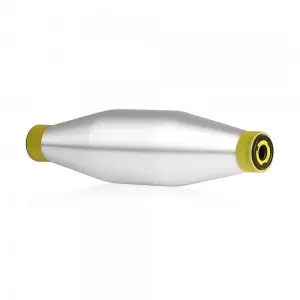
II. Three Major Technological Highlights for a “Silky Smooth Presentation” of Complex Patterns
Multiple wholesalers’ tests verified that Ocean Star’s superior smoothness stemmed from its precise technical design: Ultra-smooth fiber structure: Made from 100% polyester ultra-fine denier yarn (mainly 50d/70d specifications), with an extremely low surface friction coefficient, it easily weaves through high-density stitches during weaving, perfectly reproducing the details of the pattern. Ana, a Peruvian wholesaler, mentioned, “We produce 0.3cm diameter openwork floral patterns. Previously, our yarns always caused skipped stitches, but Ocean Star reduced the defect rate to below 2%.”
Low-Temperature Precision Bonding: The 110℃ melting point design allows for gentle curing. The resulting adhesive layer is thin and uniform, securing the pattern structure without compromising the lace’s softness. Carlos, a Brazilian customer, commented, “When used for multi-layered vine patterns, it keeps each stitch clearly visible, preventing the pattern from becoming blurred due to bonding.”
High Transparency and Compatibility: The white base yarn possesses high clarity and is perfectly compatible with lace dyes. Whether it’s a light-colored vintage pattern or a dark-colored three-dimensional design, it maintains color purity and doesn’t obscure the pattern details.
III. Real-World Wholesaler Experience: Dual Recognition from Factory to Market
In a lace factory in Medellín, Colombia, Ocean Star has become the designated yarn for producing complex patterns. Factory manager Sofia shared three key application scenarios: **Retro Floral Lace:** Compatible with high-density embroidery of 150 stitches/cm², the fine yarn ensures smooth petal edges, and the pattern retains its three-dimensionality even after multiple washes; **Openwork Vine Fabric:** 50d yarn supports multi-layered weaving, and the openwork structure is stable after bonding. When used in high-end lingerie fabrics, its softness passes skin contact tests in the South American market; **Customized Pattern Orders:** Addressing the demand for small-batch, multi-style, fragmented orders, the yarn is compatible with various equipment such as warp knitting and weft knitting, increasing production efficiency by 30%.
“South American consumers are willing to pay a premium for delicate patterns, but only if the quality is consistent,” emphasized Chilean wholesaler Miguel. “Ocean Star’s durability gives us more confidence – after 20 wash tests, the pattern showed no deformation or delamination, which is especially important for orders exported to Europe.”
IV. More Than Just Delicate: Aligning with the Sustainable Trends of the South American Textile Industry
Beyond its pattern adaptability, Ocean Star’s environmentally friendly characteristics have also gained market favor. The South American textile industry is actively responding to global sustainability initiatives, and this hot-melt yarn requires no chemical adhesives, reducing solvent use through heat-activated bonding, aligning with the green production policies promoted by the Argentine government. Simultaneously, its lightweight properties reduce transportation costs; a single spool of yarn is 15% lighter than traditional products, saving logistics expenses for cross-border wholesalers.
Conclusion: Market Competitiveness Behind Delicateness
The competition in the South American lace market has long since shifted from price wars to quality wars. Ocean Star polyester hot-melt yarn, with its ultra-fine fiber structure and precise bonding technology, makes the delicate expression of complex patterns possible, solving both the production pain points of wholesalers and meeting the end-consumer demand for high-end lace. As the head of the Brazilian Textile Association stated, “Only when the delicacy of the yarn perfectly matches the complexity of the pattern can South American lace stand out in the global market.” For South American lace wholesalers seeking differentiated competition, choosing a core raw material suitable for complex patterns may be the key to unlocking high-value-added markets.
Post time: Nov-28-2025