
Small-Batch Trial Orders Supported: Ocean Star Low-Melting-Point Nylon Filament Reduces New Product Development Risks for Wholesalers
In today’s rapidly evolving global textile market, wholesalers face increasing pressure in new product development: on one hand, consumers’ demands for functional and environmentally friendly fabrics are constantly upgrading; on the other hand, there are risks of market feedback falling short of expectations after mass production, inventory accumulation, and uncontrolled costs. This is especially true for wholesalers specializing in niche areas such as footwear materials, underwear, and home textiles. Finding a balance between “rapid trial and error” and “controllable costs” has become crucial to overcoming growth bottlenecks. Small-batch trial orders are a core strategy to solve this dilemma – and Ocean Star ‘s low-melting-point nylon filament, with its flexible trial order support and excellent product performance, is becoming an ideal choice for wholesalers to reduce new product development risks.
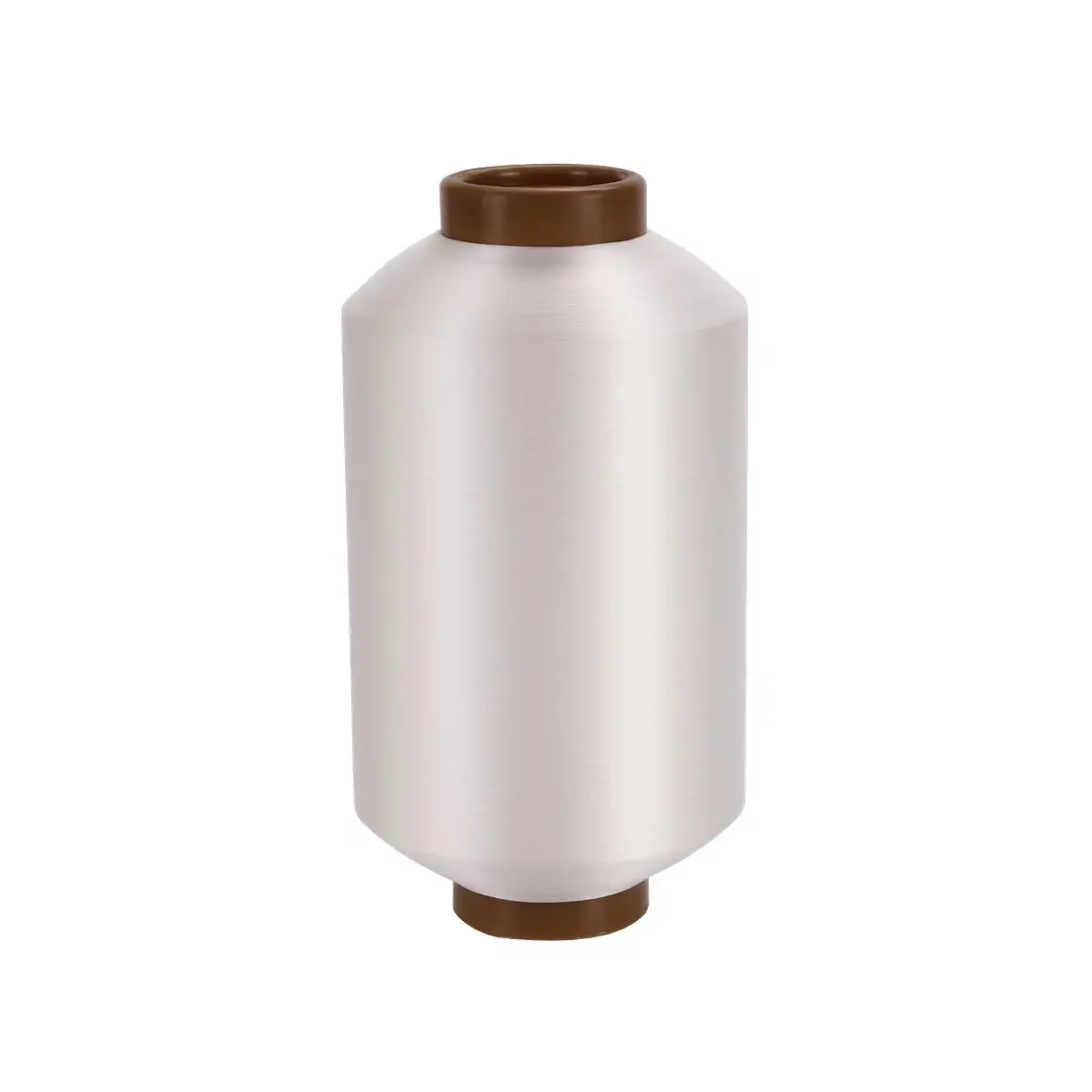
I. Three Core Risks in Wholesaler New Product Development, Small-Batch Trial Orders are Key to Breaking the Bottleneck
For textile wholesalers, the risks of new product development often lie in “uncertainty”:
Difficult market validation, easy pitfalls in mass production: If wholesalers directly invest in large-scale yarn procurement and production, once the finished products do not meet the needs of end brands or consumers (such as unsatisfactory feel, durability, or environmental standards), they may face slow sales and inventory accumulation, or even complete losses. Especially in markets such as Europe, the United States, and Southeast Asia, which have strict requirements for the environmental compliance of textile products (such as OEKO-TEX and ROHS), blind mass production may lead to customs clearance issues and returns.
Uncontrolled costs, high cost of trial and error: Traditional yarn suppliers often set high minimum order quantities (such as tens or even hundreds of kilograms). During the trial order stage, wholesalers need to bear the costs of raw materials, transportation, processing, and other aspects of the entire supply chain. Even if market feedback is poor, the initial investment cannot be recovered. For small and medium-sized wholesalers or newcomers, this “high-threshold trial and error” is almost unbearable.
Slow supply chain response, missing market opportunities: The textile industry has rapidly changing fashion trends (such as seasonal footwear materials and holiday home textiles). Waiting for the mass production cycle (usually 1-2 weeks) may cause wholesalers to miss the best promotion opportunities. However, if small-batch trial orders can be quickly implemented, it can help wholesalers adjust product direction in a timely manner and keep up with market trends. At this point, the value of small-batch trial orders becomes evident: verifying market demand at low cost, optimizing products through rapid iteration, and accumulating customer feedback with low risk – all of which depend on finding a yarn supplier that can provide flexible trial order support.
II. Ocean Star Low-Melting Point Nylon Filament: A “Performance + Compliance” Dual-Advantage Choice for Small-Batch Trial Orders
Not all low-melting point yarns can meet the needs of trial orders: if product performance is unstable or compliance standards are not met, problems will still arise during mass production even if the trial order is successful. Ocean Star has been deeply involved in the field of special yarns for over ten years (established in 2013). Its low-melting point nylon filament (including the PA11 bio-based series) not only adapts to multi-scenario needs in terms of performance but also, with its rigorous compliance certifications and flexible specifications support, becomes a “peace of mind” choice for wholesalers conducting trial orders.
1. Environmental Compliance First, No Worries About Market Access After Trial Orders
The global market has increasingly stringent environmental requirements for textile products, especially brand customers in the EU and North America, who prioritize raw materials that meet “sustainability standards.” Ocean Star low-melting point nylon filament avoids compliance risks from the source:
The core product PA11 FDY/DTY uses 100% bio-based raw materials, following the “no food competition” principle (not competing with food crops for resources). CO₂ emissions during production are reduced by at least 50% compared to PET materials, perfectly aligning with the global trend of “sustainable textiles”;
The entire product series has passed international authoritative certifications such as OEKO-TEX Standard 100, ROHS, and SGS, with no harmful chemical residues. Whether used in intimate apparel, children’s footwear materials, or high-end home textiles, it can meet the compliance requirements of the end market.
For wholesalers, using these compliant yarns during the trial order stage allows them to verify the market accessibility of the finished product in advance, avoiding the risk of returns due to “non-compliance” during later mass production. 2. Performance Adapts to Multiple Scenarios, Enabling Rapid Category Expansion After Successful Trial Orders
The core value of low-melting-point nylon filament lies in “thermal bonding replacing glue,” and Ocean Star’s products further optimize performance, allowing wholesalers to diversify their trial order categories:
Flexible Low-Melting-Point Characteristics for Processing: Melting points cover 85-180℃ (regular models 110-130℃), remaining in fiber form at room temperature for normal weaving, and rapidly melting and solidifying upon heating, eliminating the need for additional glue and simplifying downstream processing (such as flyknit shoe upper shaping, seamless bonding of underwear, and home textile quilting);
Improved Durability Enhances Product Competitiveness: Features low moisture absorption (less susceptible to dampness and deformation), high abrasion resistance (reducing microplastics generated from product wear), and excellent dyeability (50% higher dyeing efficiency than PET, with high color uniformity). Trial products not only have a good feel but also reduce after-sales complaints from end customers;
Flexible Specifications Meet Customization Needs: Offers two series, FDY (fully drawn yarn) and DTY (drawn textured yarn), with linear densities covering 20D-300D (such as 70D/24F, 150D/48F, etc.), supporting semi-dull and dyed customization. Whether developing lightweight seamless underwear or wear-resistant flyknit shoe uppers, suitable specifications can be found.
For example, a wholesaler specializing in the Southeast Asian shoe material market used Ocean Star’s 100D/36F low-melting-point nylon filament for trial production of flyknit shoe uppers: only 5 kilograms of yarn were used to complete a small batch of samples. After testing, it was found that the thermal bonding strength was 30% higher than traditional glue processes, and it met local environmental standards. Subsequently, during mass production, they quickly obtained orders from brand customers – the small-batch trial order not only verified the product’s feasibility but also helped the wholesaler identify their core selling point.
III. Ocean Star’s Small-Batch Trial Order Service: Seamless Transition from “Trial” to “Bulk”
For wholesalers, the core demand of small-batch trial orders is not only “small quantity,” but also “efficiency, controllability, and no barriers.” Ocean Star addresses this need by providing comprehensive support throughout the entire process:
1. No minimum order quantity, lowering the barrier for trial orders
Unlike traditional suppliers who require minimum orders of “tens of kilograms,” Ocean Star supports trial orders as low as a few kilograms. Wholesalers don’t need to bear the pressure of excessive inventory. Even if only 1-2 kilograms of yarn are needed to test new formulas or processes, orders can be placed quickly, significantly reducing initial investment costs.
2. Rapid sampling and delivery, keeping pace with market trends
To address the “timeliness” requirements of new product development, Ocean Star has established a rapid response mechanism: conventional specifications of low-melting-point nylon filaments can be sampled within 72 hours, and trial orders can be delivered globally within 7-10 days (covering major textile production areas in Southeast Asia, Europe, and the Americas). This means that if wholesalers identify a popular trend in footwear or lingerie materials, they can quickly verify it through trial orders, avoiding missed opportunities due to supply chain delays.
3. Full-process technical support, reducing trial order losses
Worried about “technical pitfalls” during the trial order phase? Ocean Star’s professional team provides guidance throughout the entire process, from yarn selection to processing techniques: for example, recommending suitable melting points based on finished product requirements (such as 85-110℃ for lingerie to avoid scorching the fabric, and 130-160℃ for footwear to enhance bonding strength), and providing advice on dyeing temperature control (to prevent premature melting that affects the appearance of the finished product). This helps wholesalers reduce process losses during trial orders and improve sample success rates.
IV. Conclusion: Small-batch trial orders for steady progress in new product development
In today’s increasingly competitive textile market, “blind mass production” is no longer a wise choice. “Small-batch trial orders + rapid iteration” is the core logic for wholesalers to reduce risks and seize opportunities. Ocean Star’s low-melting-point nylon filaments, with their environmentally compliant product performance, flexible specifications, and no-minimum-order-quantity trial order support, provide global wholesalers with a solution for “low-cost market verification and high-success-rate new product promotion.”
Post time: Feb-04-2026