
Polyester Hot-Melt Yarn’s Superior Weather Resistance Solves High-Temperature Application Challenges in Southeast Asian Braided Tape
The consistently high temperatures of Southeast Asia present numerous challenges to the production and application of braided tape. Traditional yarn materials are prone to adhesion failure, structural deformation, and strength reduction under sustained high temperatures, severely impacting the quality and lifespan of finished braided tapes. Polyester hot-melt yarn, with its weather resistance specifically designed for high-temperature environments, has become the preferred material for Southeast Asian braided tape wholesalers. Feedback from numerous local buyers confirms that this functional yarn fundamentally solves the production and usage pain points caused by high temperatures, providing reliable support for quality upgrades in the Southeast Asian braided tape industry.
The application scenarios for braided tape in the Southeast Asian market are extremely broad, ranging from everyday bag webbing and clothing accessories to outdoor product straps, industrial fastening webbing, and even home decoration webbing. All these applications require resistance to sustained temperatures above 30°C, and some outdoor scenarios even encounter extreme high temperatures after prolonged exposure to direct sunlight. Local wholesalers stated that the ordinary fusible yarns they previously used often resulted in poor shaping after weaving and loosening of the adhesive joints at high temperatures. This not only increased the defect rate at the production end but also led to numerous complaints from downstream customers regarding the insufficient durability of the finished products, severely impacting supply chain efficiency and brand reputation. The introduction of polyester hot-melt yarn has solved these problems.
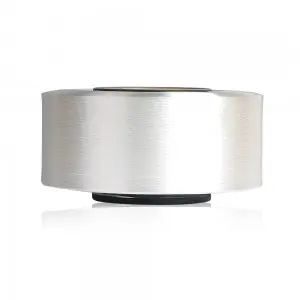
The weather resistance advantage of polyester hot-melt yarn stems from its unique core-sheath composite structure and the precise ratio of modified polyester raw materials. The core layer uses high-toughness conventional polyester filaments, possessing excellent high-temperature stability. It will not soften or deform in the high-temperature environment of Southeast Asia, providing durable structural support and mechanical strength for the woven tape. The sheath layer is a customized low-melting-point modified polyester, which undergoes special weather-resistant treatment, with its melting point precisely controlled within the 110-180℃ range. After heating and melting, it forms high-strength, highly temperature-resistant adhesive joints. After cooling and solidification, it maintains strong adhesion even under prolonged high-temperature environments, preventing delamination and fraying. Compared to yarns produced using traditional coating processes, polyester hot-melt yarn requires no additional chemical adhesives, eliminating the problem of adhesive aging and failure at high temperatures from the outset. This significantly improves the temperature resistance and stability of the bonded joints.
Beyond its core high-temperature weather resistance, the performance advantages of polyester hot-melt yarn are highly compatible with the production and application needs of woven tape in Southeast Asia. Local wholesalers report that this yarn maintains excellent processability even at high temperatures and can be blended and interwoven with various fibers such as cotton, nylon, and regular polyester at room temperature. It is compatible with mainstream circular knitting machines, warp knitting machines, and weaving machines in Southeast Asia, requiring no modification to existing production lines and significantly reducing process adaptation costs. Simultaneously, the heat shrinkage rate of polyester hot-melt yarn is as low as 5%, effectively maintaining the dimensional stability of the woven tape during high-temperature weaving and setting processes, preventing shrinkage, wrinkling, and deformation. This greatly improves the flatness and precision of the finished woven tape, meeting the stringent requirements for appearance and specifications in high-end bags, clothing, and industrial products.
In practical applications, the weather resistance of polyester hot-melt yarn has been proven in woven tape products used in various scenarios across Southeast Asia. Outdoor product webbing using this yarn maintains strong adhesion and stable strength even after prolonged exposure to sunlight and high temperatures, without breaking or loosening. Bag webbing shows no signs of aging at the bonded joints in high-temperature transportation and use environments, effectively improving the durability of bags. Industrial fastening webbing, with its structural stability at high temperatures, meets the high-strength requirements of factories, construction sites, and other scenarios. Local wholesalers report that woven tape produced using polyester hot-melt yarn has seen a reduction in defect rate of over 60%, significantly improved downstream customer satisfaction, and a substantial increase in product market competitiveness.
Furthermore, the environmentally friendly characteristics of polyester hot-melt yarn align with the green development trend of the Southeast Asian textile industry. This yarn uses a glue-free bonding process, resulting in no VOC emissions and no glue residue during production and use, thus avoiding environmental pollution and the problem of glue releasing odors at high temperatures. Meanwhile, its excellent wear and tear resistance greatly extends the service life of the woven tape, reduces resource waste caused by product damage, and balances economic and ecological benefits, making it the preferred material for Southeast Asian textile companies to achieve green production.
Post time: Mar-09-2026