
Penetration Rate of Low-Melting-Point Nylon Filaments in Composite Processes
Global Sofa Fabric Market Size and Regional Growth Pattern
Core Characteristics and Compatibility of Low-Melting-Point Nylon Filaments with Composite Processes
Analysis of Technological Application Scenarios in Sofa Fabric Composite Processes
Current Penetration Rate: Driving Factors and Data Support
Market Penetration Potential and Technological Upgrade Directions in the Next 3-5 Years
I. Global Sofa Fabric Market Size and Regional Growth Pattern
The global sofa fabric market is in a period of steady growth. Two authoritative reports show:
Overall Market Level: The market size reached US$22.5 billion in 2024 and is projected to increase to US$30.4 billion by 2033, with a CAGR of 4.2% from 2026 to 2033, covering six major regions including North America, Europe, and Asia Pacific;
Decorative Fabric Segment: The sofa decorative fabric market size was US$9.18 billion in 2024, with a CAGR of 2.8% from 2025 to 2035, and is expected to exceed US$12.5 billion by 2035.
Regional growth exhibits three main characteristics: North America dominates the market: driven by high-end home furnishing demand, it holds the largest global market share and favors innovative composite fabrics; Asia-Pacific is rapidly rising: urbanization in countries like China and India is driving upgrades in home furnishing consumption. In 2022, China’s modular sofa market reached 48.7 billion yuan, a 15% annual increase, and is projected to exceed 90 billion yuan by 2026, directly boosting demand for composite fabrics; Europe is experiencing steady growth: environmental policies are driving the application of sustainable materials, with low-melting-point nylon filaments gaining popularity as a glue-free bonding solution.
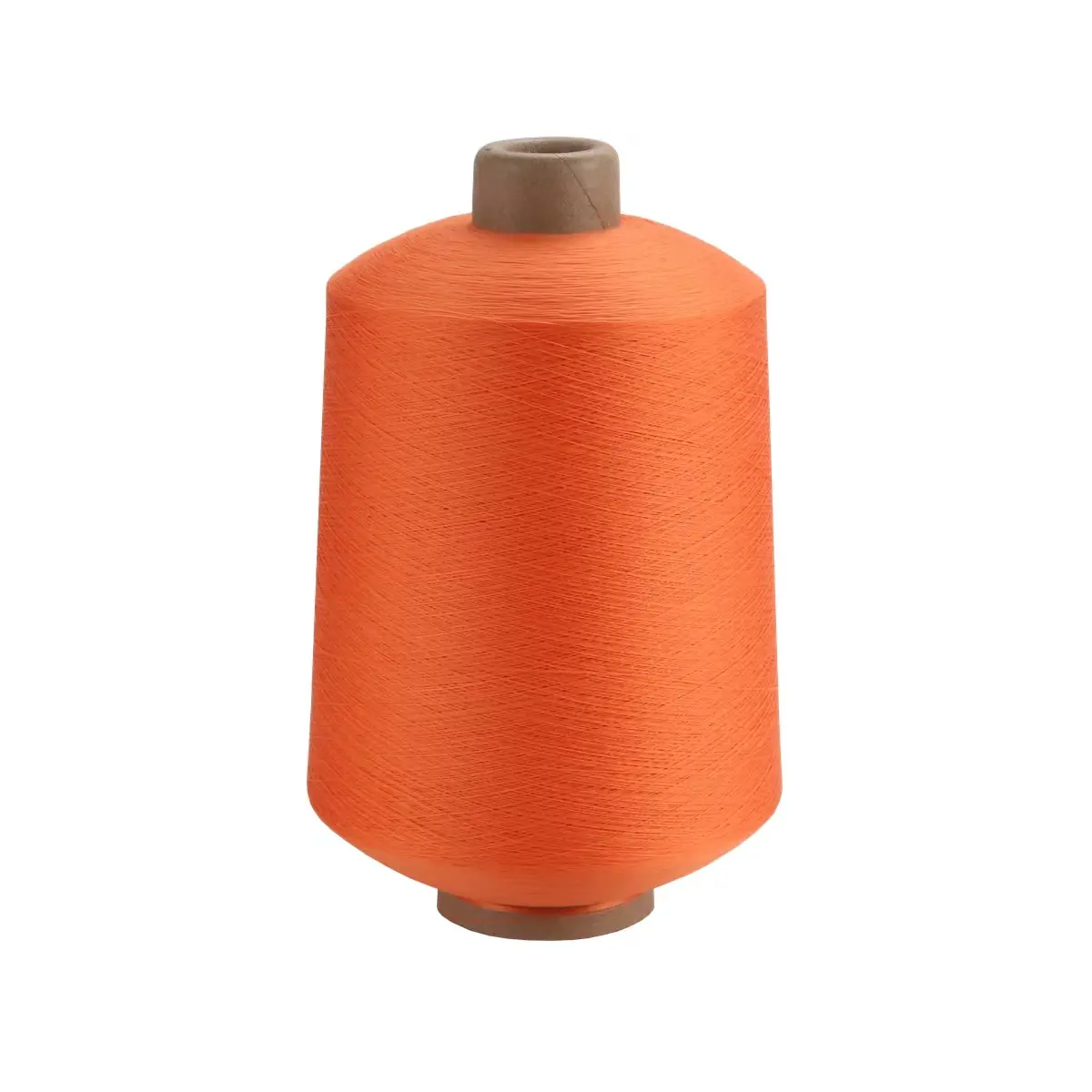
II. Core Characteristics and Composite Process Compatibility of Low-Melting-Point Nylon Filaments
Low-melting-point nylon filaments (also known as nylon hot-melt yarns) are ideal materials for sofa fabric composite processes due to their unique properties. Their core advantages include:
Precisely controllable melting characteristics: Melting point range of 85-180℃ can be adjusted as needed; the ultra-low melting point model of 85℃ can achieve low-temperature bonding without damaging the fiber substrate;
Superior mechanical properties: Tensile strength reaches 5.0-6.4 g/d, abrasion resistance ranks among the top textile fibers, and the thickness loss rate is only 2.3% after 100,000 dynamic loading tests;
Environmental and process advantages: Replaces traditional chemical adhesives, avoids VOC pollution, simplifies the hot-pressing composite process, and increases production efficiency by more than 30%;
Multi-functional compatibility: Excellent dyeing uniformity (acid dye dyeing), anti-yellowing, washable, and can be composited with various materials such as PU foam and recycled polyester.
Compared to traditional composite solutions, its adaptability is significantly superior:

III. Analysis of Technical Application Scenarios in Sofa Fabric Composite Processes
In sofa fabric composite systems, low-melting-point nylon filaments are mainly used in the key bonding stages of three-layer composite structures. Typical scenarios include:
Modular sofa lightweight solution: As an intermediate bonding layer connecting the surface fabric (polyester woven fabric/microfiber) and high-density PU foam, the weight of a three-seater module is reduced from 65-80kg to 48-55kg, a weight reduction of 20%-30%, while also improving structural stability. IKEA’s KIVIK series utilizes this solution, with each module weighing only 18.5kg, achieving a 41% penetration rate in small apartments; High-abrasion-resistant fabric composite: Hot-melt bonding integrates the surface fabric with the reinforcing base, enabling the fabric to withstand over 50,000 abrasion cycles (Martindale test), meeting the high-frequency usage needs of commercial spaces (hotels, co-working spaces); Functional fabric upgrade: Low-melting-point nylon filaments are added to the memory foam composite layer, and pressure dispersion is optimized through hot pressing, reducing pressure on the buttocks by 38% while solving the poor heat dissipation problem of traditional memory foam (thermal conductivity increased to 0.08 W/m・K); Environmentally friendly recycled fabric production: Composite with recycled polyester (rPET) fabric, reducing the carbon footprint by 30% compared to traditional processes, aligning with global sustainable consumption trends. IV. Current Penetration Rate: Driving Factors and Data Support
The penetration rate of low-melting-point nylon filaments in sofa fabric composite processes is rapidly increasing. The core drivers and data support are as follows:
Core Drivers of Penetration Rate:
* Policy: Environmental regulations in Europe and the United States restrict the use of chemical adhesives, promoting the widespread adoption of glue-free composite technologies.
* Demand: Consumers are demanding higher durability (lifespan ≥ 10 years) and environmental friendliness in sofas.
* Supply: The global market size for nylon hot melt yarn is projected to reach $675 million by 2031, with continued capacity expansion (e.g., Xielong High-Tech’s monthly production of 200 tons). Key Penetration Data: High-end Market: In North America and Europe, 62% of modular sofa products from high-end brands utilize low-melting-point nylon filament composite technology. Regional Penetration: The Asia-Pacific region sees an annual penetration rate increase of 8.3%, with China, as a core production base, achieving a 35% adoption rate for sofa fabric companies. Scenario Penetration: The penetration rate of commercial space sofas (hotels/offices) is higher than in the residential market, reaching 47%, due to stronger demands for wear resistance and ease of maintenance.
V. Market Penetration Potential and Technological Upgrade Direction in the Next 3-5 Years
Penetration Rate Growth Forecast: Global Level: The penetration rate of low-melting-point nylon filament in sofa fabric composite technology is expected to increase from the current 23% to 38% by 2028, with a CAGR of 12.5%. Regional Focus: The Asia-Pacific region will become the growth engine, with the Chinese market penetration rate expected to exceed 50%, driven by factors including the widespread adoption of modular sofas (market size exceeding 90 billion RMB in 2026) and stricter environmental policies. Technology Upgrade Directions:
* **Materials Innovation:** Mass production of bio-based low-melting-point nylon filaments, reducing reliance on petroleum resources and further decreasing carbon footprint by 20%;
* **Performance Optimization:** Iterative development of anti-yellowing and high thermal conductivity models to address long-term aging issues;
* **Process Innovation:** Upgrading integrated composite equipment to achieve continuous production from weaving to hot pressing, further reducing costs by 15%;
* **Application Expansion:** Extending to outdoor sofas and smart sofas (sensor fabric composites), developing weather-resistant and conductive functional products.
Market Opportunities:
* **Regional Opportunities:** Rising home furnishing consumption in emerging markets such as Southeast Asia and the Middle East, leading to an 11% annual increase in imported composite fabric demand;
* **Customer Opportunities:** Modular sofa manufacturers and high-end furniture brands (such as IKEA and Herman Miller) continue to expand their procurement demand for environmentally friendly composite fabrics;
* **Technological Barriers:** Precise melting point control (±5℃) and optimized composite process adaptability will become core competitive advantages.
Post time: Nov-14-2025