
Ocean Star PA11 Filament: A New High-End Material Choice Competing with International Brands
In the global high-end filament material market, PA11 filament, with its excellent biocompatibility, weather resistance, and mechanical properties, has become a core material in textiles, industrial accessories, and high-end apparel. International brands, leveraging their long-standing market reputation and technological accumulation, occupy a significant market share. Ocean Star, as an innovative enterprise focusing on the R&D and production of PA11 filament, has developed a unique competitive advantage through technological breakthroughs and product optimization, providing more valuable material solutions to global customers.
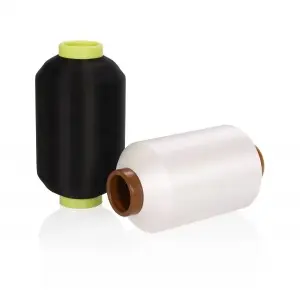
I. Bio-based Technology Innovation: A Dual Breakthrough in Environmental Protection and Performance
In the global wave of “carbon neutrality,” environmentally friendly materials have become a core competitive arena. International brands’ PA11 filaments largely rely on traditional petroleum-based raw materials, or while venturing into the bio-based field, their high costs hinder large-scale application. Ocean Star, however, insists on 100% bio-based PA11 raw material R&D and production, practicing environmental protection from the source.
Ocean Star’s bio-based PA11 filament uses renewable biological resources as raw materials, reducing dependence on fossil fuels and achieving low carbon emissions throughout its entire life cycle, fully complying with international environmental standards such as EU REACH and US EPA. More importantly, Ocean Star has not compromised performance for its environmental attributes—through its independently developed polymerization process, its PA11 filament achieves or even surpasses international brands in core indicators such as tensile strength and elongation at break. In applications such as textiles, webbing, and high-end apparel, it not only meets stringent physical performance requirements but also helps downstream customers upgrade their products for environmental protection, gaining a competitive edge in the green consumer market.
II. Upgraded Customization Capabilities: Breaking the Standardization Limitations of International Brands
International brands’ PA11 filament products are mostly standardized specifications. While covering general applications, they often suffer from insufficient adaptability when facing the personalized needs of different industries and customers. Ocean Star, starting from market demand, has built a comprehensive customization service system, becoming one of its core competitive advantages.
In terms of product specifications, Ocean Star offers an extremely wide range of choices – covering two major series, FDY and DTY, with fineness ranging from 20D/7F to 150D/48F, including different luster types such as semi-matte and glossy, precisely matching diverse application scenarios such as textile fabrics, garment accessories, webbing, and sofa fabrics. Whether it’s lace fabrics requiring ultra-fine yarn diameters or knitted products demanding high elasticity and recovery, Ocean Star can quickly respond to customization needs by adjusting raw material formulas and production processes.
In contrast, international brands’ customization services often suffer from long lead times, high minimum order quantities, and high costs. Ocean Star, relying on its own R&D team and production lines, has compressed the customization cycle to below the industry average while lowering the minimum order quantity threshold, allowing small and medium-sized customers to enjoy high-end customization services. This advantage is particularly prominent in the niche market.
III. Dyeing Process Innovation: Dual Empowerment of Color and Environmental Protection
Dyeing effect and environmental friendliness are key considerations in the application of PA11 filament. International brands often rely on traditional high-temperature dyeing processes for PA11 filament dyeing. This method is not only energy-intensive and polluting, but also prone to uneven dyeing and insufficient colorfastness, requiring additional color-fixing treatments and increasing production costs for customers.
Ocean Star innovatively employs water-dyeing, fundamentally solving the pain points of traditional dyeing. Using water as a medium, water-dyeing eliminates the need for harmful chemical auxiliaries, making the dyeing process more environmentally friendly and aligning with global green production trends. Simultaneously, this process allows dyes to penetrate evenly into the fiber, achieving high colorfastness, rich color, and resistance to fading. It also supports customization of over a thousand colors, precisely matching customer color requirements.
Furthermore, water-dyeing consumes only about 60% of the energy of traditional processes. This not only reduces Ocean Star’s production costs but also lowers environmental treatment costs for downstream customers, creating a triple advantage of “environmentally friendly + highly efficient + low-cost”—a technological breakthrough that many international brands have yet to achieve.
IV. Core Performance Optimization: Durability Advantages for High-End Scenarios
The mechanical properties of PA11 filament directly determine the quality and lifespan of the final product. While international brands’ PA11 filaments can meet basic usage requirements, they often suffer from insufficient impact resistance, breakage, and deformation under extreme environments or high-frequency use.
Ocean Star addresses this pain point by focusing on optimizing the impact resistance and durability of its PA11 filaments. Its low-melting-point nylon filaments, through a special molecular structure design, maintain softness while increasing impact strength by more than 15% compared to similar international products. In applications such as sofa fabrics, clothing accessories, and webbing, which require repeated stretching or exposure to external forces, it exhibits stronger fatigue resistance and is less prone to breakage and pilling.
Furthermore, Ocean Star’s PA11 filaments have reached internationally advanced levels in temperature resistance and corrosion resistance, adapting to different regional climates and diverse application scenarios. Whether in high-temperature dyeing processes or long-term outdoor use, it maintains stable performance, providing global customers with more reliable material assurance.
V. Integrated Service System: Efficiently Responding to Global Market Demands
In the global trade environment, service response speed and professionalism have become crucial components of a company’s competitiveness. International brands, due to their complex hierarchical structures and dispersed production bases, often suffer from slow service response, high communication costs, and long delivery cycles, making it difficult to meet customers’ urgent needs.
Ocean Star, as an innovative enterprise integrating R&D, production, and sales, has built a flat global service system. Its in-house R&D team can quickly connect with customers’ technical needs and provide targeted solutions; its production lines combine large-scale production with flexible customization, allowing for flexible capacity adjustments and shorter delivery cycles; its sales team possesses extensive international market experience, providing multilingual communication and full-process tracking services, ensuring a seamless customer experience from product consultation and sample testing to mass delivery.
In contrast, international brands often rely on regional agents, resulting in untimely information transmission and low problem-solving efficiency. Ocean Star’s integrated service system allows global customers to enjoy more efficient and professional service support, a key reason for its rapid breakthrough in the international market.
Post time: Jan-14-2026