
Lace Lingerie Breathability: Optimizing Air Permeability with PA11 DTY Filament
Lace lingerie, with its exquisite texture and elegant feel, has become a core category in the global lingerie market, balancing both aesthetic and comfort needs. However, for a long time, traditional lace fabrics have faced a common problem: the difficulty of achieving both breathability and structural stability simultaneously. Polyester lace is stuffy and sticky, while ordinary nylon lace easily collapses and clogs pores after absorbing moisture. These problems directly affect the wearing experience.
The emergence of 100% bio-based PA11 DTY filament provides a new solution to this industry challenge. From the fiber’s inherent properties to the weaving process, it comprehensively optimizes the air permeability of lace fabrics, redefining the comfort standards of high-end lace lingerie.
I. The Core of Lace Lingerie Breathability: Three Key Dimensions Affecting Air Permeability
The breathability of lace lingerie essentially depends on the efficiency of air circulation between the fabric fibers and yarn gaps. This efficiency is determined by three core factors:
Fiber Microstructure: The density and moisture absorption properties of the fibers directly affect the size and stability of the gaps between fibers;
Yarn Weaving Form: Fine-denier, uniform yarns can create a lighter mesh structure, increasing porosity;
Fabric Process Adaptability: The amount of adhesive used during the weaving process and the fiber’s wear resistance affect the long-term maintenance of porosity.
Traditional synthetic fibers (such as PET and ordinary nylon 6) have significant shortcomings in these three dimensions: polyester fibers have high density and poor moisture absorption, easily forming a stuffy barrier; ordinary nylon fibers swell after absorbing moisture, blocking the original air channels. The characteristics of PA11 DTY filament precisely address these pain points, achieving a systematic optimization of air permeability.
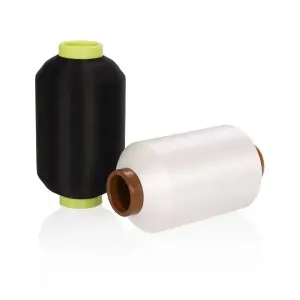
II. Material Advantages of PA11 DTY Filament: Activating Breathability Potential from the Fiber Source
As a 100% bio-based synthetic fiber, the core physical properties of PA11 DTY filament lay the foundation for optimizing the air permeability of lace lingerie. 1. Low-Density Fiber Structure, Widening Airflow Channels
The low-density characteristic of PA11 DTY filament is key to improving breathability. Compared to traditional polyester fibers and ordinary nylon, a lower fiber density means that the same weight of yarn can form a looser fiber aggregate, resulting in larger interstitial spaces between fibers, providing a natural “channel network” for airflow.
In lace weaving, this low-density advantage is further amplified: when PA11 DTY filament is spun into fine denier yarn (such as 20D/7F, 40D/36F specifications), it can produce a lace texture with a finer mesh but higher porosity. Air can easily penetrate the fabric surface, creating microcirculation between the skin and the fabric, completely eliminating stuffiness.
2. Low Moisture Absorption, Maintaining Long-Lasting Breathability
The moisture absorption performance of underwear fabric directly determines the durability of its breathability. Ordinary nylon has a moisture regain rate of 4%-5%, and the fibers will slightly swell after absorbing moisture, causing the lace pores to be compressed and shrink; polyester fibers have a moisture regain rate of only 0.4%-0.5%, although they absorb less moisture, their breathability is poor, easily leading to a stuffy feeling.
PA11 DTY filament possesses both low moisture absorption and low moisture regain characteristics, and will not experience fiber swelling even in humid environments. This means that whether during daily wear or sweating in the summer, the pore structure of the lace fabric remains stable, and the airflow rate will not decrease due to changes in humidity, achieving a dry and breathable experience all day long.
3. Bio-Based Attributes, Balancing Breathability and Sustainability
Amidst the global sustainable fashion trend, the 100% bio-based attribute of PA11 DTY filament is even more competitive. Its raw materials come from renewable biomass, and the production process does not compete with food resources. Compared to PET fibers, carbon emissions are reduced by at least 50%.
It is worth noting that in 2026, the cost of bio-based fabrics globally has for the first time fallen below that of traditional synthetic fibers, a trend that is driving PA11 DTY filament to become the preferred material for high-end underwear brands. Consumers can enjoy breathable comfort while also practicing green consumption principles, which aligns with the sustainable upgrade needs of the global lingerie market.
III. Optimized Weaving Process: How PA11 DTY Filament Protects the Breathability of Lace Pores
The breathability of lace fabric depends not only on the fiber itself but also on the weaving process. The process adaptability of PA11 DTY filament further enhances its advantage in air circulation.
1. Excellent Spinnability, Weaving High-Porosity, Lightweight Lace
PA11 DTY filament possesses the process advantages of high yarn yield and low melting point, allowing for easy spinning into fine and ultra-fine denier yarns. For example, PA11 DTY filaments of specifications such as 20D/7F and 70D/72F can meet the stringent requirements for yarn fineness in lace weaving.
Finer yarns mean that a lighter mesh structure can be woven on the same area of lace fabric, significantly increasing porosity. Compared to lace woven with traditional coarse denier yarns, PA11 DTY filament lace shows a significant improvement in air circulation efficiency, and the feel is softer and more skin-friendly, meeting the needs of close-fitting lingerie.
2. Low Melting Point, Reducing Blockage of Pores by Adhesives
Hot-melt adhesives are often used for shaping in lace weaving, but excessive adhesive can block the fabric pores, severely affecting breathability. The low melting point of PA11 DTY filament significantly reduces the amount of hot-melt adhesive needed – during the weaving process, the fiber itself can achieve partial bonding and shaping through low-temperature hot melting, eliminating the need for additional large amounts of adhesive.
This characteristic avoids the blockage of air channels by the adhesive layer at the process level, and also reduces the problems of lace hardening and yellowing caused by adhesive aging, ensuring long-term consistency in breathability and aesthetics.
3. High Abrasion Resistance, Maintaining Long-Term Stability of Pore Structure
During the lifespan of lace lingerie, frequent friction can lead to fiber wear and mesh collapse, thereby reducing air circulation. PA11 DTY filament’s high abrasion resistance effectively slows down this process: its high fiber strength and superior wear resistance compared to ordinary nylon and polyester fibers mean that even with long-term wear and washing, the lace’s mesh structure is less prone to deformation and collapse, maintaining stable air permeability over time.
This advantage not only enhances the wearing experience of lingerie but also extends product lifespan, reducing the frequency of clothing replacement and further aligning with the concept of sustainable consumption.
IV. Beyond Breathability: PA11 DTY Filament Enables Multi-Dimensional Upgrades for Lace Lingerie
In addition to optimizing air permeability, PA11 DTY filament brings more added value to lace lingerie:
Easy Dyeing: Compared to PET fibers, PA11 DTY filament has a lower dyeing temperature and better dye absorption, allowing for precise presentation of rich colors. The dyeing process does not clog fiber pores, so breathability remains unaffected;
Low Microplastic Emissions: High abrasion resistance reduces fiber shedding, lowering the production of microplastics during washing, making it more environmentally friendly;
Safe and Skin-Friendly: Complies with international environmental standards such as OEKO-TEX STANDARD 100, with no release of harmful chemical substances, making it suitable for close-fitting wear.
V. Conclusion: PA11 DTY Filament Leads the Breathability Revolution in Lace Lingerie
In the global lingerie market’s trend towards “comfort and sustainability,” PA11 DTY filament, with its unique material advantages and process adaptability, provides a revolutionary solution for optimizing the air permeability of lace lingerie. It not only solves the pain points of traditional lace fabrics—stuffiness and unstable breathability—but also, with its 100% bio-based environmental attributes, aligns with the green transformation needs of the global fashion industry.
Post time: Jan-21-2026