
Global Braided Tape Market Demand Forecast: Growth Potential of Polyester Hot-Melt Yarn Applications 2024-2028
I. Overall Growth Trend of the Global Braided Tape Market (2024-2028)
According to data analysis compiled by Grand View Research and the International Textile Manufacturers Federation (ITMF), the global braided tape market size exceeded US$8.5 billion in 2024 and is projected to continue expanding at a CAGR of 5.8%-6.2% from 2024 to 2028, reaching US$11.2 billion by the end of 2028. Behind this growth trajectory, polyester hot-melt yarn, with its core advantages such as low melting point self-adhesion, high strength, and abrasion resistance, is continuously increasing its penetration rate in mid-to-high-end braided tape products, becoming a key raw material driving the market’s structural growth.
From a product structure perspective, seamless and endless braided tapes, as high-performance sub-segments, are experiencing particularly rapid growth. The global seamless braided tape market reached $4.87 billion in 2023, and is projected to maintain a CAGR of over 6.5% from 2024 to 2028. Polyester hot-melt yarn’s application share in this category is expected to increase from 32% in 2024 to 41% in 2028, primarily due to its process adaptability in precision weaving.
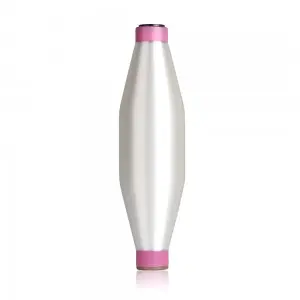
II. Growth Potential of Core Application Areas for Polyester Hot-Melt Yarn
1. Automotive Industry: Driven by Both New Energy and Safety Systems The explosive growth in global new energy vehicle production has become the core demand engine. In 2023, global new energy vehicle production exceeded 14 million units, driving a 12.7% year-on-year increase in demand for automotive braided tape. Seatbelt webbing, battery pack securing straps, and interior trim functional straps are among the most prominent applications for polyester hot-melt yarn. These applications require materials with high-temperature stability (-40℃ to 120℃), tensile strength ≥800MPa, and environmental compliance. The seamless molding characteristics of polyester hot-melt yarn, achieved through a thermal bonding process, effectively improve the structural integrity and service life of the webbing, meeting international certification standards such as ISO 13232. It is projected that from 2024 to 2028, the CAGR of polyester hot-melt yarn consumption in the automotive sector will reach 7.3%, increasing its share of global demand from 14.7% to 18.2%.
2. Industrial and Logistics Packaging: Upgrading Demands for Lightweighting and Environmental Protection Driven by the goals of improving global supply chain efficiency and carbon neutrality, applications such as industrial strapping and container securing straps are placing significantly higher demands on the lightweighting and recyclability of materials. High-strength woven tape made from polyester hot-melt yarn is 15%-20% lighter than traditional nylon webbing, and the recycling rate of recycled polyester (rPET)-based hot-melt yarn can reach over 90%, meeting the requirements of the EU’s Green Deal and GRS (Global Recycling Standard). In 2023, polyester hot-melt yarn accounted for 28% of the global industrial woven tape market, and this is expected to increase to 35% by 2028, mainly driven by new demand from North America’s “reindustrialization” strategy and the relocation of manufacturing in Southeast Asia.
3. Medical and Smart Wearables: Rising Demand for High-End Functional Products In the medical field, products such as minimally invasive medical device catheters and sterile straps have stringent requirements for the biocompatibility, antibacterial properties, and precision molding of woven materials. Polyester hot-melt yarn, through modification treatment, can achieve an antibacterial rate of ≥99% and biosafety compliance with ISO 10993 standards, leading to its rapid expansion in the application of disposable medical products. Meanwhile, the demand for flexible conductive webbing from smart wearable devices is driving the composite application of polyester hot-melt yarn and conductive fibers. This segment reached $420 million in 2024 and is projected to grow at a CAGR of 11.5% from 2024 to 2028.
4. Home Textiles and Footwear: Consumer Upgrades Drive Functionalization
Global consumers’ increasing demand for durability and comfort in home furnishings and footwear is driving the application of polyester hot-melt yarn in areas such as sofa elastic bands, mattress reinforcement bands, and shoe reinforcement bands. Its thermal bonding process reduces glue usage, enabling environmentally friendly production, while improving product washability (≥50 washes without glue peeling), aligning with the preference for environmentally friendly consumer goods in European and American markets. In 2024, the combined demand for polyester hot-melt yarn in the home textiles and footwear sector reached 38.5%, and it is projected to maintain a market share of over 35% by 2028, becoming a pillar of basic demand.
III. Global Regional Market Demand Dynamics
1. Asia Pacific (excluding China): Manufacturing Relocation Drives Growth The rise of emerging manufacturing bases such as India, Vietnam, and Indonesia has driven the expansion of woven tape production capacity in the region. In 2024, the demand for polyester hot melt yarn in this region increased by 9.8% year-on-year. Vietnam, a major exporter of textiles, apparel, and auto parts, imported 12,000 tons of polyester hot melt yarn in 2024, mainly for export-oriented products. India, on the other hand, has driven the growth in demand for industrial woven tape due to the upgrading of its domestic textile industry, with the regional CAGR expected to reach 7.1% from 2024 to 2028.
2. European Market: High Value Added and Environmental Protection Driven The European market, centered on Germany and Italy, focuses on the demand for high-end industrial equipment, medical devices, and luxury brand accessories, with stringent requirements for the performance parameters of polyester hot melt yarn (such as high temperature resistance and color fastness). The European market reached €1.98 billion in 2024, with recycled polyester hot melt yarn accounting for 22%, a figure projected to rise to 30% by 2028, primarily driven by EU carbon tariffs and brand ESG procurement requirements.
3. North American Market: Reindustrialization and Consumption Upgrade as Dual Engines
The US “reindustrialization” strategy is driving investment growth in automotive manufacturing and industrial automation. In 2024, North American demand for polyester hot melt yarn reached $2.15 billion, with industrial braided tape accounting for over 40%. Simultaneously, North American consumers’ demand for high-end outdoor products and sports equipment is driving the application of high-strength, lightweight polyester hot melt yarn braided tape, with the regional CAGR projected to remain around 5.4% from 2024 to 2028.
IV. Growth Drivers and Future Challenges
Core Drivers:
Technological Innovation:** The synergistic application of laser welding, ultrasonic welding, and other processes with polyester hot-melt yarn enhances the precision forming capability of braided tapes.
Environmental Policies:** Global carbon neutrality goals drive the replacement of traditional materials with recycled polyester hot-melt yarn; certifications such as GRS and OEKO-TEX have become key to market access.
Downstream Expansion:** The rapid development of emerging fields such as new energy vehicles, smart wearables, and minimally invasive medical devices opens up new demand scenarios.
Supply Chain Integration:** Regional trade agreements such as RCEP reduce logistics costs and facilitate the circulation of polyester hot-melt yarn in the Asia-Pacific region.
Potential Challenges:
Raw Material Price Fluctuations (Fluctuations in petroleum derivative prices affect polyester costs);
Reliance on Imported High-End Equipment (Endless braiding equipment is mainly dominated by German and Japanese companies);
International Trade Barriers (Adjustments to import tariffs on synthetic fiber products by some countries).
V. Market Outlook for 2028
By 2028, the global market size for polyester hot-melt yarn in the weaving tape market is projected to exceed US$720 million, accounting for over 45% of the total global demand for polyester hot-melt yarn. Technological upgrades will focus on the R&D of ultra-fine denier (≤100 denier) products, the industrialization of bio-based polyester hot-melt yarn (such as PLA composite modification), and the integration of intelligent sensing functions (such as temperature-sensing webbing). For market participants, focusing on high-value-added application areas (medical, new energy vehicles), obtaining international environmental certifications, and optimizing regional supply chain layouts will be key to seizing growth opportunities.
Post time: Nov-24-2025