Functional Needs of Braided Tape: A Case Study of UV-Resistant Polyester Hot-Melt Yarn
In the global textile accessories market, braided tape is transforming from a “basic load-bearing component” to a “multi-functional solution.” With the rapid development of the outdoor economy, automotive lightweighting, and marine equipment, end products are placing higher demands on the weather resistance and stability of braided tape—especially in scenarios involving long-term exposure to natural environments. UV radiation-induced material aging, decreased colorfastness, and strength degradation have become core pain points restricting product lifespan. UV-resistant modified polyester hot-melt yarn, with its unique thermal bonding properties and weather resistance, is becoming a key material for addressing the functional needs of braided tape, demonstrating irreplaceable application value in multiple cross-industry scenarios.
I. UV-Resistant Polyester Hot-Melt Yarn: A Technological Upgrade from “Adhesion Foundation” to “Weather Resistance Core”
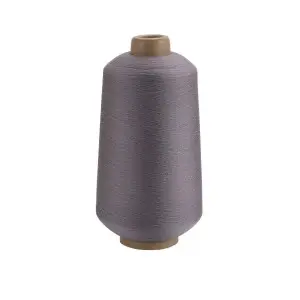
To understand its application logic in braided tape, it is first necessary to clarify the core advantages of polyester hot-melt yarn and the technical logic of UV-resistant modification. Traditional polyester hot-melt yarn uses 100% polyester as its base material. Leveraging its low melting point of around 110℃, it achieves self-bonding between fibers during weaving through hot pressing, eliminating the need for additional stitching or glue. This simplifies the production process and improves the structural stability of the woven tape. However, under prolonged UV exposure, the molecular chains of ordinary polyester are prone to breakage, leading to problems such as embrittlement, fading, and reduced load-bearing capacity in the woven tape—this is the core driving force behind the development of UV-resistant modification technology.
The technological breakthrough of UV-resistant polyester hot-melt yarn lies in “functional synergistic design”: by uniformly adding highly efficient UV stabilizers (such as benzotriazoles and hindered amine compounds) to the polyester base material, these additives effectively absorb or reflect UV rays, preventing them from damaging the polyester molecular structure. Simultaneously, the hot-melt bonding formula is optimized during the modification process, ensuring that while improving weather resistance, the 110℃ melt bonding efficiency and bonding strength are not affected. From a performance perspective, qualified UV-resistant polyester hot-melt yarn must meet two core standards:
UV Aging Resistance:After 800-1200 hours of accelerated UV aging testing, the yarn’s breaking strength retention rate should be ≥80%, with no significant embrittlement.
Colorfastness Stability:Under ISO 105-B02 standard testing, the colorfastness to sunlight should reach level 4-5, meaning no visible fading should occur within one year, even under strong tropical sunlight.
II. Implementation Scenarios: Global Application Cases of UV-resistant Polyester Hot-melt Yarn Braided Tape
The value of UV-resistant polyester hot-melt yarn is ultimately realized through its practical application in various scenarios. The following analysis examines four typical cross-industry scenarios to illustrate how it addresses end-user pain points and creates differentiated value.
1. Outdoor Gear: The “Weather-Resistant Lifeline” for Tents and Awnings In the global outdoor gear market, especially for professional tents designed for high-altitude and tropical regions (such as mountaineering tents and desert camping tents), woven webbing plays a crucial role in securing the frame and connecting the tent fabric. It must withstand strong UV rays, significant temperature differences between day and night, and wind and sand erosion over extended periods. Previously, some brands used ordinary polyester woven webbing, which often resulted in webbing breakage and loosening of the tent fabric connections within 6-8 months in environments such as the Sahara Desert in Africa or the Andes Mountains in South America.
A European outdoor gear brand has achieved two major breakthroughs by using UV-resistant polyester hot-melt yarn woven webbing:
Structural Durability: The hot-melt bonding process increases the bonding strength between the webbing and the tent fabric by 30%, avoiding thread breakage caused by UV aging at traditional seams;
Weather Resistance: Field tests in the Masai Mara in Kenya (with an average annual UV radiation intensity of approximately 60 W/m²) showed that the woven webbing maintained its tensile strength for over 18 months (initial strength 2600N, still reaching 2100N after 18 months), with no fading or brittleness at the tent fabric joints. This solution has become standard equipment in the brand’s professional outdoor tents, increasing product premium by 25%.
2. Automotive Interiors: Colorfastness Guarantee for Seat Webbing
With the increasing popularity of new energy vehicles, panoramic sunroofs and large side windows have become mainstream designs. This exposes interior textiles (especially seat webbing and headliner straps) to stronger UV radiation. Ordinary webbing is prone to yellowing and fading under prolonged sun exposure, affecting not only the aesthetics of the interior but also potentially releasing aging and degradation products. European automotive interior regulations (such as REACH) impose stringent requirements on the weather resistance and environmental friendliness of interior textiles, with UV resistance being one of the core indicators.
A North American automotive parts supplier has customized a seat webbing solution for a high-end electric vehicle brand, using 150D UV-resistant polyester hot-melt yarn:
Colorfastness Control: Through a combination of UV stabilizers and dope-dyed technology, after 3 years of simulated in-vehicle sunlight exposure (1000 hours of UVB-313 lamp irradiation), the color difference value (ΔE) is ≤1.5, far below the industry standard of ΔE≤3.0;
Process Compatibility: The 110℃ melting temperature seamlessly integrates with the thermoforming process of automotive seats, resulting in smooth bonding edges between the webbing and seat fabric without glue overflow, while also meeting the VOC (volatile organic compound) limits for interior materials. This solution has been applied to multiple pure electric SUVs, and customer feedback indicates no significant discoloration of the in-vehicle webbing within 3 years.
3. Marine Equipment: The “Corrosion-Resistant Partner” for Marine Coverings and Sails The marine environment poses a more severe challenge to woven webbing—the “triple corrosion” of ultraviolet radiation, seawater salt spray, and high humidity accelerates the aging and degradation of ordinary webbing. In applications such as yacht sails, marine deck coverings, and dock mooring straps, the weather resistance of webbing directly affects equipment safety and maintenance costs.
A Southeast Asian yacht manufacturer designed sail webbing for its 30-foot recreational yacht using UV-resistant polyester hot-melt yarn: Salt spray resistance + UV resistance synergistic:The yarn undergoes a special surface treatment, showing no rust or degradation after 720 hours in a 5% sodium chloride salt spray test (ASTM B117 standard). Simultaneously, in the strong UV environment of tropical oceans, the webbing retains 90% of its abrasion resistance, avoiding surface fuzzing and breakage caused by aging in traditional webbing.
Lightweight advantage:Compared to traditional nylon UV-resistant webbing, the polyester hot-melt yarn webbing is 15% lighter, helping to reduce the overall weight of the sails and improve the yacht’s sailing efficiency. The replacement cycle of this webbing has been extended from 12 months to 24 months, reducing maintenance costs for boat owners by 50%.
4. Agricultural Textiles: Greenhouse Shading Nets as a “Crop Protection Barrier”
In modern agriculture, woven products such as greenhouse shading nets and crop protection nets need to protect crop growth by regulating light intensity, while also withstanding UV radiation and wind and rain from the open environment. Traditional polyethylene (PE) shading nets, although inexpensive, are prone to cracking after 1-2 years of sun exposure and require frequent replacement; while ordinary polyester shading nets, although strong, suffer from unstable light transmittance due to UV aging.
A South American agricultural technology company has solved this contradiction by using greenhouse shade nets woven from UV-resistant polyester hot-melt yarn:
Light Transmittance Stability:The uniform bonding of the hot-melt yarn ensures consistent mesh size, while UV-resistant modification guarantees that the light transmittance fluctuation is ≤5% over two years in open-air use in São Paulo, Brazil (average 2200 hours of sunshine per year), compared to 15% for traditional polyester nets, ensuring stable light exposure for crop growth.
Wind Load Resistance: The three-dimensional structure formed by the hot-melt bonding increases the wind load resistance of the shade net to 1.2 kN/m², capable of withstanding tropical storm-level winds and reducing damage caused by extreme weather. This solution has been applied in 1000 hectares of greenhouses in the area, reducing farmers’ shade net replacement costs by 60%.
III. Selection Guide: How to Match the Needs of UV-Resistant Polyester Hot-Melt Yarn Woven Strips?
For brands and buyers worldwide, when selecting UV-resistant polyester hot-melt yarn woven webbing, it’s crucial to focus on “performance suitability” and “scenario compatibility,” avoiding blindly pursuing high-specification parameters: Prioritize evaluating actual UV resistance data: Pay attention to “artificial accelerated UV aging test duration” (≥800 hours recommended) and “tensile strength retention rate” (≥80%), rather than solely relying on the “UV-resistant” label; simultaneously, adjust selection based on the UV intensity of the application region—tropical regions require products with higher weather resistance ratings (e.g., 1200 hours of UV resistance).
Balance adhesive strength and weather resistance: Some low-quality products may sacrifice hot-melt adhesive strength to improve UV resistance. It’s essential to confirm that the webbing’s bond shear strength is ≥50 N/cm under 110℃ melting conditions to ensure structural stability.
Focus on Customization and Adaptability: Different scenarios have different requirements for webbing specifications (e.g., 50D/100D/150D), colors (solution dyeing or post-dyeing), and widths. Choosing a supplier that can provide flexible customization can avoid application limitations caused by specification mismatches.
IV. Conclusion: Functional Integration is the Future Direction of Braided Webbing
When braided webbing is no longer limited to “connection and load-bearing” but becomes an important component of the “weather resistance, safety, and user experience” of end products, the value of “functional materials” such as UV-resistant polyester hot-melt yarn becomes increasingly prominent. From outdoor equipment to marine engineering, from automotive interiors to modern agriculture, its application cases prove that the technological upgrading of materials is not isolated but needs to be deeply integrated with the needs of the scenario—it must not only solve the current pain points of weather resistance but also reserve space for future multifunctional integration (such as UV resistance + waterproofing, UV resistance + antibacterial).
Post time: Dec-22-2025